Further Images
| Medium | Oil on canvas |
| Signed | Signed lower left |
| Size | 21.50" × 29.00" (54.6cm × 73.7cm) |
| Framed Size | 28.50" × 36.00" (72.4cm × 91.4cm) |
| Dated | c. 1906 |
| Condition | Very good condition |
| Provenance | Private collection - Paris |
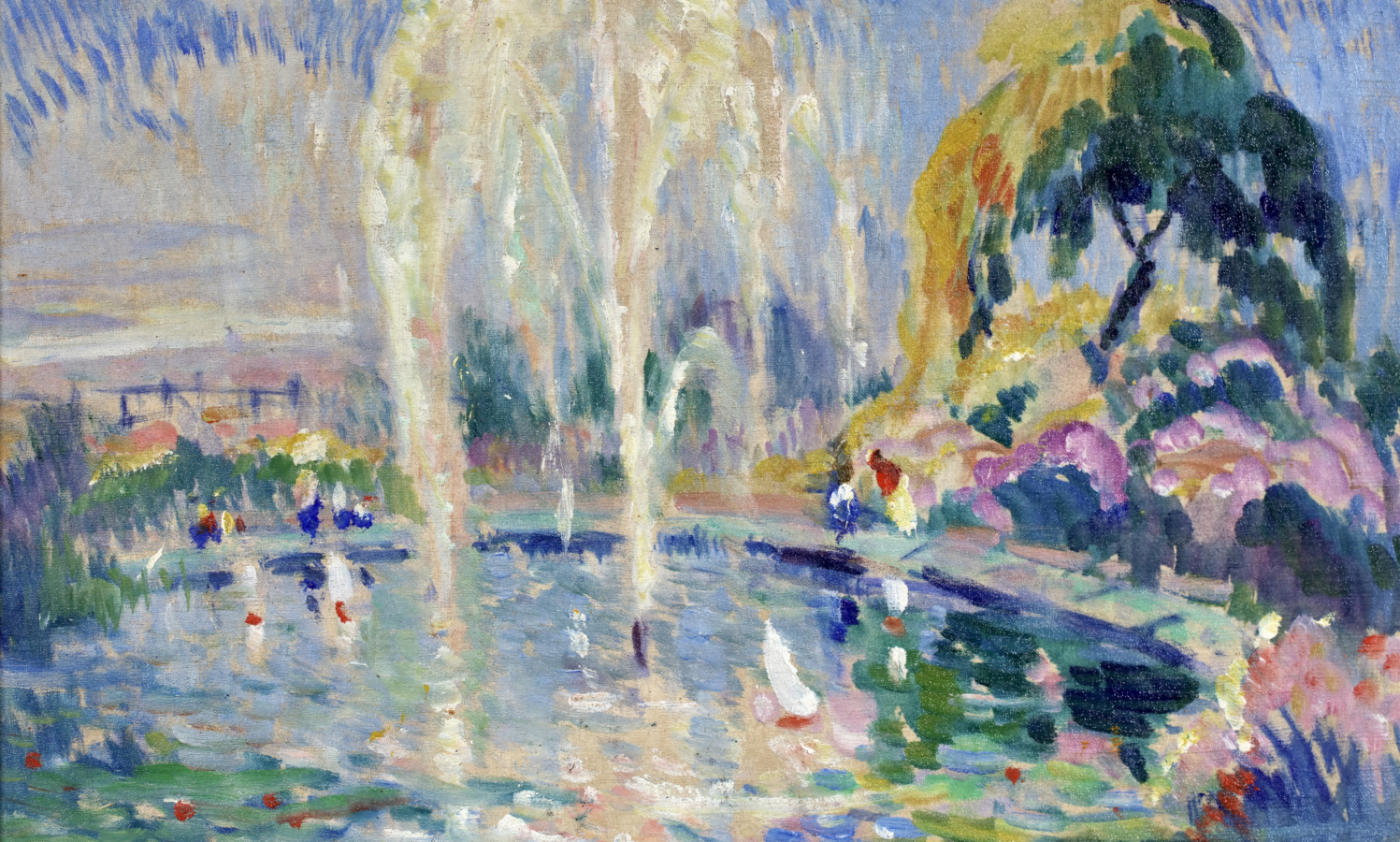
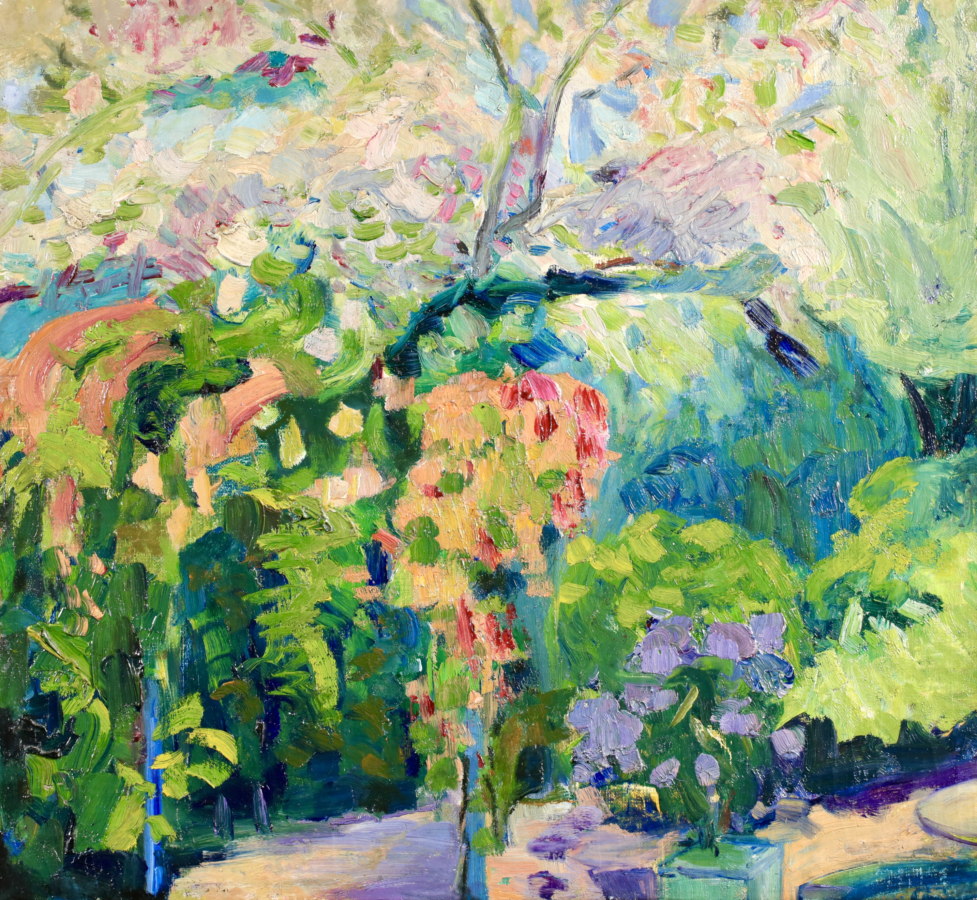
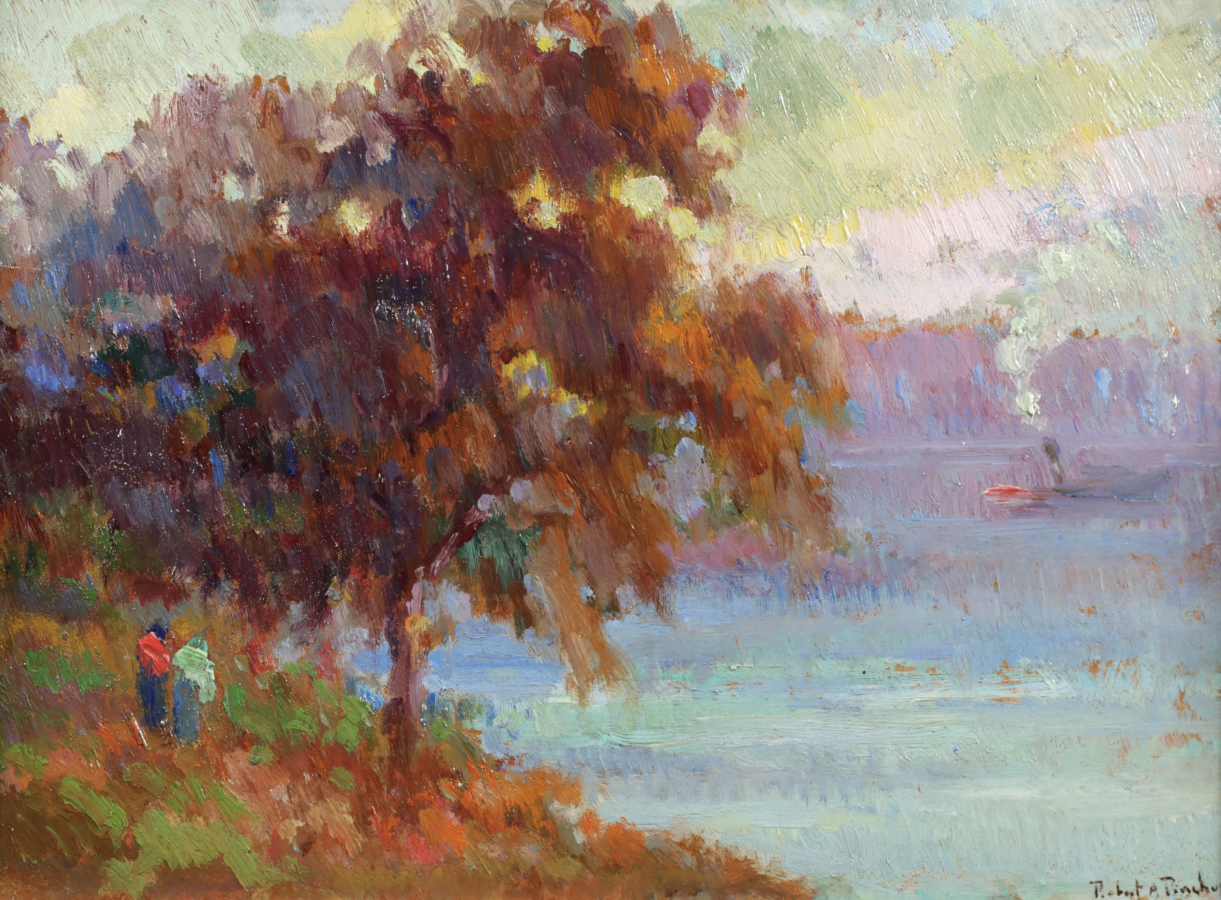
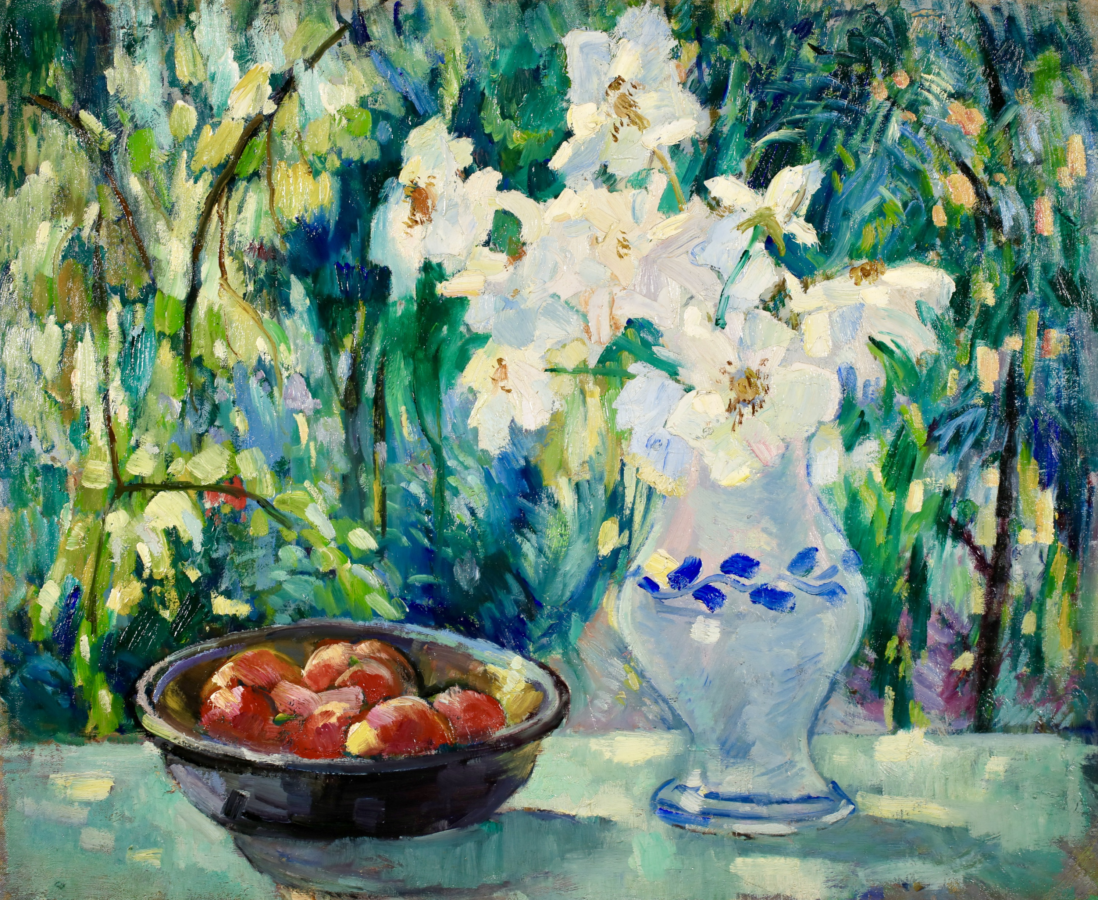
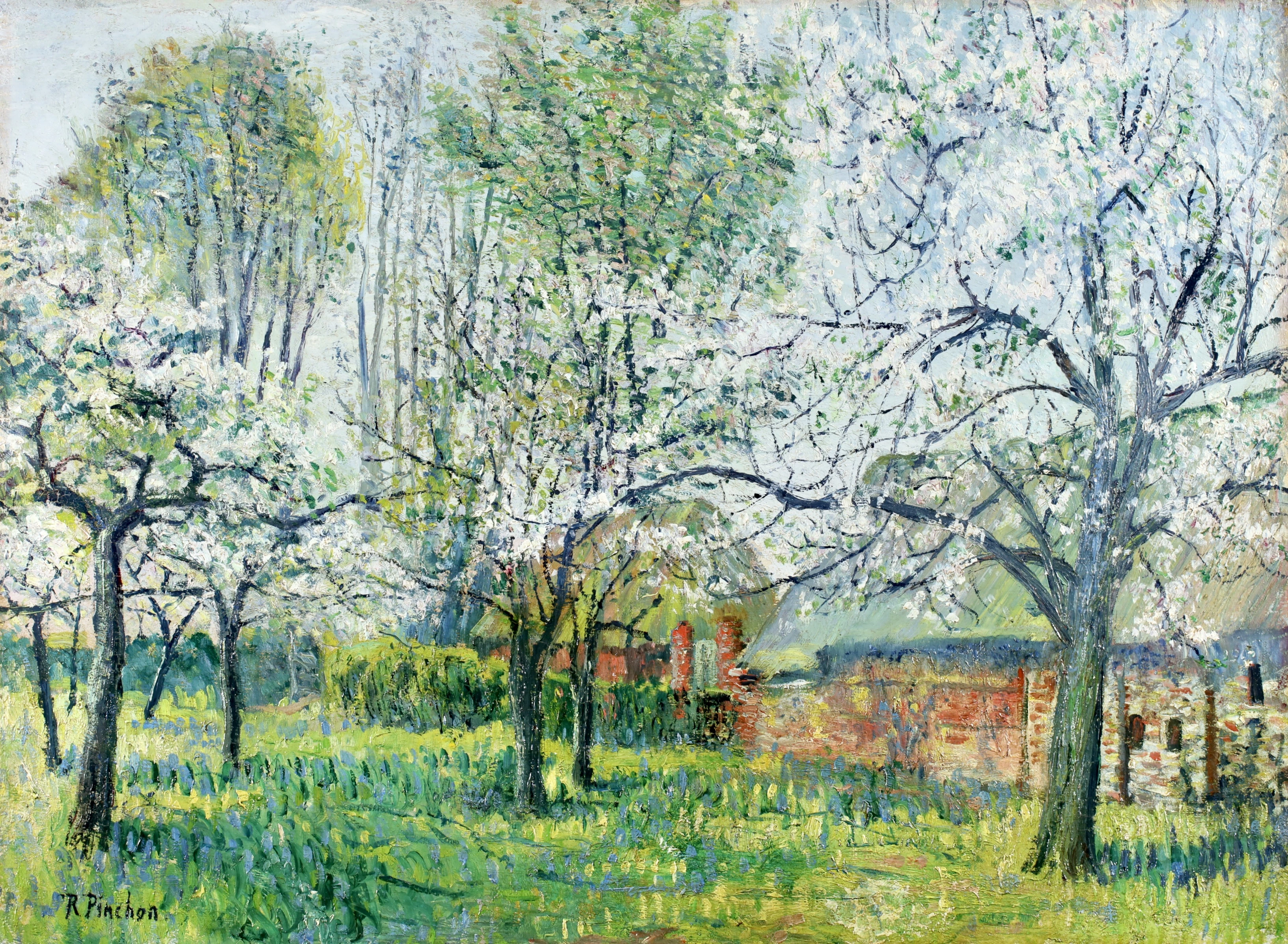
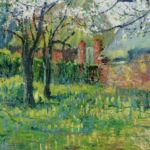
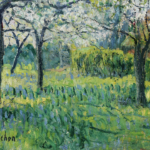
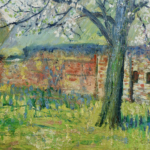
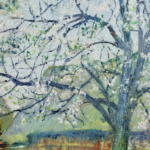
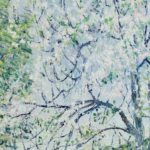
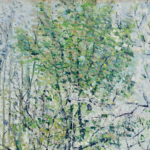
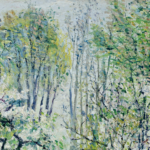
| About this Painting | An orchard in full blossom behind a Normandy farm. The trees fill almost the entire canvas, their white flower painted in thousands of short loaded touches over a high, pale sky, with pricks of fresh green where the leaf is just breaking and darker branches drawn through in near-black. Behind, the red brick and half-timbering of the farm buildings and the long grey-green slopes of their thatched roofs, and in front a meadow worked in vertical strokes of acid green, blue and lilac, so that the grass seems to move. Everything is built from separate marks of pure colour laid side by side and nothing is blended; the effect at a distance is of light falling through blossom, and close to, of a surface of extraordinary density. It belongs to the years when Pinchon, still under twenty-one, was working at his most Fauve. Pinchon was born in Rouen into a literary family — his father was a close friend of Maupassant — and was painting by the age of ten and exhibiting at the Galerie Legrip at fourteen. He trained at the Lycée Corneille and the École des Beaux-Arts de Rouen, and frequented Joseph Delattre's Académie libre in the rue des Charrettes, the gathering place of the new generation of the École de Rouen. Marcel Duchamp, a schoolfriend, painted his portrait in 1903. He showed at the Salon d'Automne and the Indépendants from 1905, and from 1905 to 1907 worked in a frankly Fauve manner, though he never abandoned the landscape. Monet said of him that he had a surprising touch in the service of a surprising eye. He was a founder of the Groupe des Trente, and his work is in the Musée des Beaux-Arts de Rouen, which holds Le Pont aux Anglais, soleil couchant of 1905. |
£49,000.00
GBP