Further Images
| Medium | Oil on canvas |
| Signed | Signed lower left |
| Size | 24.00" × 29.00" (61.0cm × 73.7cm) |
| Framed Size | 31.00" × 36.00" (78.7cm × 91.4cm) |
| Dated | c. 1920 |
| Condition | Very good condition |
| Provenance | Private collection - France The authenticity of this work has been confirmed by Cyril Klein-Montezin |
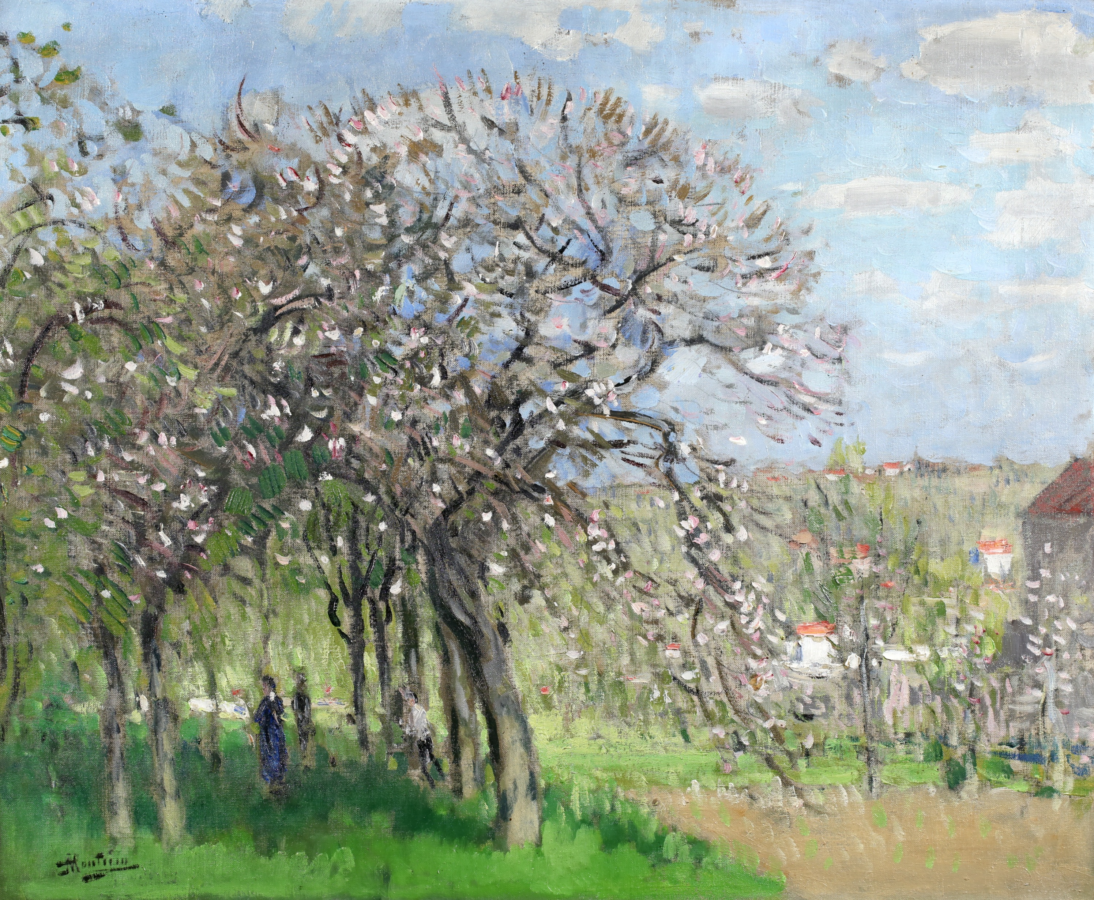
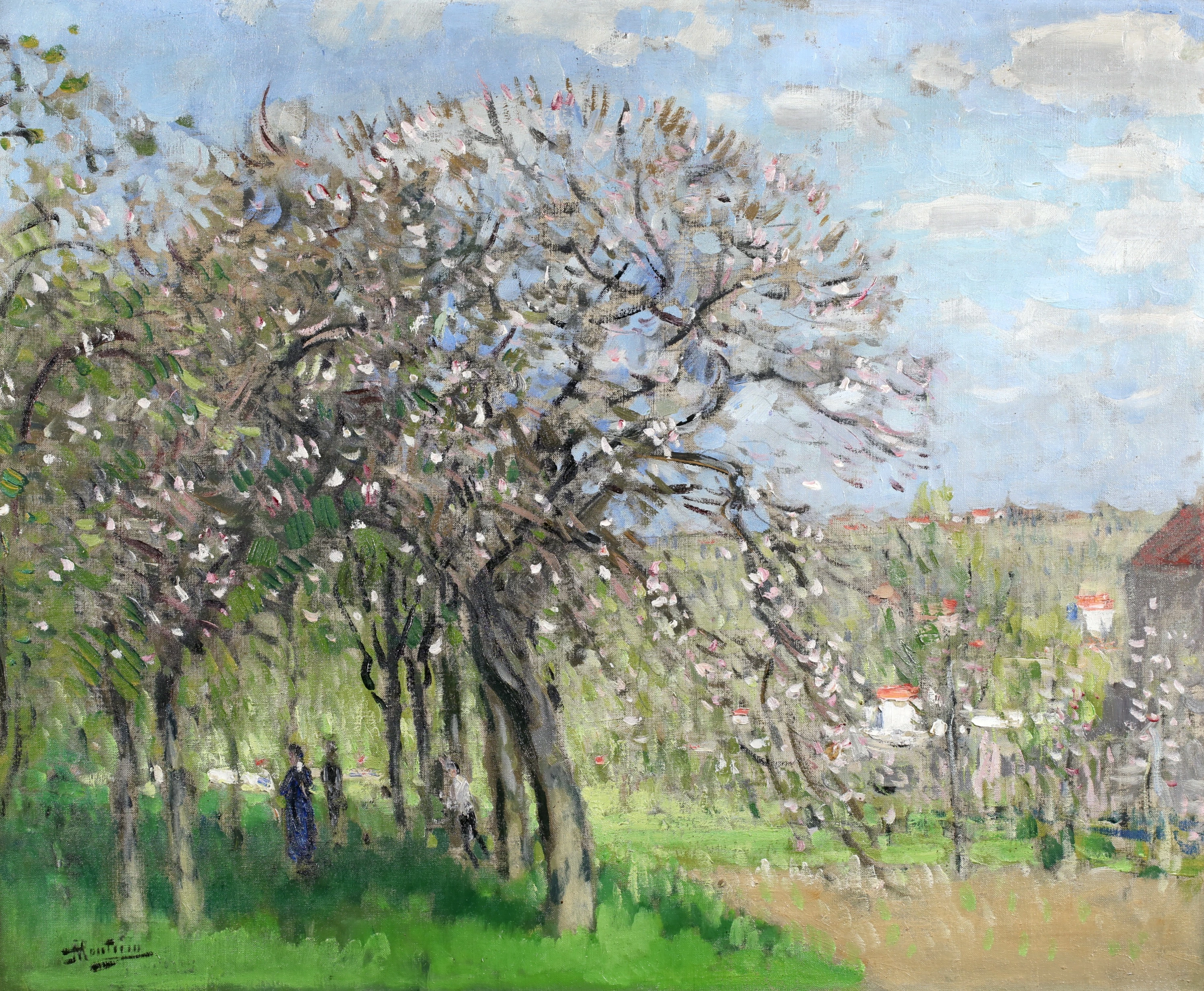
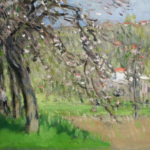
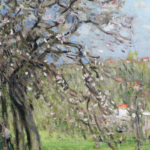
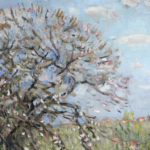
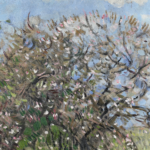
| About this Painting | Apple blossom in full flower — the trees in the foreground filling the canvas with their canopy of white and pink, figures moving through the orchard below, a village glimpsed through the branches to the right, a pale spring sky above. Pierre Eugène Montézin (1874–1946) painted this kind of subject with a directness and physical joy that comes from a lifetime of working outdoors. He could not really paint any other way — he said himself that he could only work from nature — and in a canvas of this quality you feel exactly that: the sense of a painter standing in an orchard on a spring morning, looking hard at the light. The brushwork is characteristic of his mature style: broad, confident strokes that lay the colour down decisively without overworking it. The blossom is not painted petal by petal but suggested — dabs and flicks of white and pale pink against the grey-green of the branches, the sky showing through in passages of soft blue between the masses of flower. The foreground figures are handled with equal economy: a woman in a blue dress, a figure in white, placed with the instinct of a painter who understood that the human presence in a landscape should feel incidental rather than composed. The light throughout is the particular light of the Île-de-France in April — clear, cool, luminous. Montézin began his career as a decorative muralist, spent ten years being rejected by the Salon, and eventually won the Medal of Honor at the Salon des Artistes Français in 1932 — the first landscape painter to receive the award in thirty-five years. Critical reaction was extraordinary: for three decades, landscapes had been considered a minor form, and Montézin's triumph overturned that judgment permanently. He was elected to the Académie des Beaux-Arts in 1940, taking the seat left vacant by the death of Edouard Vuillard. He died in 1946 in Brittany, suddenly, while he was painting — the only end he would have wanted. |
SOLD