Jean Dufy

( 1888 - 1964 )

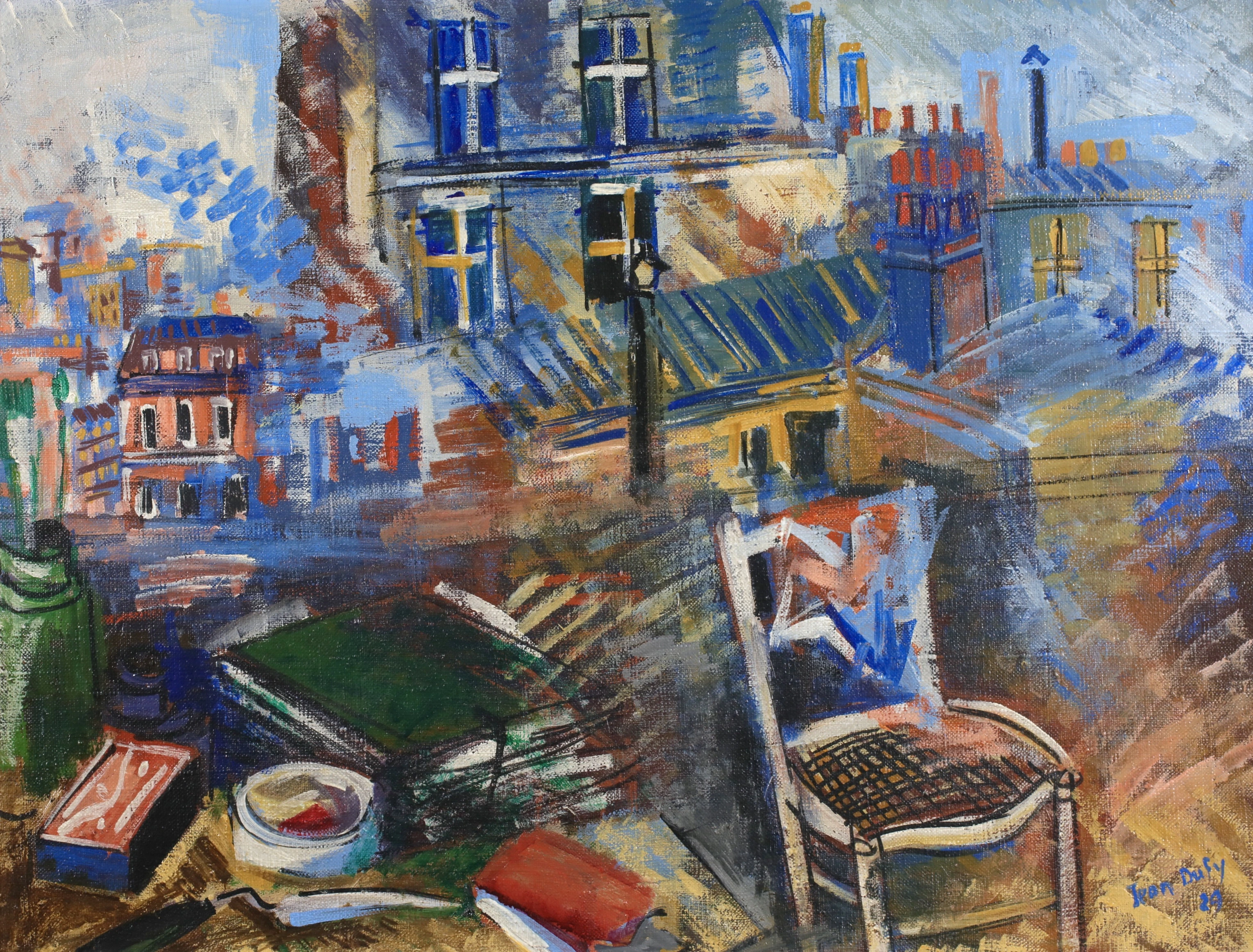
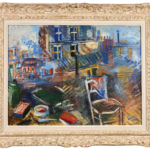
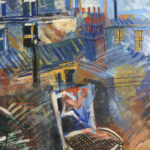
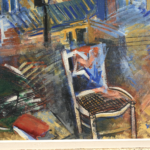
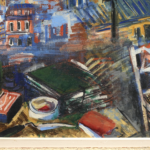
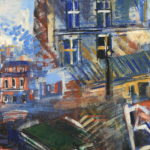
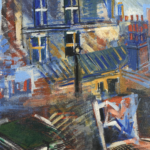
Montmartre – Vue de l’atelier de Jean Dufy

Jean Dufy

( 1888 - 1964 )

Montmartre – Vue de l’atelier de Jean Dufy

  • Medium: Oil on canvas

  • Signed: Signed & dated 1929 lower right

  • Size: 18.00" x 24.00" (45.7cm x 61.0cm)

  • Framed Size: 23.00" x 29.00" (58.4cm x 73.7cm)

  • Dated: 1929

£39,000.00
GBP

Image download 1Image download 2Image download 3Image download 4Image download 5Image download 6Image download 7Image download 8Image download 9Image download 10Image download 11 Download all Images

Additional information

  • Condition: Very good condition

  • Provenance: The collection of Richard H. Zinser

  • Literature: The authenticity of this work has been confirmed by Jacques Bailly
    The painting will be included in volume III of the catalogue raisonné of the work of Jean Dufy by Jacques Bailly

About this painting

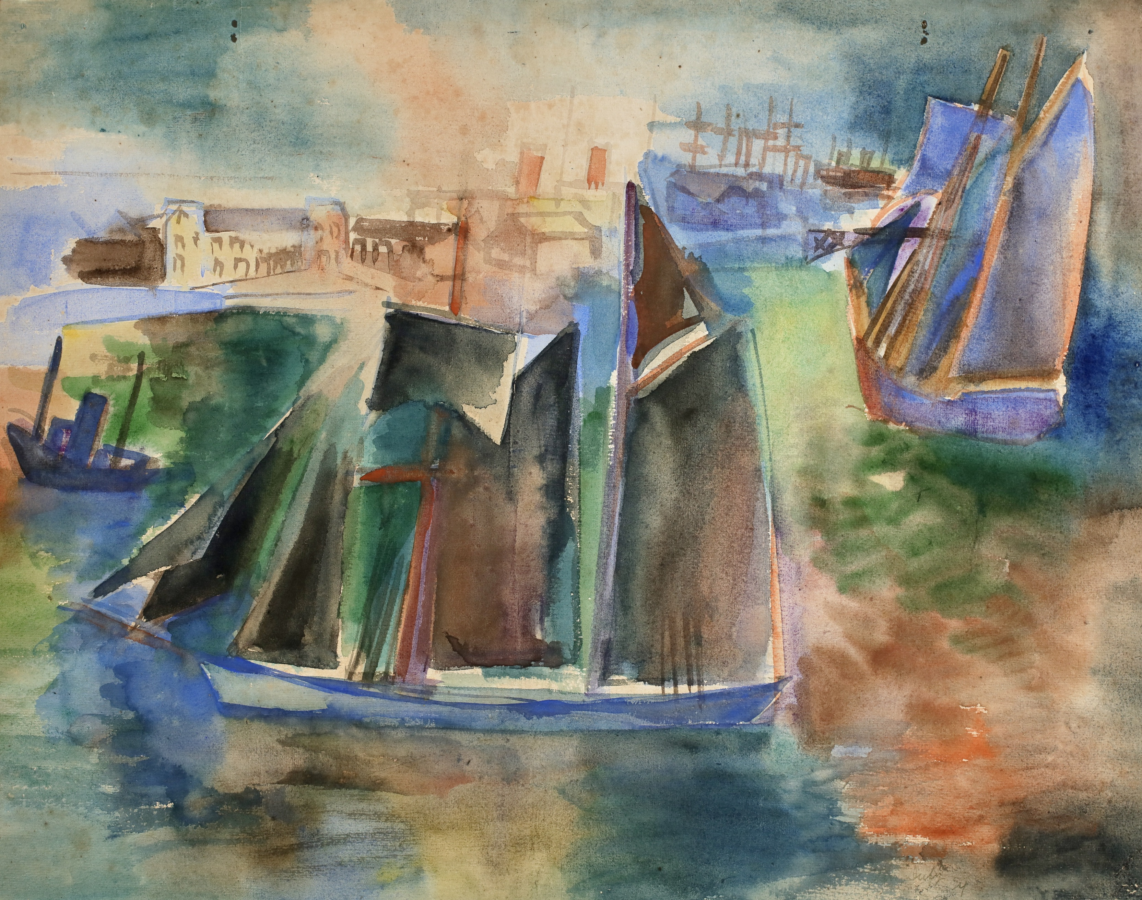
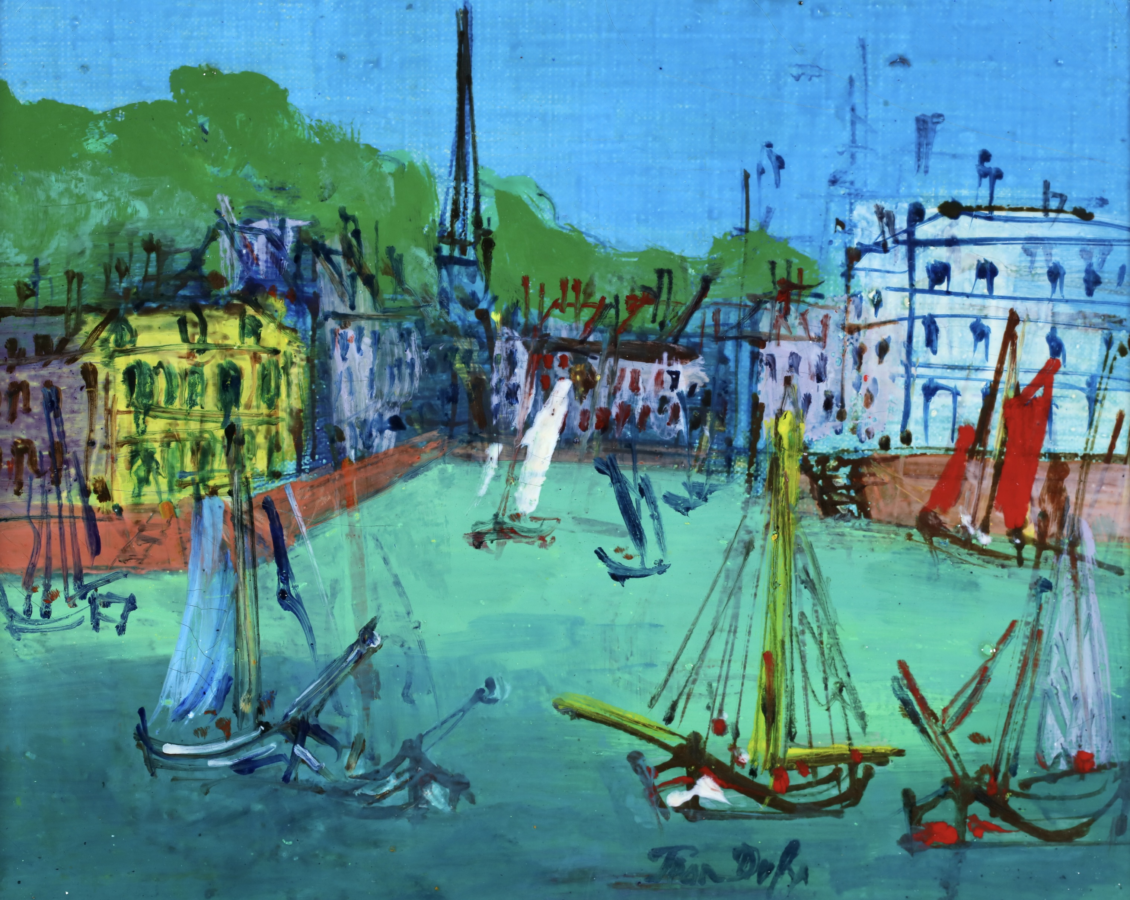
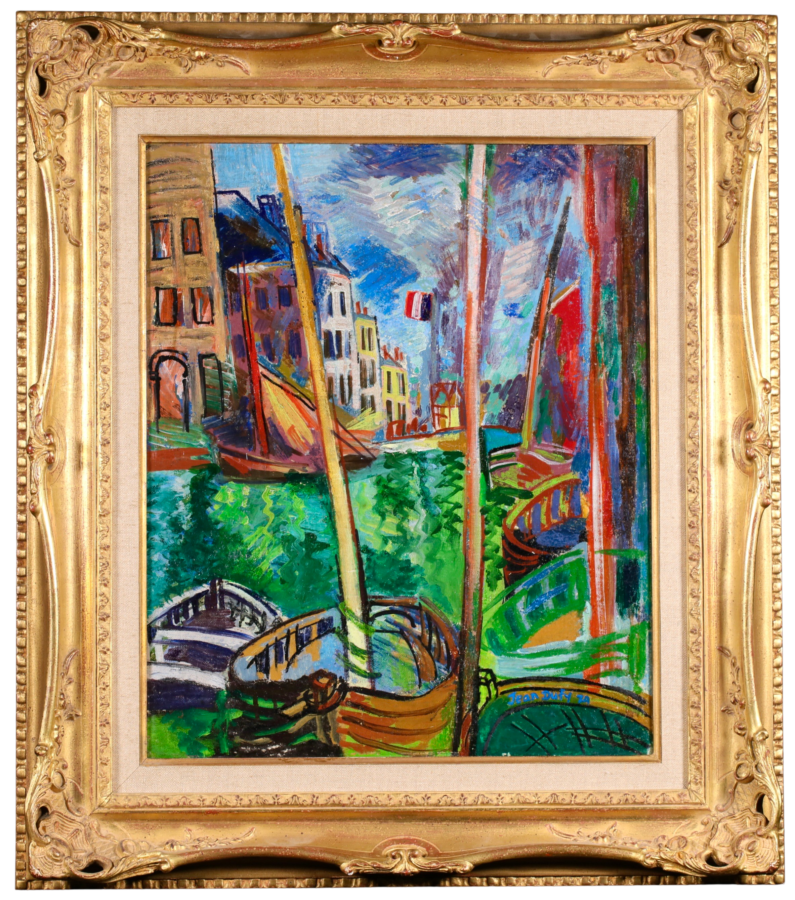
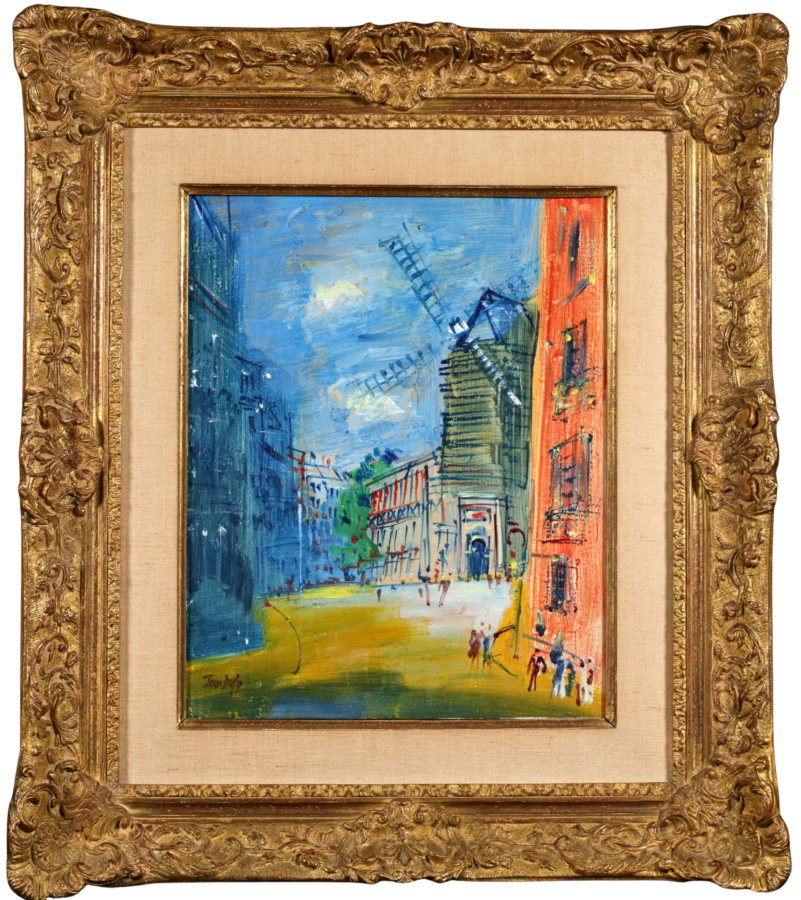
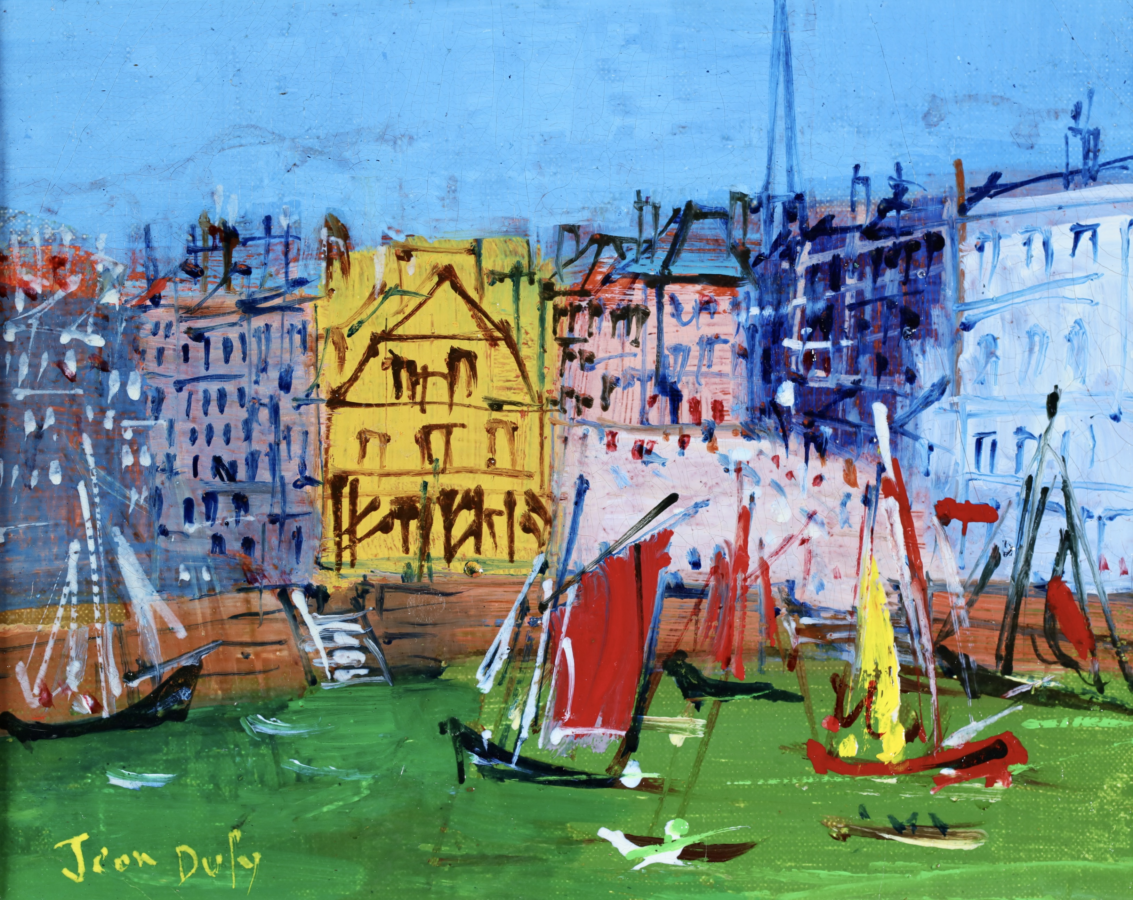
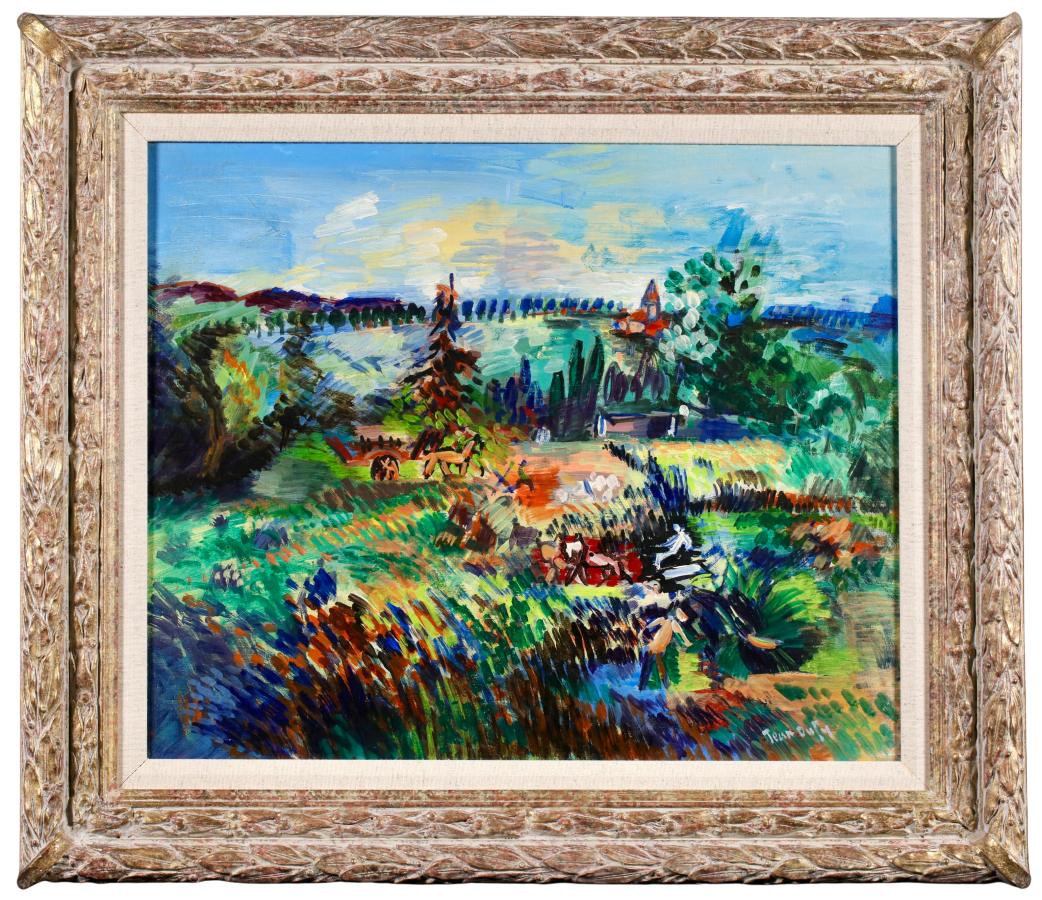
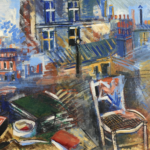
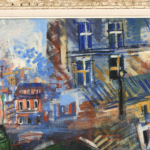
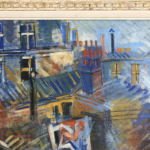
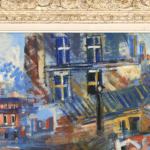
This is one of the most ambitious compositions in Jean Dufy's output — a painting that collapses the boundary between interior and exterior, between the painter's own table and the rooftops of Paris beyond, into a single continuous world of colour and form. Books, an ashtray, a matchbox, a chair — the objects of a working studio — occupy the foreground, while behind them the zinc rooftops, chimneys, windows and facades of the city stretch away under a broken blue sky. The two spaces are not separated. They flow into each other, the diagonal lines of the roofs continuing the rhythms of the table top, the blue of the Paris sky bleeding into the blue of the shadows indoors. The palette is more complex and more demanding than in Dufy's harbour or racing subjects. This is not a painting of colour for its own sake but of colour doing structural work — the ochres and greens of the rooftops, the deep blue of the window frames, the warm reds and browns of the distant buildings, all held together by the confident grey of the foreground surface. The handling is freer than it looks: individual brushstrokes are rapid and sure, the paint applied without hesitation, the whole canvas resolved with the economy of a painter who knows exactly what he is doing and has no interest in labouring the point. Dated 1948 — the same year as the Honfleur harbour paintings — this canvas shows a different, more introspective Dufy: the painter alone in his studio, looking outward at the city he loved, making it his own in the only way that mattered to him. The authenticity of this work has been confirmed by Jacques Bailly, the leading authority on Jean Dufy's output, and it will be included in Volume III of the catalogue raisonné of his work — the definitive scholarly record. It comes from the collection of Richard H. Zinser, a distinguished American collector of French modern art. Jean Dufy (1888–1964) was born in Le Havre and spent his career in Paris among a circle that included Braque, Picasso and Apollinaire. His work is held in the Musée National d'Art Moderne at the Centre Pompidou in Paris, the Museum of Modern Art in New York and the Albertina in Vienna.

Be the First to Know

Love the work of Jean Dufy?

Sign up to receive notifications when new artworks by Jean Dufy are added to our collection.

    Jean Dufy Biography

    View full artist profile

    Jean Dufy came from a family of nine children brought up in an artistic and, especially, musical environment. By the age of 14, Dufy was painting stage sets for family plays; his talents were recognised and nurtured by his older brother Raoul and the latter's friend Othon Friesz. He enrolled at the college of fine arts in Le Havre, where Raoul, Friesz and Georges Braque had also studied, but he abandoned his studies early on and moved to Paris to be with his brother who ultimately proved to be his mentor. He travelled extensively in Western Europe and North Africa. He served in a cavalry regiment during World War I, but by 1920 he was back in Paris, where he exhibited examples of his painting at the Salon d'Automne, of which he was already a member. He produced designs for the silk factories in Lyons and for the porcelain works in Limoges.

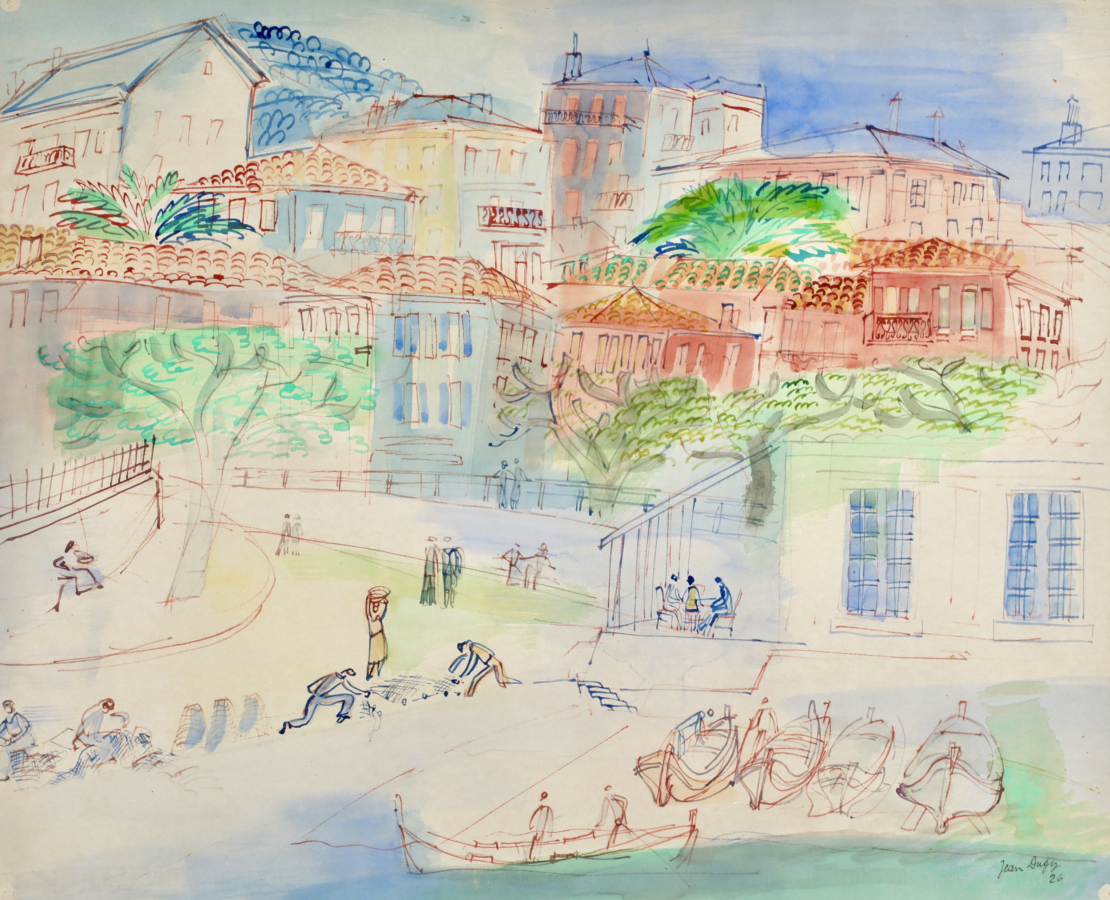
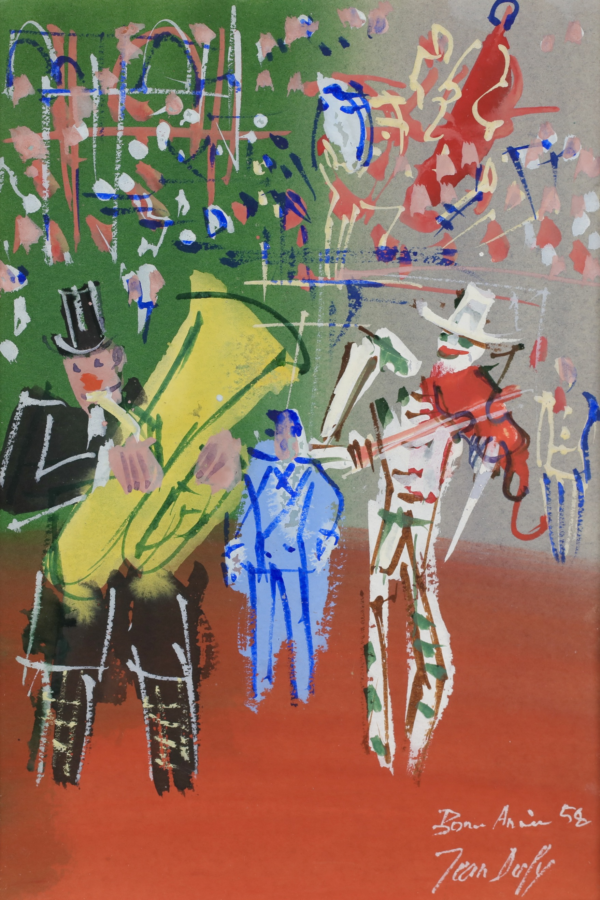
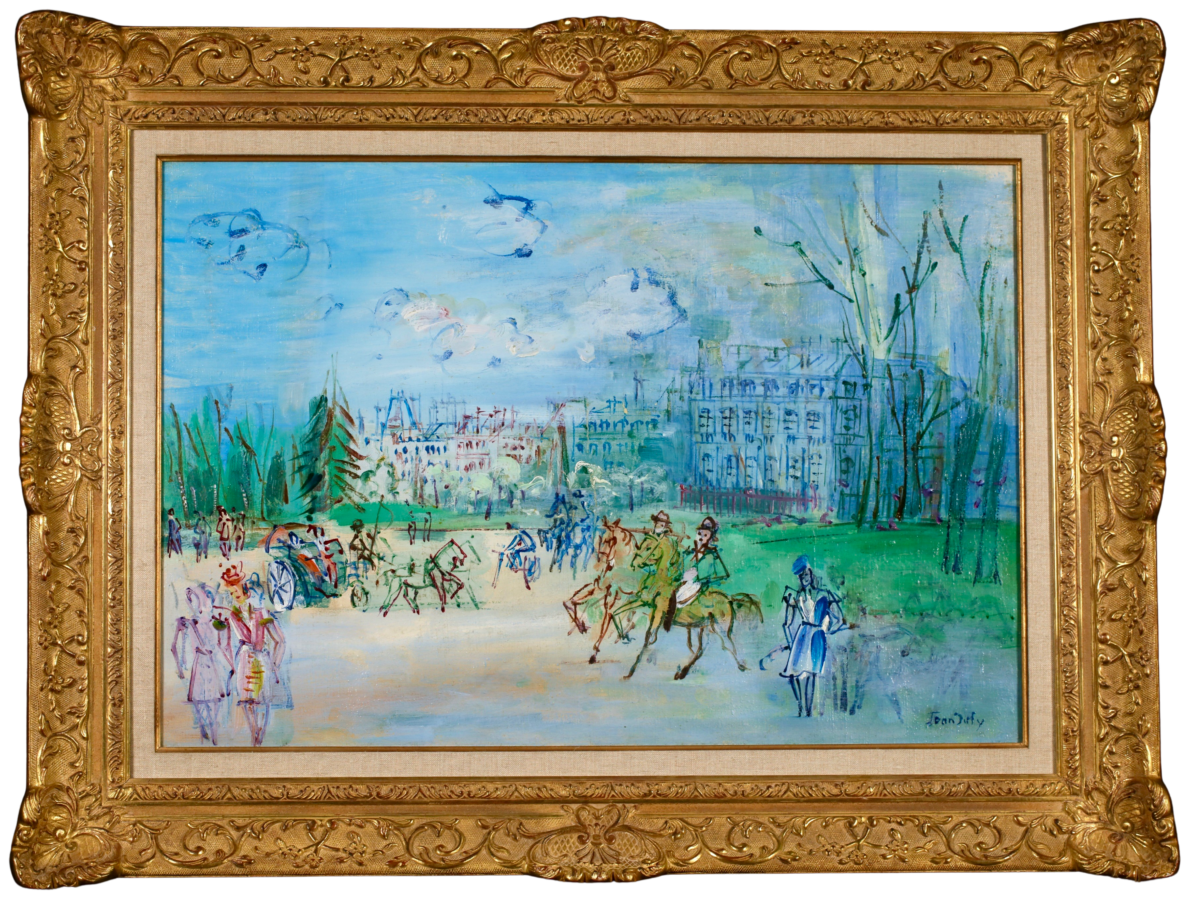
    Dufy painted in oils, watercolours and occasionally Indian ink. Inevitably, his body of work is compared to that of his brother Raoul and, as far as choice of subject matter is concerned, they are often similar: views of Paris and other French cities, circus scenes, horse races, beach scenes, orchestras and the like. Jean Dufy's orchestra scenes have proved particularly useful in identifying his artistic signature compared with that of his brother Raoul, of whom it has frequently been said that he painted in a lively 'staccato' style, whereas Jean (himself a gifted classical guitarist and jazz musician) painted in a style that was smoother and more fluent, using deep blues interspersed with reds and greens, with points of yellow creating the effects of light. His purpose was to capture the overall impact of a scene rather than its uniqueness and individuality. He spent many years in the comparative seclusion of his farm near Nantes on the River Loire, where he painted canvases that exhibit a freshness and enthusiasm that he clearly shared with his more famous brother.

    A Jean Dufy retrospective was held at the Reine Gallery in New York in 1966, two years after his death.

    Response in
    3 Hours

    Our specialist team aims to respond to all inquiries within 3 hours during our opening hours.

    Google Logo REVIEWS.io Logo

    Client Satisfaction
    Guarantee

    Boasting over 200 five-star reviews across Google, 1stDibs, and REVIEWS.io.

    1stDibs Logo

    Platinum
    Seller

    Recognized as an experienced seller who consistently exceeds customer expectations.

    Member since 2016 with over 100 five-star reviews.

    Two Decades
    of Expertise

    Leighton Fine Art brings over two decades of experience in the fine art industry.

    Share on social media

    A2A - Logo Facebook - Logo Facebook Messenger - Logo X - Logo LinkedIn - Logo Email - Logo WhatsApp - Logo