Jean Dufy

( 1888 - 1964 )

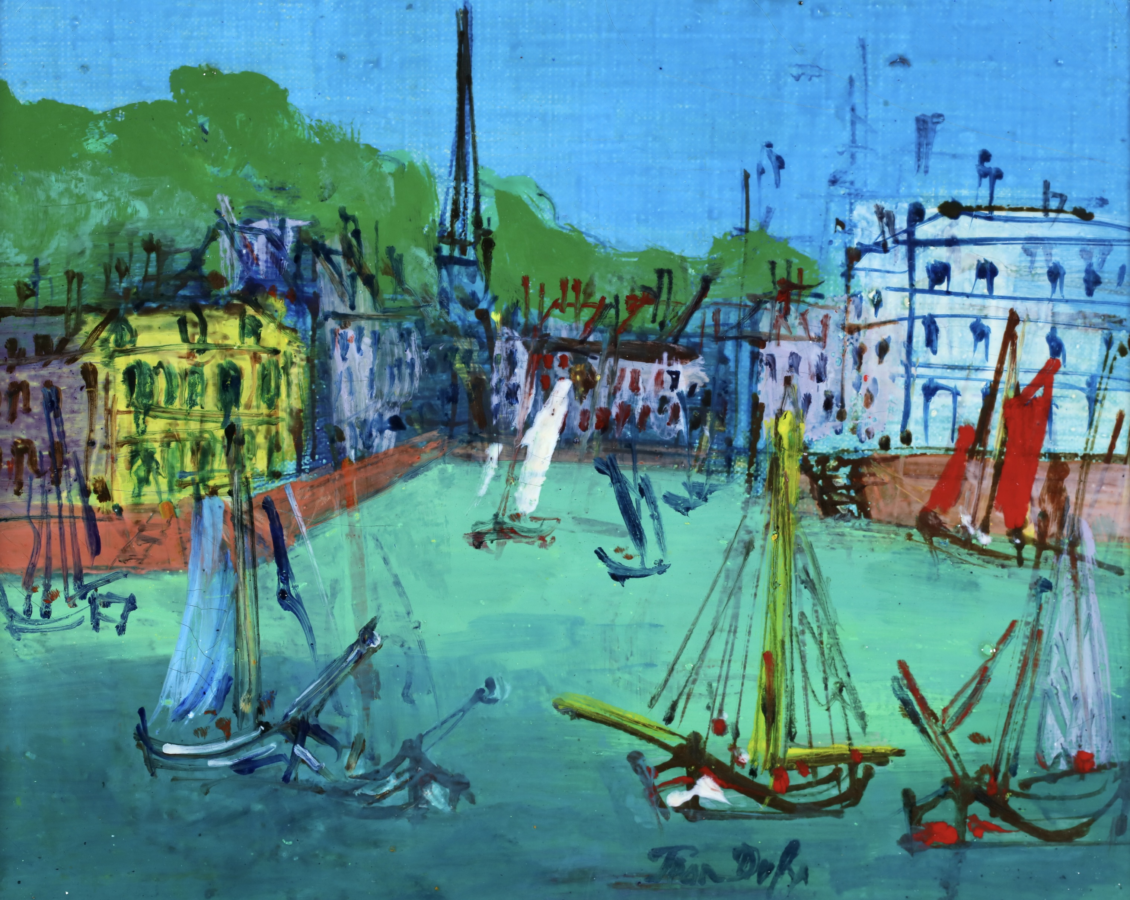
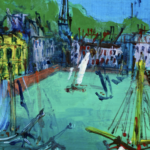
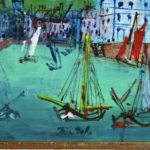
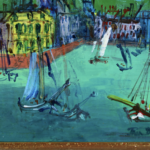
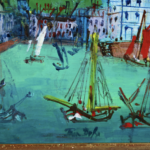
Bateaux des Pecheurs – Honfleur

Jean Dufy

( 1888 - 1964 )

Bateaux des Pecheurs – Honfleur

  • Medium: Oil on canvas

  • Signed: Signed

  • Size: 7.50" x 9.50" (19.1cm x 24.1cm)

  • Framed Size: 16.00" x 18.00" (40.6cm x 45.7cm)

  • Dated: c. 1946

£26,800.00
GBP

Image download 1Image download 2Image download 3Image download 4Image download 5Image download 6Image download 7Image download 8Image download 9Image download 10Image download 11Image download 12 Download all Images

Additional information

  • Condition: Very good conditionition

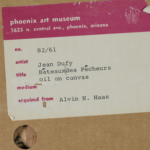
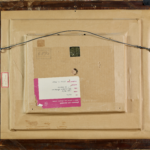
  • Provenance: The Cleveland Museum of Art
    The Phoenix Art Museum
    The Collection of Alvin H. Haas
    Findlay Galleries - Chicago

About this painting

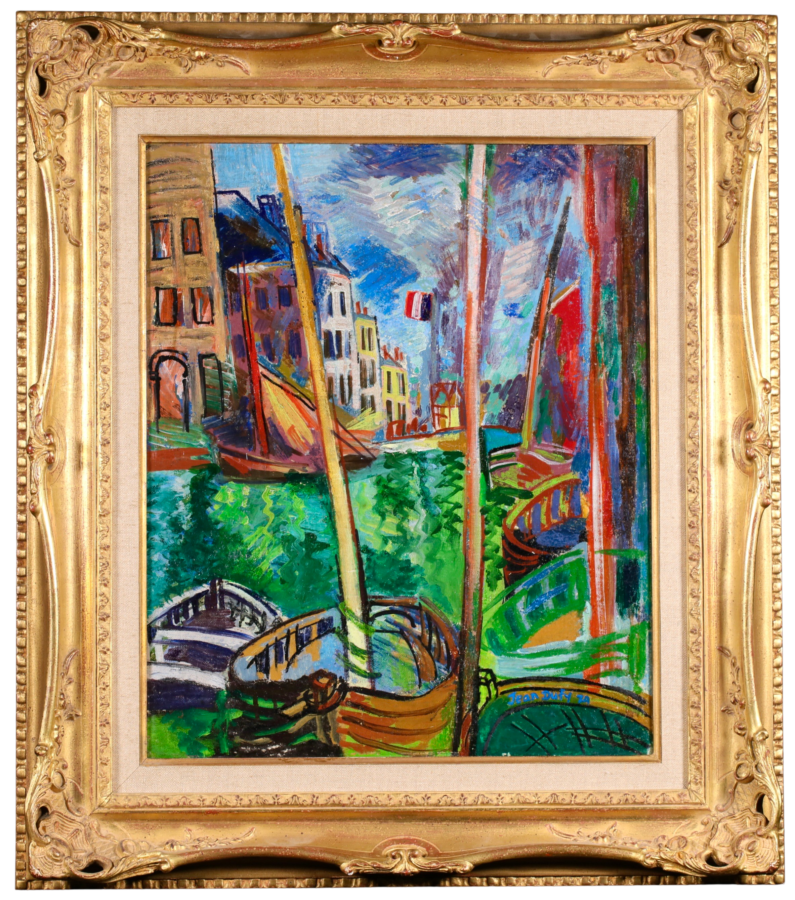
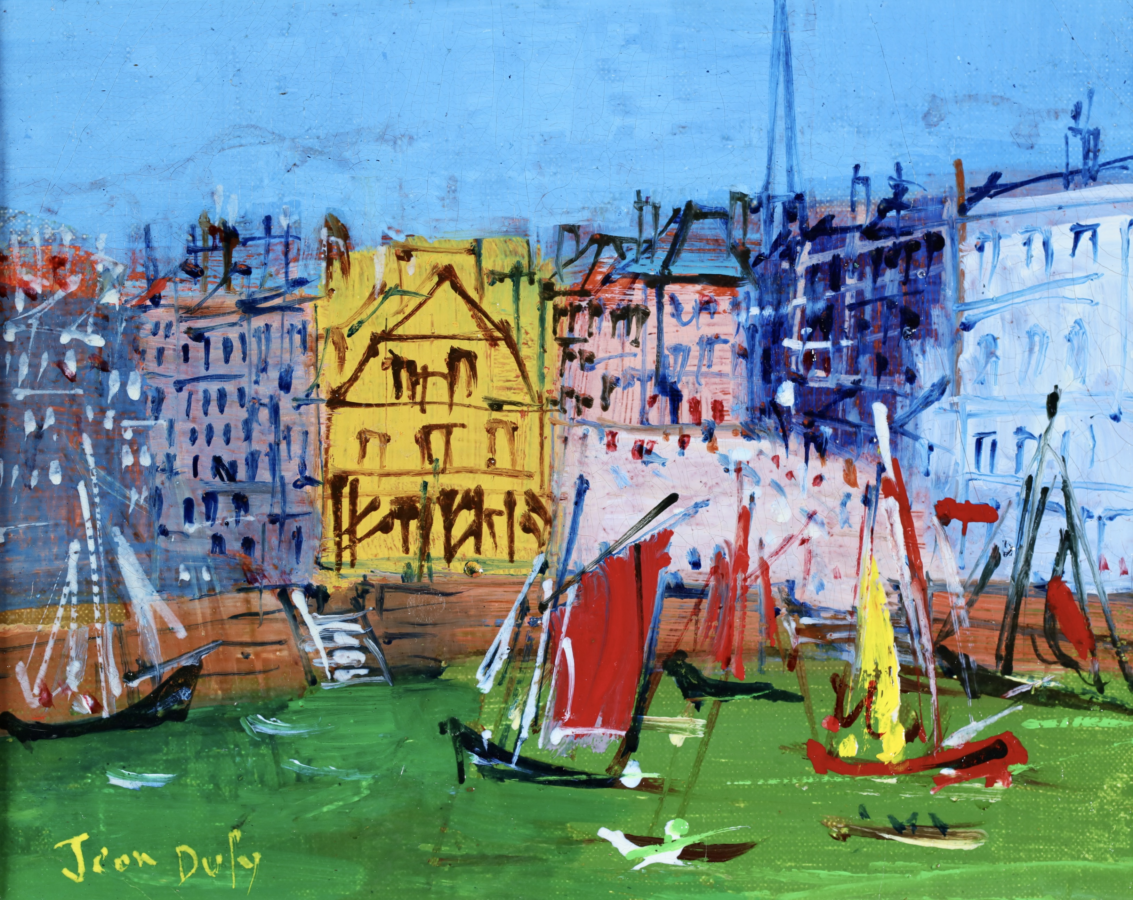
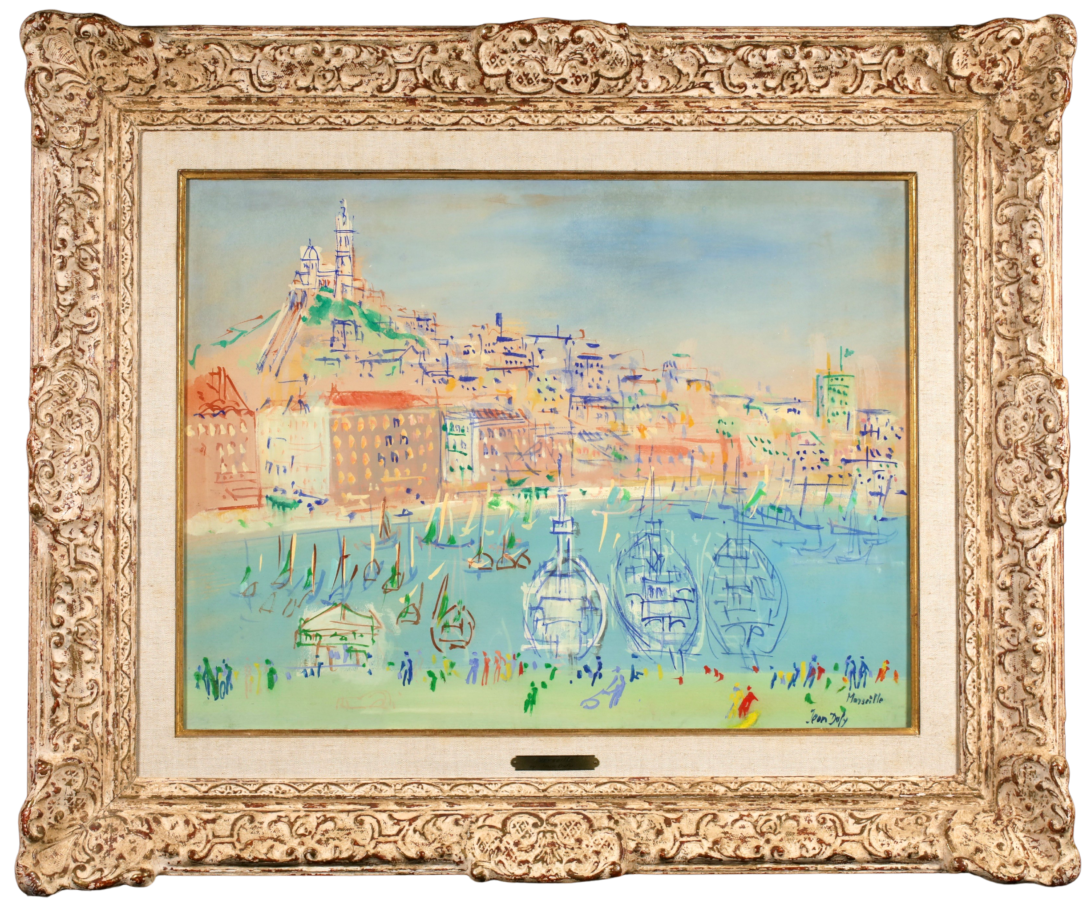
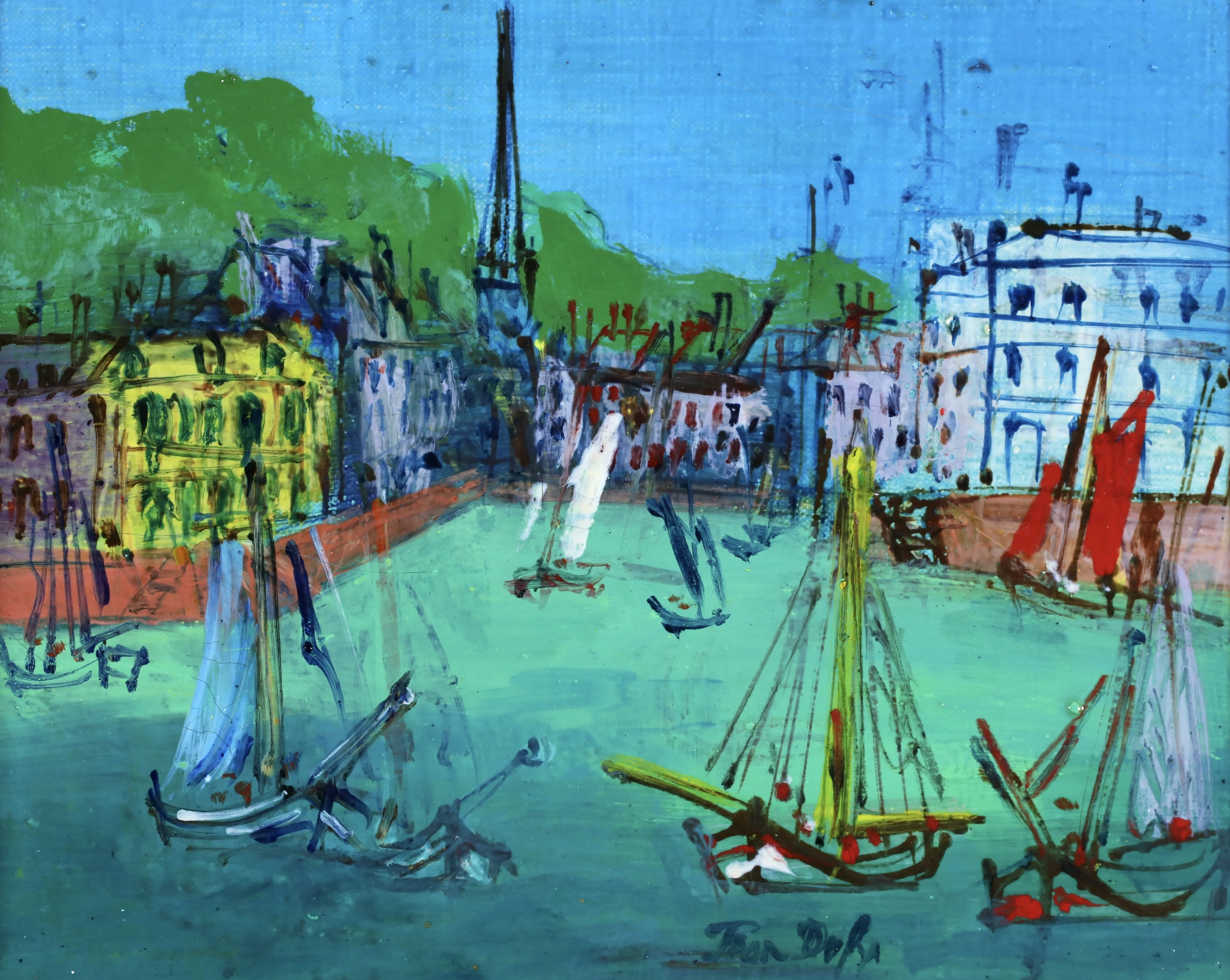
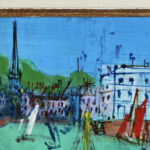
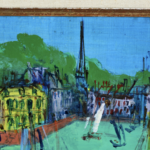
Honfleur has been painted by almost every significant French artist since Boudin set up his easel on the quayside in the 1850s. Monet grew up there. Courbet painted it. Jongkind, Sisley, Pissarro — all of them came. By the time Jean Dufy arrived in 1946 the harbour was one of the most painted subjects in French art, which makes what he does with it all the more remarkable. This is not a painting of Honfleur as anyone had seen it before. The palette is electric. The harbour water is an intense flat turquoise — not the grey-green of the Norman estuary but something closer to the Mediterranean, pushed to a register that has no interest in meteorological accuracy and every interest in visual exhilaration. Against it the fishing boats are rendered in rapid calligraphic strokes — masts indicated with a single line, hulls suggested rather than described, the rigging a web of dark marks laid over the luminous ground with complete confidence. The buildings behind the quay are handled with the same freedom: yellow, white, blue and pink, their architectural details dissolved into colour and mark. 1946 is a significant date. Paris had been liberated two years earlier, and there is something in the mood of this canvas — the brightness of the colour, the energy of the handling, the sense of joy in the act of painting — that belongs to that particular moment of release. Dufy was fifty-eight and at the height of his powers. The provenance of this work is exceptional. It passed through the collections of the Cleveland Museum of Art and the Phoenix Art Museum before entering the private collection of Alvin H. Haas, and was subsequently handled by Findlay Galleries in Chicago — one of the most respected dealers in French modern art in the United States. A painting with this history has been seen, assessed and valued by some of the most discerning eyes in the American museum world. Born in Le Havre in 1888 — just along the Normandy coast from Honfleur — Jean Dufy spent his career in Paris among a circle that included Braque, Picasso and Apollinaire. His work is held in the Musée National d'Art Moderne at the Centre Pompidou in Paris, the Museum of Modern Art in New York and the Albertina in Vienna.

Be the First to Know

Love the work of Jean Dufy?

Sign up to receive notifications when new artworks by Jean Dufy are added to our collection.

    Jean Dufy Biography

    View full artist profile

    Jean Dufy came from a family of nine children brought up in an artistic and, especially, musical environment. By the age of 14, Dufy was painting stage sets for family plays; his talents were recognised and nurtured by his older brother Raoul and the latter's friend Othon Friesz. He enrolled at the college of fine arts in Le Havre, where Raoul, Friesz and Georges Braque had also studied, but he abandoned his studies early on and moved to Paris to be with his brother who ultimately proved to be his mentor. He travelled extensively in Western Europe and North Africa. He served in a cavalry regiment during World War I, but by 1920 he was back in Paris, where he exhibited examples of his painting at the Salon d'Automne, of which he was already a member. He produced designs for the silk factories in Lyons and for the porcelain works in Limoges.

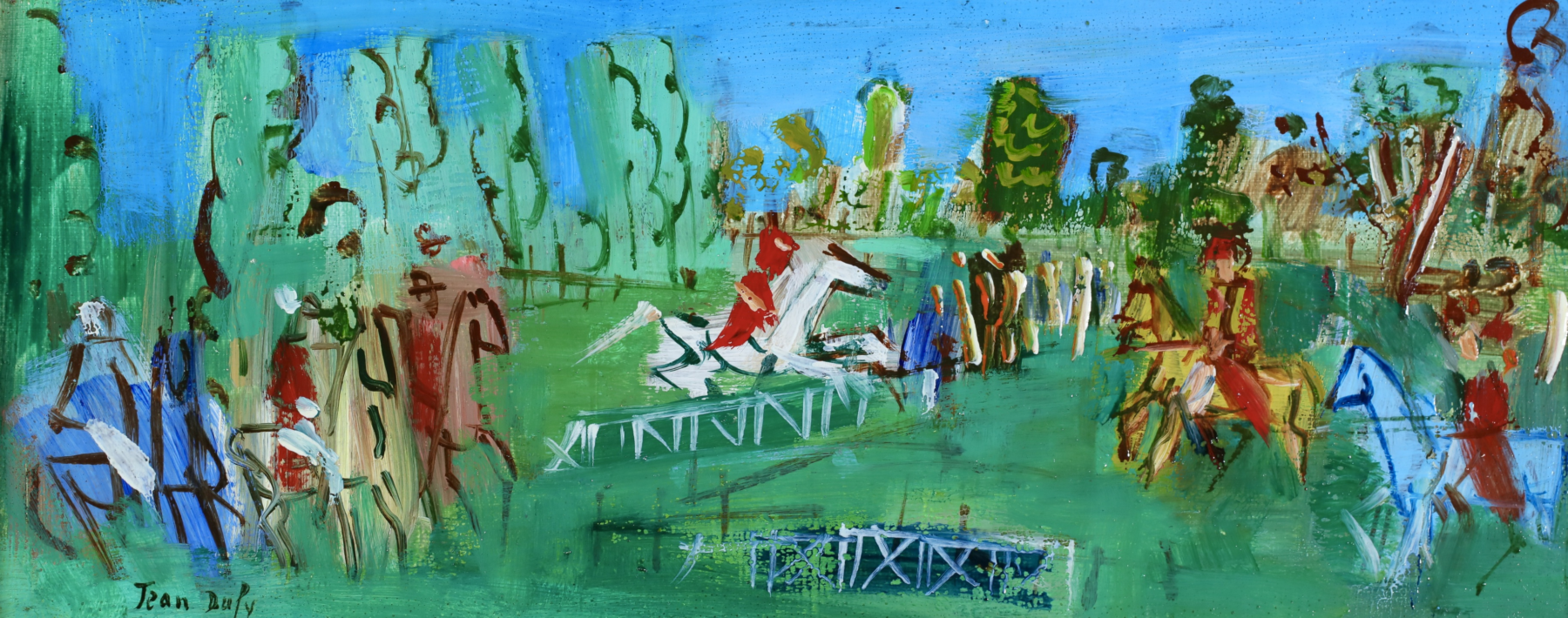
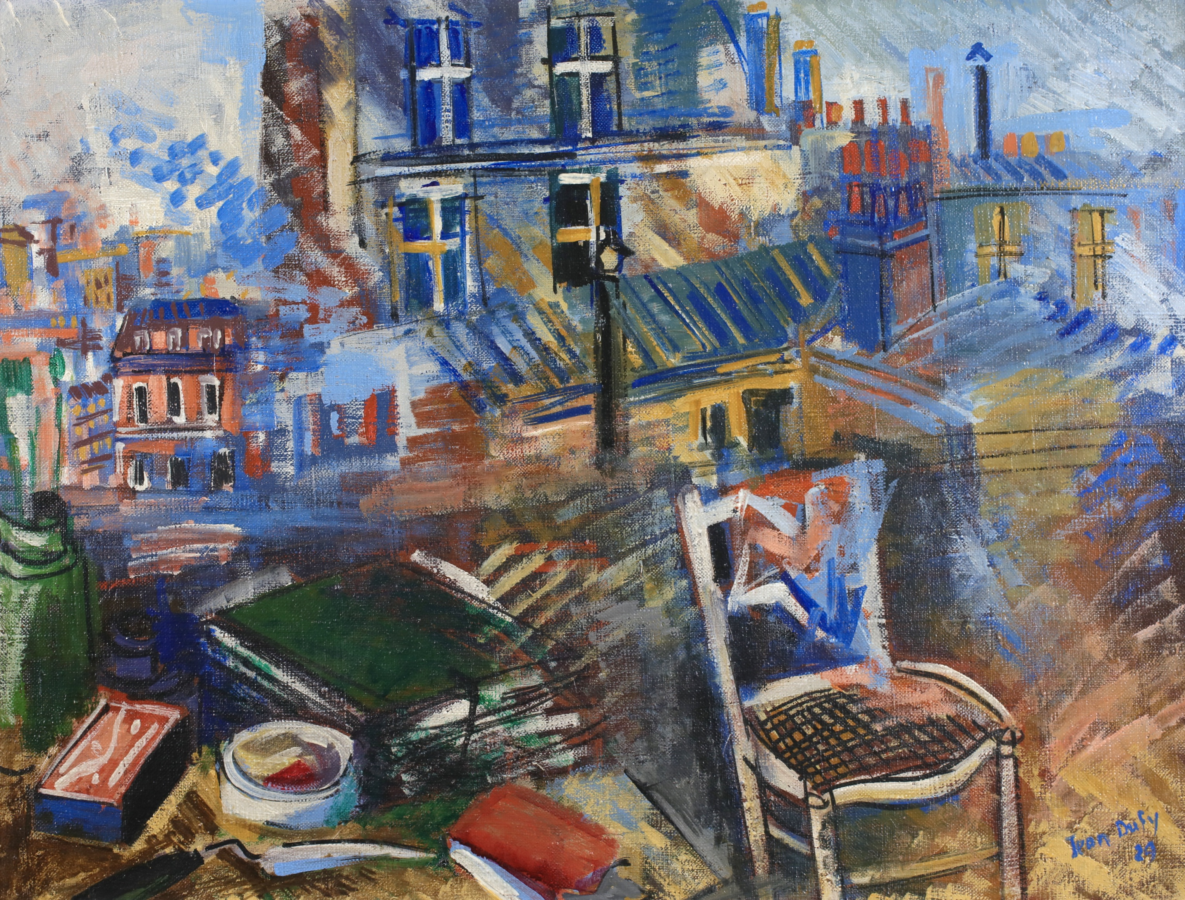
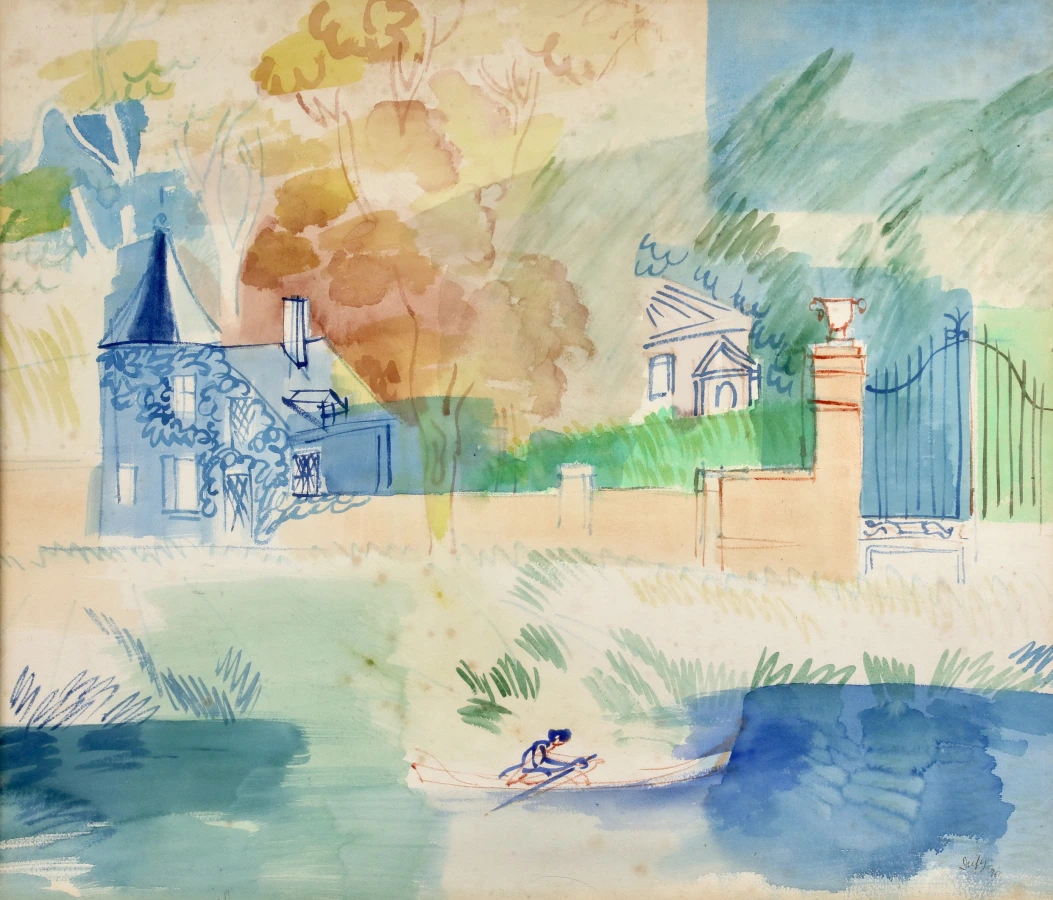
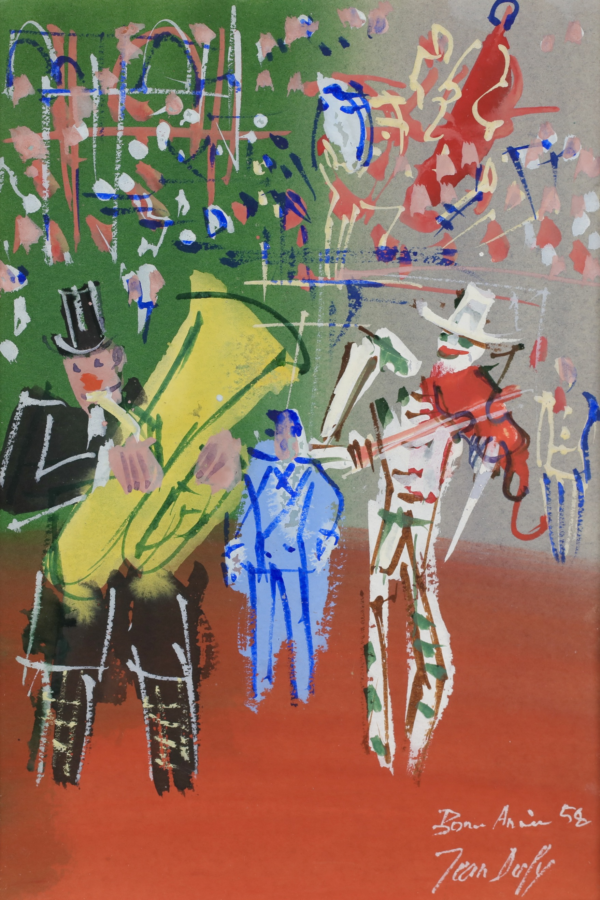
    Dufy painted in oils, watercolours and occasionally Indian ink. Inevitably, his body of work is compared to that of his brother Raoul and, as far as choice of subject matter is concerned, they are often similar: views of Paris and other French cities, circus scenes, horse races, beach scenes, orchestras and the like. Jean Dufy's orchestra scenes have proved particularly useful in identifying his artistic signature compared with that of his brother Raoul, of whom it has frequently been said that he painted in a lively 'staccato' style, whereas Jean (himself a gifted classical guitarist and jazz musician) painted in a style that was smoother and more fluent, using deep blues interspersed with reds and greens, with points of yellow creating the effects of light. His purpose was to capture the overall impact of a scene rather than its uniqueness and individuality. He spent many years in the comparative seclusion of his farm near Nantes on the River Loire, where he painted canvases that exhibit a freshness and enthusiasm that he clearly shared with his more famous brother.

    A Jean Dufy retrospective was held at the Reine Gallery in New York in 1966, two years after his death.

    Response in
    3 Hours

    Our specialist team aims to respond to all inquiries within 3 hours during our opening hours.

    Google Logo REVIEWS.io Logo

    Client Satisfaction
    Guarantee

    Boasting over 200 five-star reviews across Google, 1stDibs, and REVIEWS.io.

    1stDibs Logo

    Platinum
    Seller

    Recognized as an experienced seller who consistently exceeds customer expectations.

    Member since 2016 with over 100 five-star reviews.

    Two Decades
    of Expertise

    Leighton Fine Art brings over two decades of experience in the fine art industry.

    Share on social media

    A2A - Logo Facebook - Logo Facebook Messenger - Logo X - Logo LinkedIn - Logo Email - Logo WhatsApp - Logo