Further Images
| Medium | Oil on canvas |
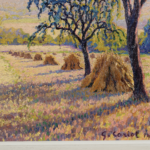
| Signed | Signed & dated lower right |
| Size | 15.00" × 18.00" (38.1cm × 45.7cm) |
| Framed Size | 22.00" × 25.00" (55.9cm × 63.5cm) |
| Dated | 1913 |
| Condition | Very good condition |
| Provenance | Private collection - Alpes Maritime |
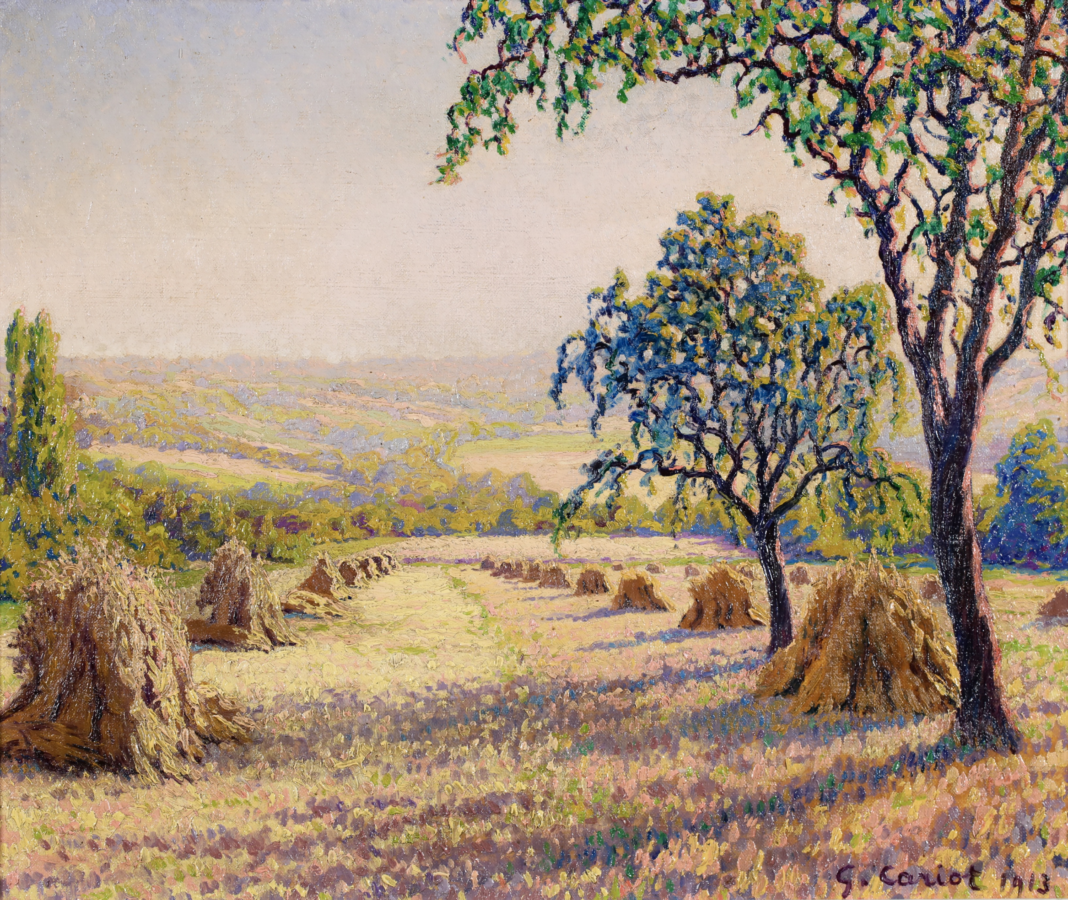
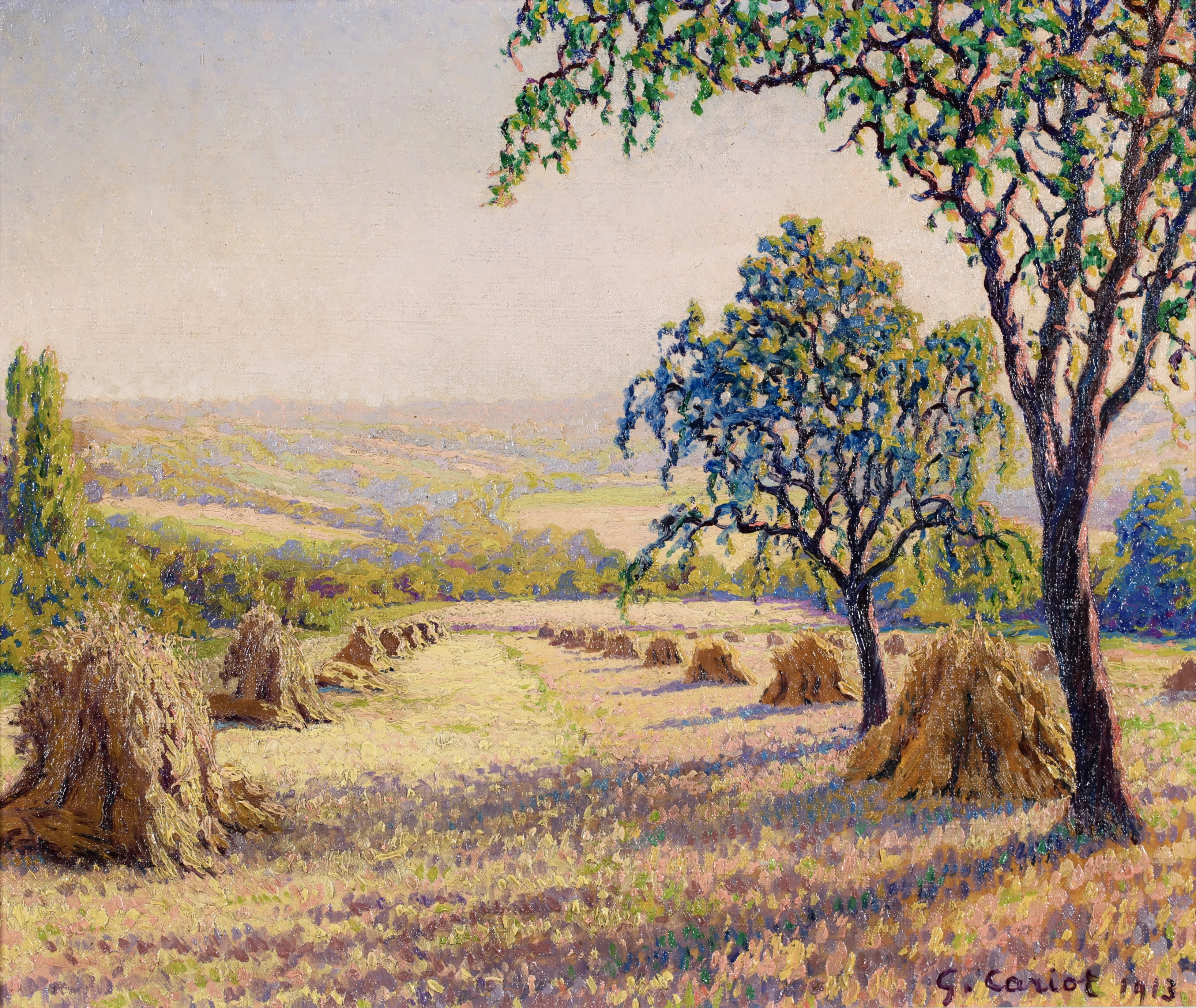
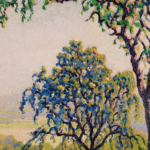
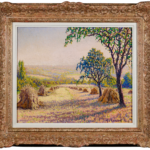
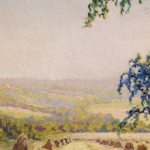
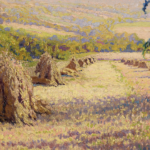
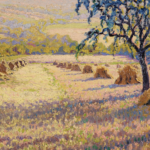
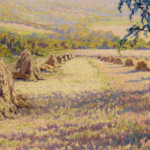
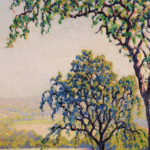
| About this Painting | A harvest field in full summer — sheaves of cut wheat gathered into stooks across the pale gold of the stubble, two trees against a luminous sky, the hills receding into blue haze beyond. Gustave Cariot (1872–1950) painted this canvas in 1913, and it places him in direct conversation with the great tradition of the harvest subject in French painting — Monet's haystacks most obviously, but also Pissarro's field workers and the rural subjects that the Impressionists had established as the central territory of plein-air painting. The palette is characteristic of Cariot at his most accomplished. The gold and ochre of the sheaves, the shadows falling in violet and mauve across the stubble, the vivid blue-green of the foliage, the warm pink of the tree trunk in afternoon light — every colour pushed slightly beyond what strict observation would require, heightened in the manner of a painter who had absorbed the lessons of Divisionism without surrendering to its system. The brushwork is varied and energetic: short, varied strokes in the foreground stubble that catch the light differently from every angle, looser and more fluid in the distance where the hills dissolve into atmosphere. Cariot was born in the Marais district of Paris in 1872, the son of a luggage maker who expected him to join the family business. He refused, and spent his career as a largely self-taught painter who never quite aligned himself with any single movement despite being drawn repeatedly to the techniques and subjects of the Neo-Impressionists. He was fascinated by Monet's series paintings — the haystacks, the Rouen Cathedral — and shared that ambition to document a single subject across changing light and season. He exhibited regularly at the Salon des Artistes Indépendants, the Salon d'Automne and the Salon National des Beaux-Arts, and in 1909 showed with La Société Moderne alongside Emmanuel de la Villéon at the Galeries Durand-Ruel in Paris. His work is held in several French public collections. |
SOLD