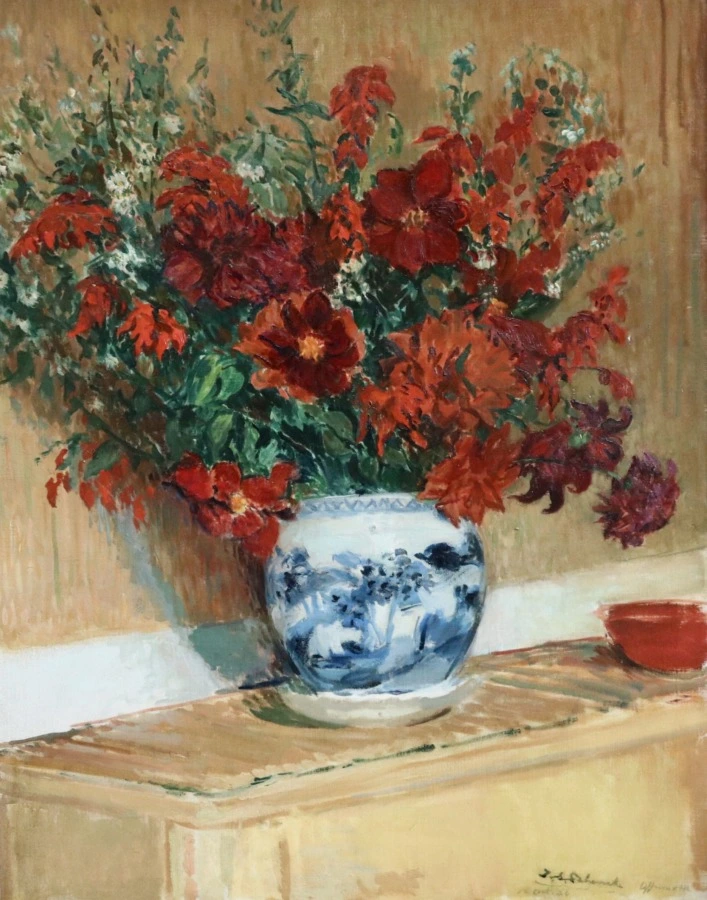
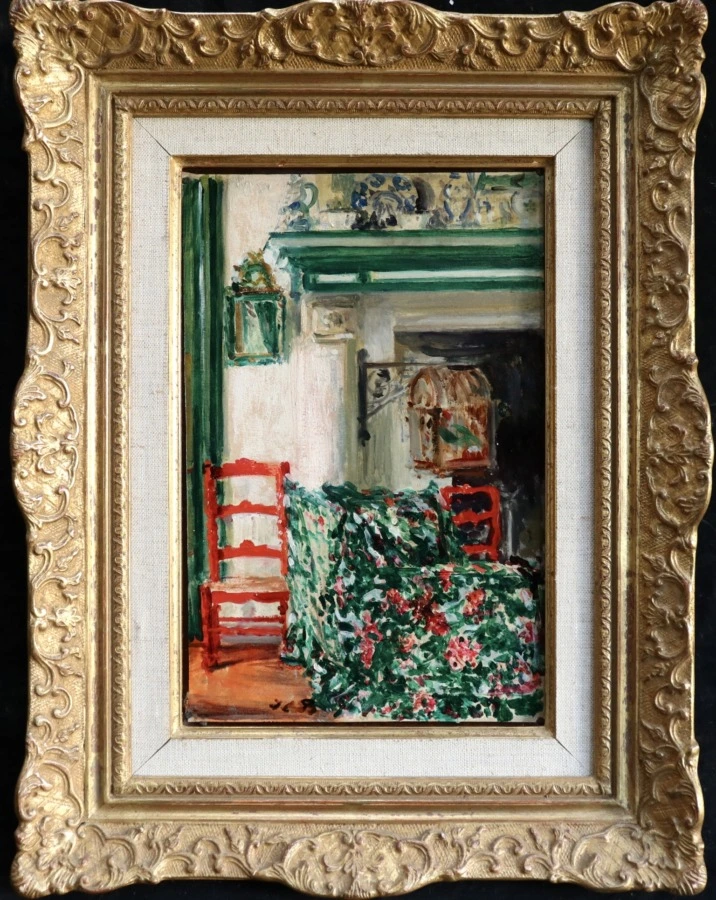
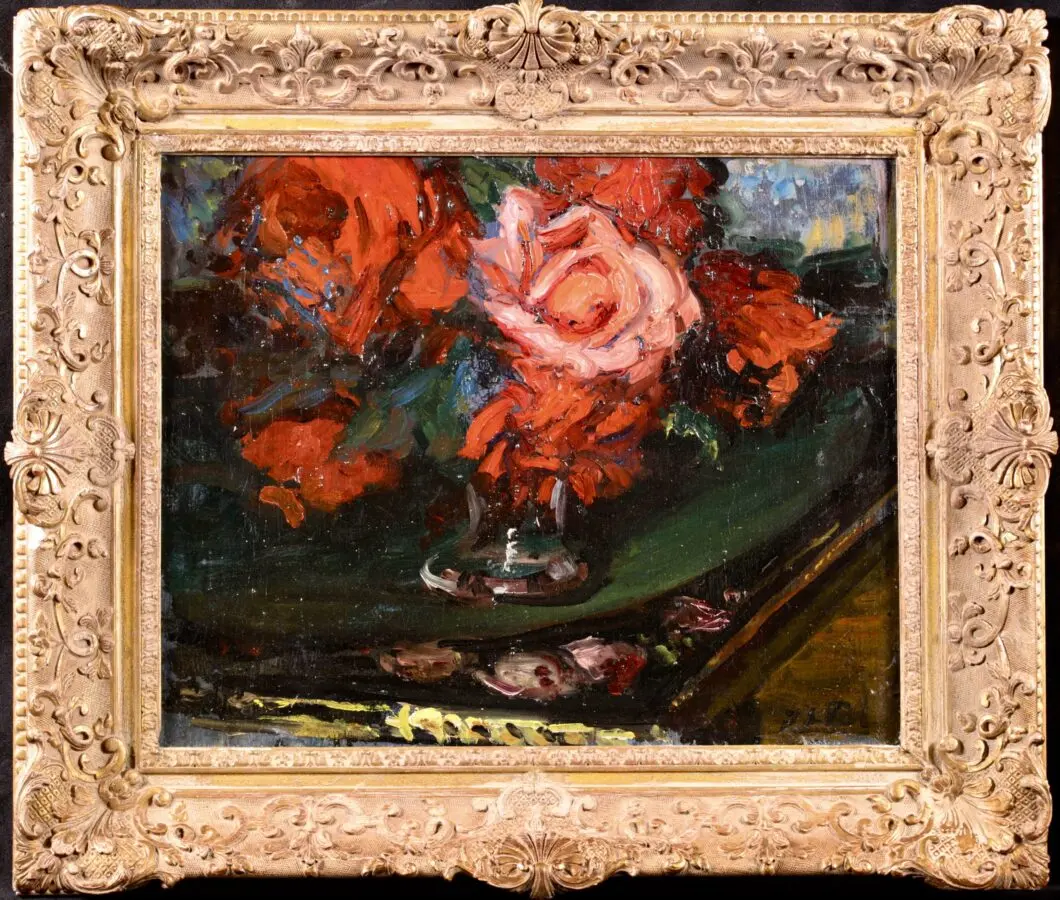
Jacques Emile Blanche Paintings for Sale
Jacques Emile Blanche received training from Gervex and Fernand Humbert. His grandfather was Émile Antoine Blanche, the psychiatrist who treated the poet Gérard de Nerval on several occasions. He was awarded a gold medal at the Exposition Universelle in Paris in 1900, and was a Commander of the Légion d'Honneur. He was well known in French and British artistic circles, and married the daughter of John Lemoine, the leader of the Diary of the Proceedings ( Journal des Débats), and author of the Life of Brummel. He exhibited his works in London and Paris.
Jacques Emile Blanche had a wide circle of acquaintances, and the list of portraits which he executed is indicative of the diversity of those who used to meet at his home: Henri Bergson; Stéphane Mallarmé; Henry Bernstein (1902); André Gide (1912); Anna de Noailles (1912); Jean Cocteau (1912); Igor Stravinsky (1915); Francis Jammes (1917); Paul Claudel (1919); Jean Giraudoux; Paul Valéry; Marcel Proust; Max Jacob (1921); Maeterlinck (1931); Debussy; Antoine Bourdelle; George Moore; André Maurois; François Mauriac; Maréchal Foch and the Princess de Broglie.
He also wrote novels, which were more or less autobiographical, and essays, such as From David to Degas; Dates; From Gauguin to the Negro Review; Journals of an Artist ( De David à Degas; Dates; De Gauguin à la Revue nègre; Cahiers d'un artiste) in six volumes, and Manet. During meetings at his studio, he used to collect any snippets that would flesh out the essays he wrote, which alternated between being sharp and emotive. He gave them in series to the magazine Comoedia, under the title of Studio Talk. It was said that he aroused tremendous debate, notably with André Lhote, a painter younger than himself, who also doubled as a critic. The latter initially attempted to define the main characteristics of the art of the 'rebellious and charming Jacques Émile Blanche,' but subsequently treated him less generously, referring to a painter 'attached to the notion of 'high-and-mighty' genre painting.' He added that this sort of painting was marvellously illustrated by Manet.
The quality of his flat surfaces, the precious greys and silvery light effects cause Jacques Émile Blanche to be compared more with Manet, whom he admired, than with the Impressionists, with whom he was compared in terms of his early works. Nevertheless, his outdoor backgrounds with traces of sometimes vivid colours have something in common with them.
In the aftermath of World War I, he spent a long time on an enormous composition entitled Tribute to those who Died in the War. It was executed in a style which was totally different to his work as a whole. He offered this work to the church in Offranville near Dieppe. He also donated around 100 of his works to the Musée des Beaux-Arts in Rouen.
Jacques Emile Blanche regularly exhibited in Paris, at the Salon of the Société Nationale des Beaux-Arts (also known as the Salon de Mars) from the time it was founded in 1890. At the time of the initial exhibitions held by the Société Nationale des Beaux-Arts, he rapidly gained fame by exhibiting such portraits as Paul Adam and Charles Cottet. He sometimes grouped together several members of the same family in one painting: The Painter Thaulow and His Family in 1895, The Vielé-Griffin Family, and numerous refined portraits of key figures in France and England.
Apart from this Salon, for which he was one of the first driving forces and founder members, he was later to put in a great deal of effort on the occasion of the Salon des Tuileries between 1933 and 1939, even though he was by then in his seventies and already famous.
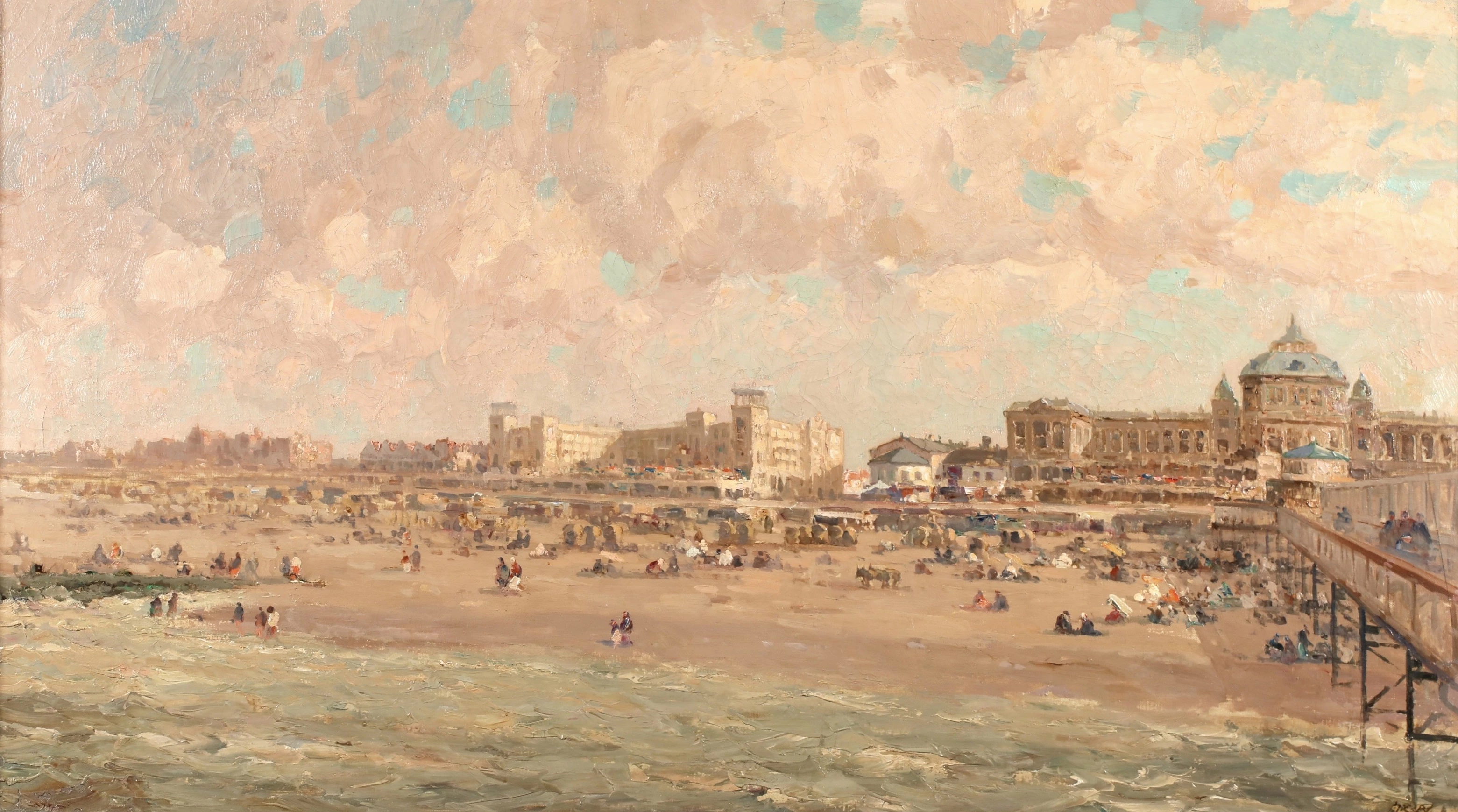
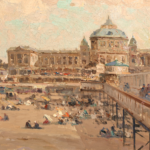
He exhibited genre scenes, scenes of fashionable places - like Brighton or Dieppe - and racecourse scenes at the Salon des Tuileries in 1933. These included Family of Pedlars in London; Portrait of the Female Novelist Sylvia Thompson; Racecourses in Ireland; Arrival of the Herring in Dieppe; White Masts; Brighton; in 1934: Portrait of James Joyce; Grand National Steeplechase; Spring Races in England (sketch); Dieppe Beach; Outer Harbour of Dieppe in Autumn; in 1935: Rugby; Walter Richard Sickert; Dieppe; Tea Party at the Madeleine; in 1939: Love Thy Neighbour. Many exhibitions have been dedicated to him since his death, including one at the Musée des Beaux-Arts in Rouen in 1997, and one at the Galerie Philippe Heim in Paris in 1999.
Museum and Gallery Holdings
Brussels: Portrait of the French Painter Charles Cottet
Dieppe: Sleeping Child; Fish Week
Dijon: General Mangin; The Sailing Ship
London (Tate Collection): Francis Poictevin (1887, oil on canvas, portrait); Charles Conder (1904, oil on canvas, portrait); Ludgate Circus: Entrance to the City (November, Midday) (c. 1910, oil/panel); August Morning, Dieppe Beach (c. 1934, oil on canvas); other paintings
Lyons: Portrait of Debussy
Mulhouse: Begonias
Paris (Louvre): The Painter Thaulow and his Family (1895)
Paris (MAM): The Pink Room; The Port at Le Havre; Flowers in a Vase; Still-life; Portrait of the Artist's Mother (June 1895); Portrait of Igor Stravinsky
Paris (Mus. Carnavalet): Portrait of Jean Cocteau
Rouen: Little Girl in a Straw Hat (and around 100 works, including 30 or so portraits of well-known figures); Lengthened White Rose (c. 1895); Knightsbridge, the Crossroads of Brompton Road (c. 1906)
Collectors increasingly choose to buy paintings online for convenience and access to a broader selection.
Jacques Emile Blanche Paintings for Sale