Louis Anquetin

( 1861 - 1932 )

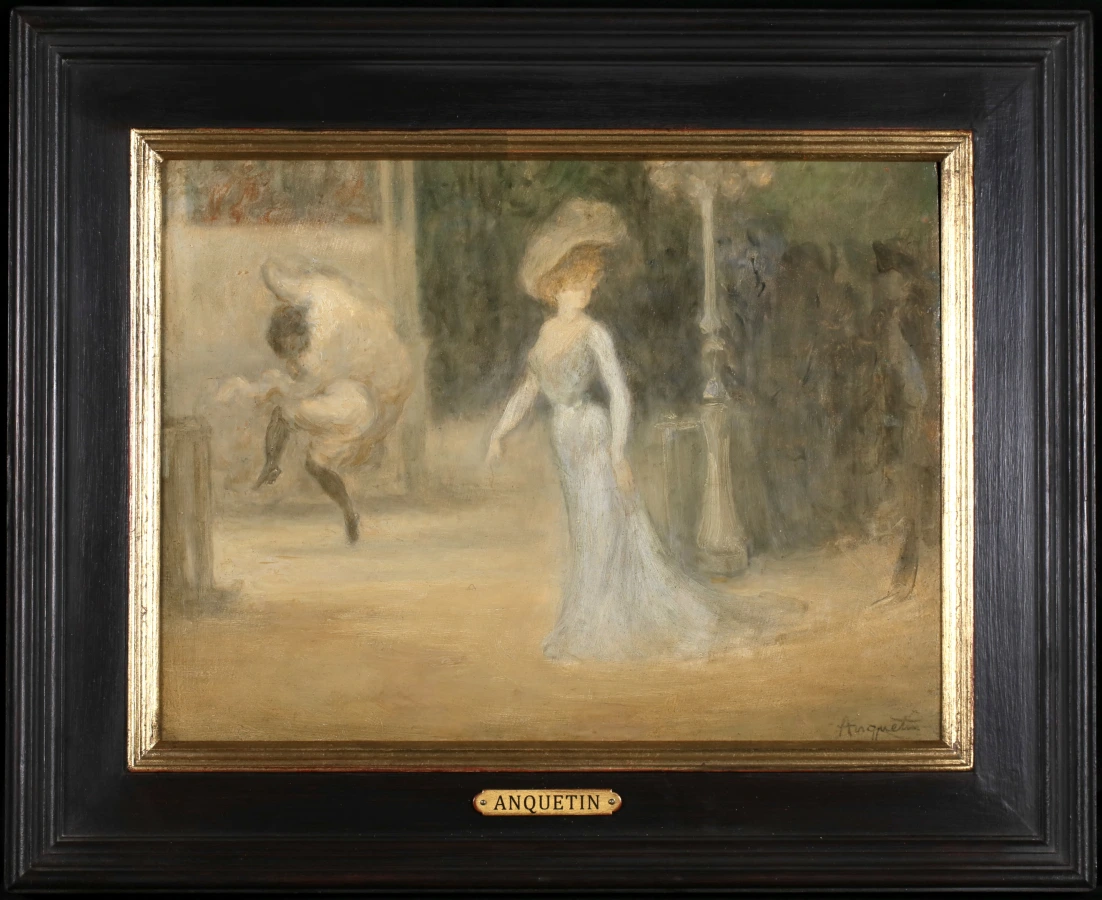
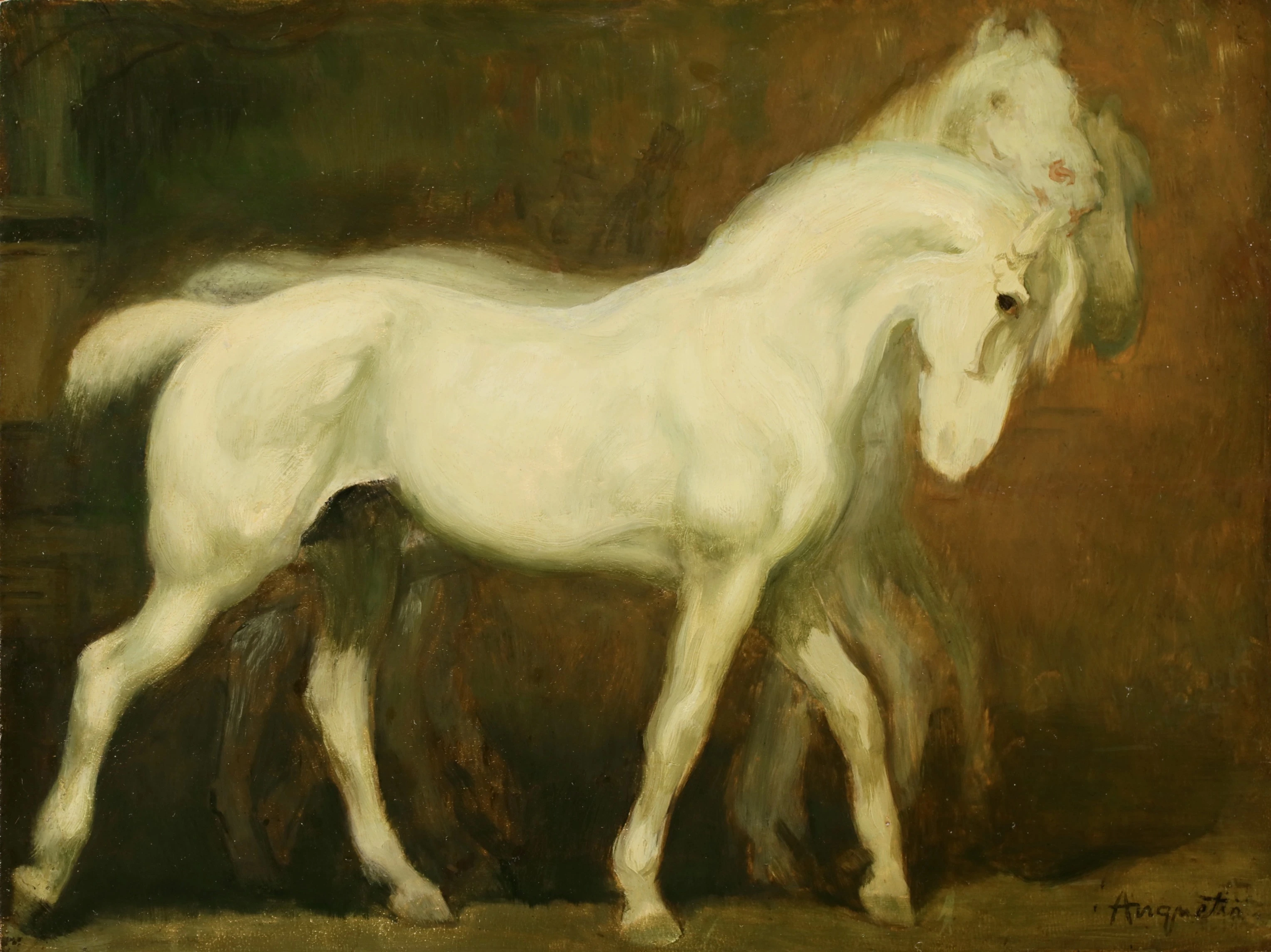
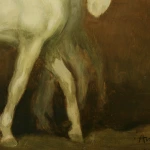
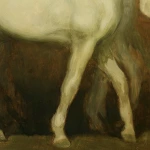
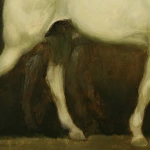
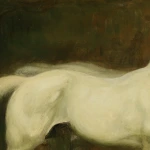
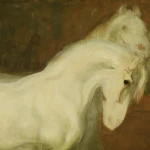
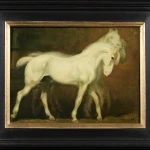
Les Trois Chevaux

Louis Anquetin

( 1861 - 1932 )

Les Trois Chevaux

  • Medium: Oil on panel

  • Signed: Signed lower right

  • Size: 10.50" x 14.00" (26.7cm x 35.6cm)

  • Framed Size: 16.50" x 20.00" (41.9cm x 50.8cm)

  • Dated: c. 1895

£6,950.00
GBP

Image download 1Image download 2Image download 3Image download 4Image download 5Image download 6Image download 7Image download 8 Download all Images

Additional information

  • Condition: Very good condition

  • Provenance: The estate of the painter
    This work is included in the catalogue raisonne of the work of Louis Anquetin under preparation by Galerie Brame et Lorenceau

Be the First to Know

Love the work of Louis Anquetin?

Sign up to receive notifications when new artworks by Louis Anquetin are added to our collection.

    Louis Anquetin Biography

    View full artist profile

    Louis Anquetin went to school in Rouen. He was given an allowance by his father, a well-off shopkeeper, to go and study painting in Paris. In 1882 he entered the free academy run by Cormon, where he was heavily influenced by the Impressionists, particularly Monet, whom he revered, but also Degas (especially his Japonist periods). Anquetin was extremely talented and made an impression on Van Gogh, who met him during his time in Paris, and Toulouse-Lautrec, a close friend who also admired his work. Some sources claim that Anquetin, Van Gogh, Toulouse-Lautrec and Émile Bernard met at Cormon's academy. Because of his great skill, Anquetin experimented with many of the techniques he encountered, perhaps at the expense of developing a real personality of his own. In 1887 the rigours of Pointillism and Seurat's theories on 'scientific Impressionism' seduced him, but not for long. In 1888 he met Émile Bernard and his friends, and discovered that they all shared an enthusiasm for the work of Gauguin, his contemporary subjects and flat areas of colour with bold outlines, which was known at the time as Gauguin's Synthetism. Artists would gather at the Café Volpini, where they also exhibited their Symbolist/Synthetist paintings. Following on from their reflections on the works of Gaugin, Bernard and Anquetin defined one aspect of his work under the term 'Cloisonnism'. The question of which of them came up with this term would later be heavily disputed.

    Anquetin exhibited at the Salon des Artistes Indépendants for the first time in 1888. In 1891 he showed his works at the gallery Le Barc de Boutteville alongside the Nabis. He exhibited at the Salon of the Société Nationale des Beaux-Arts from 1890 to 1914, and became a member in 1907. In 1892 he exhibited at the Rose+Croix Salon at the Galerie Durand-Ruel. In 1812 he participated in the Salon d'Automne, where the theme was the 19th-century portrait. Here he showed his Portrait of Monsieur Janvier in the Role of Lampourde, which was probably painted before 1900 and is perhaps the same work as his 1887 Portrait of an Actor. As a result of these official events, Anquetin received a commission from the Gobelins manufactory for a tapestry cartoon on the subject of War and Peace, and was decorated with the Légion d'Honneur. Private commissions included a ceiling painting of Rinaldo and Armida in the house of Baron Empain in Brussels, a theatre curtain for the Théâtre Antoine in Paris, which was bought by the city authorities, and decorations for the Cercle Artistique in Nice.

    In 1888 Anquetin's style was very similar to that of Émile Bernard, as can be seen, for example, in the former's Reaper in the Fields of 1886. The distinction between the two artists came with Anquetin's Portrait of an Actor and Woman in the Street. Then, in 1890, for a variety of reasons (his interest in anatomy, his desire to return to composition and grand subjects, and a quest for movement), Anquetin took to studying the 17th-century Flemish masters such as Rubens and Jordaens. He broke with the innovators for good and progressively returned to traditionalism. He was 30 at the time, and his youthful sense of adventure had gone. By 1896 he had abandoned all interest in modernity, as can be seen in his painting Fighting, which he exhibited in 1896. From that point on he permanently adopted the Rubenesque model in terms of his themes, the way that he arranged his compositions, and the details of his backgrounds and ornaments. He studied Rubens' technique in minute detail, for example Rubens' use of glazes to create transparent effects and give his colours a light, airy quality. When invited to write an essay on Rubens for the Comoedia review, Anquetin lamented the lack of interest in technique shown by his contemporaries and called for the establishment of a technique class at the École des Beaux-Arts.

    Anquetin's artistic journey followed a trajectory parallel to that of his friend Émile Bernard. Like Anquetin, Bernard suddenly abandoned his youthful exuberance for an almost obsessive return to tradition, in his case a focus on 17th-century Spanish artists like Murillo, and Bolognese painters such as the Carracci, who founded the Accademia dei Desiderosi. Was Anquetin consciously abandoning modernism, or was he simply a casualty of the public's disaffection with modern art? Whatever the reason, he ended his days a solitary misanthrope. However, his talent still sometimes shone through, particularly when he was able to tap into human reality, as with his Self-portrait and Portrait of the Actor Firmin Gémier in 'La Rabouilleuse'. The paintings are nostalgic proof of what Signac once said about Anquetin: 'If a creative spirit had only a tenth of his talent, he would produce wonders.'

    Museum and Gallery Holdings

    La Rochelle: Towers of La Rochelle
    London (Tate Collection): Girl Reading a Newspaper (1890, pastel/paper); The Finish of the Horse Race (c. 1898-1899, watercolour/board); studies
    Paris (MNAM-CCI): Racing; Child in Profile; Still-life Study; Woman in the Street; Portrait of the Marguerite Brothers; Study of a Male Nude Leaping (drawing); Bust of a Woman in Profile (pen); Cavalry Battles (pen


    Response in
    3 Hours

    Our specialist team aims to respond to all inquiries within 3 hours during our opening hours.

    Google Logo REVIEWS.io Logo

    Client Satisfaction
    Guarantee

    Boasting over 200 five-star reviews across Google, 1stDibs, and REVIEWS.io.

    1stDibs Logo

    Platinum
    Seller

    Recognized as an experienced seller who consistently exceeds customer expectations.

    Member since 2016 with over 100 five-star reviews.

    Two Decades
    of Expertise

    Leighton Fine Art brings over two decades of experience in the fine art industry.

    Share on social media

    A2A - Logo Facebook - Logo Facebook Messenger - Logo X - Logo LinkedIn - Logo Email - Logo WhatsApp - Logo