Further Images
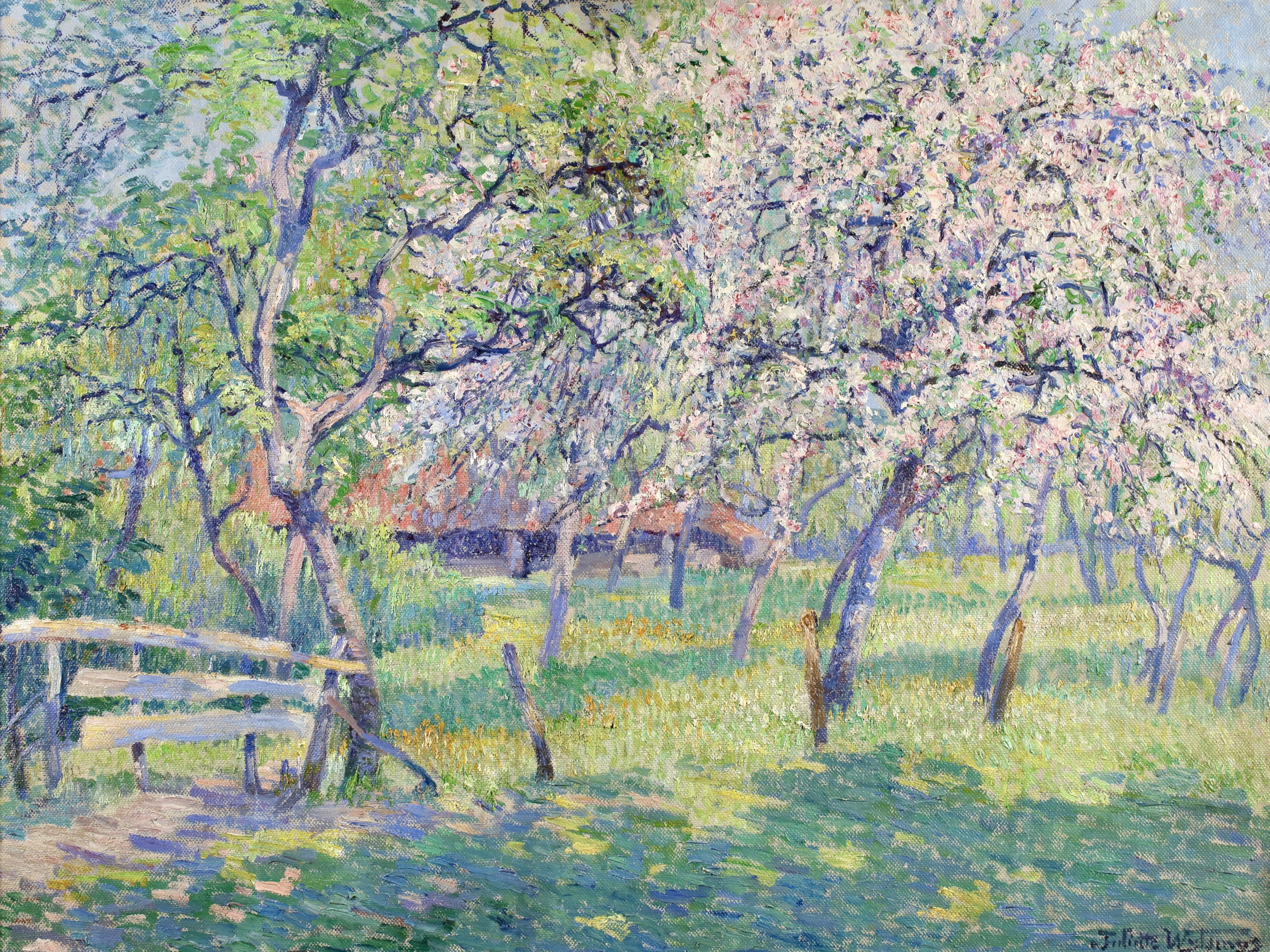
| Medium | Oil on canvas |
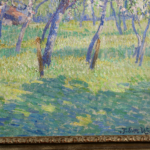
| Signed | Signed lower right |
| Size | 24.00" × 32.00" (61.0cm × 81.3cm) |
| Framed Size | 31.00" × 39.00" (78.7cm × 99.1cm) |
| Dated | c. 1905 |
| Condition | Very good condition |
| Provenance | Private collection - Belgium De Vuyst - Belgium |
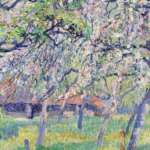
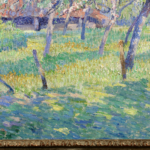
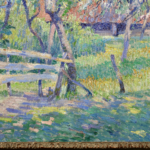
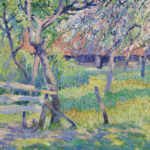
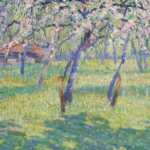
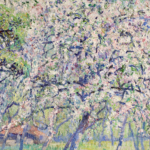
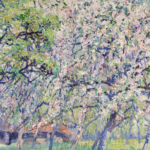
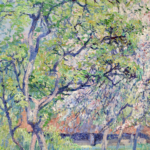
| About this Painting | An orchard in blossom is the kind of subject that separates painters who understand colour from those who merely use it. Juliette Wytsman (1866–1925) understood it completely. The white and pink of flowering trees against the particular soft greens and greys of the Belgian countryside demanded a palette of extraordinary sensitivity — not the heightened intensity of the French Fauves, but something quieter and more sustained, built from close observation and genuine feeling for natural light. Wytsman was born in Brussels in 1866 and trained under Henri Hendrickx and later under Jean Capeinick in Ghent — the same teacher who shaped her future husband, the painter Rodolphe Wytsman, whom she met in Capeinick's studio. Their marriage in 1886 created one of the most productive artistic partnerships in Belgian Impressionism. Together they painted the gardens and landscapes around their estate at Linkebeek on the outskirts of Brussels — sunlit, unhurried, endlessly attentive to the specific quality of northern European light as it falls on blossom, leaf and grass. Her brushwork in garden and orchard subjects has a characteristic looseness and freshness — the strokes of blossom applied quickly but with absolute confidence, the foliage behind built in layers that suggest depth without insisting on it. The colour is always observed rather than invented. That restraint is what gives her best work its lasting quality. She exhibited at the World's Columbian Exposition in Chicago in 1893 and her paintings are held in the Royal Museum of Fine Arts in Antwerp, the Royal Museums of Fine Arts of Belgium in Brussels and the Museum of Fine Arts in Ghent. She is one of the most significant figures in Belgian Impressionism and one of its most unjustly overlooked. |
£55,000.00
GBP