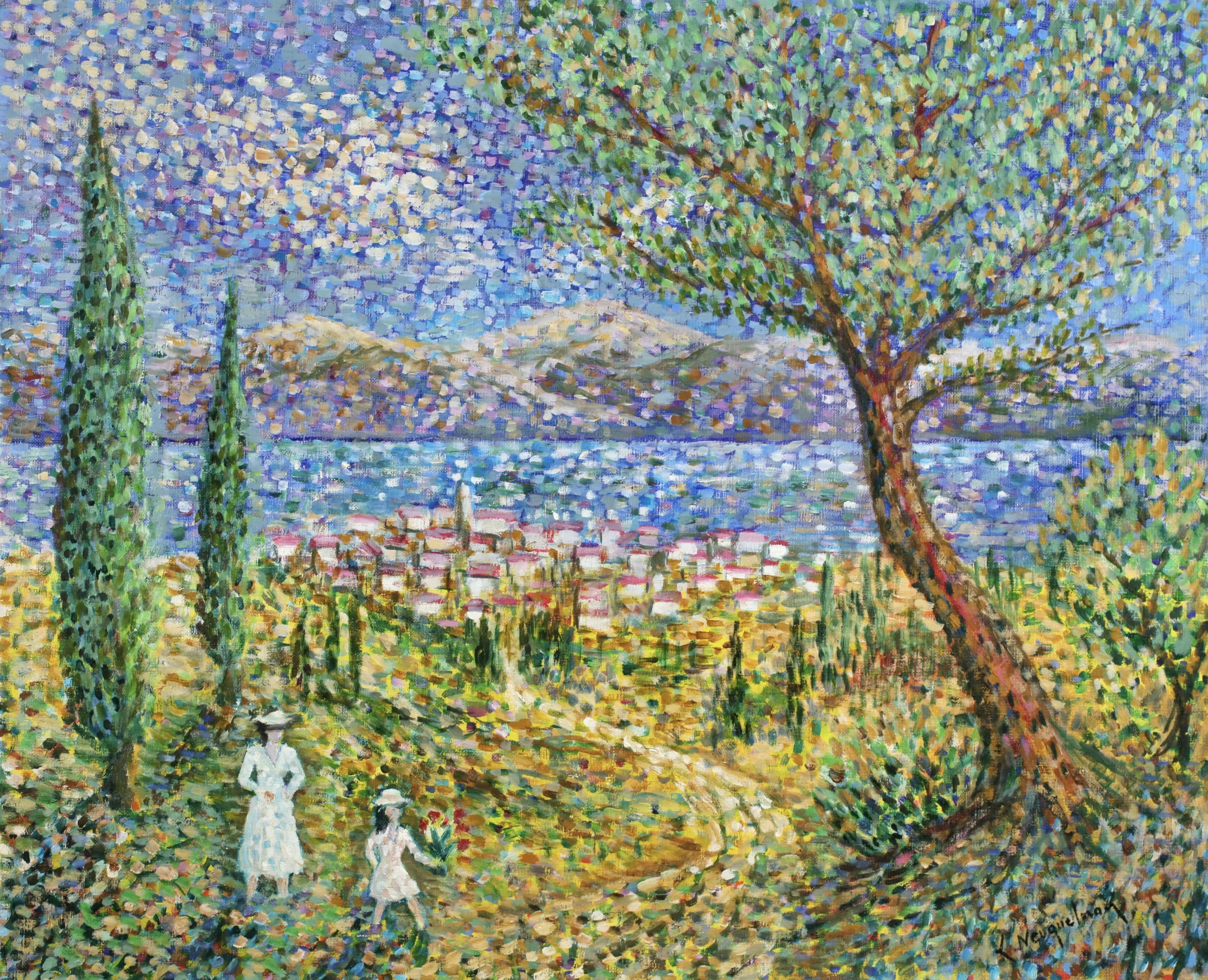
Lucien Neuquelman was born in Paris on 16 February 1909 and died in 1988, leaving behind a body of work that traces one of the more interesting arcs in twentieth-century French painting: an artist who began under the influence of Fauvism and ended, half a century later, as a committed pointillist.
His formal training began at the École des Beaux-Arts in Toulon, on the Mediterranean coast — a formative setting for a painter whose lifelong subject would be light on water. In 1930 he moved to Paris and enrolled at the Académie de la Grande Chaumière in Montparnasse, then among the most vital independent studios in Europe. It was there that he met Othon Friesz, the Le Havre-born Fauve who had exhibited alongside Matisse and Derain at the notorious Salon d'Automne of 1905. Friesz became Neuquelman's teacher, then his friend and mentor, and the relationship shaped everything that followed.
What Neuquelman took from Friesz was twofold — two inheritances at once. The first was Fauvism's liberated colour theory: the conviction that a painter's palette answers to sensation rather than to description. The second was less obvious and arguably more important. Friesz, for all his early radicalism, was a deep admirer of Chardin, Poussin and Corot, and he passed that admiration on. From this side of his teaching Neuquelman absorbed an insistence on structure — strong composition, solid and voluminous form, the sense that a picture must be built rather than merely felt. The tension between these two impulses gives his best work its particular character: pictures that are chromatically adventurous but never loose, sunlit but never insubstantial.
He worked across a broad range of subjects — figures, genre scenes, still life — but he is remembered above all as a landscape and marine painter. Brittany drew him repeatedly, as did the Normandy coast; his views of the old port of Honfleur are among his most sought-after works. He painted the beaches of Royan and the harbours and hinterland of the Midi, and he returned throughout his career to Parisian street life, including views of Saint-Germain-des-Prés. His handling in these works is characteristic: a bright palette applied in short, energetic strokes that keep the surface alive without dissolving the underlying architecture of the scene.
A Parisian gallery mounted a retrospective of his work in 1945, when he was still in his thirties — an early mark of standing. He also worked in ceramics and produced lithographs, and his prints continue to circulate in the European market.
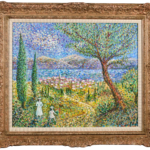
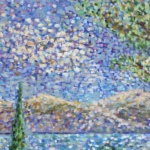
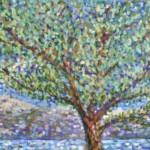
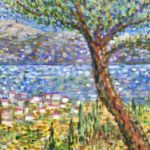
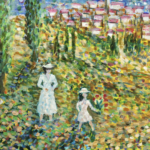
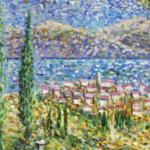
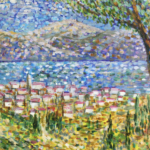
Towards the end of his life Neuquelman moved decisively into pointillism, in a manner openly indebted to Henri-Edmond Cross and Paul Signac. This was not a young man's experiment but a late clarification: a painter who had spent decades thinking about colour arriving, finally, at its most systematic expression. It is a satisfying resolution to a career that began with Fauvism's freedoms and never stopped asking how far colour could be trusted to do the work of form.