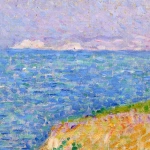
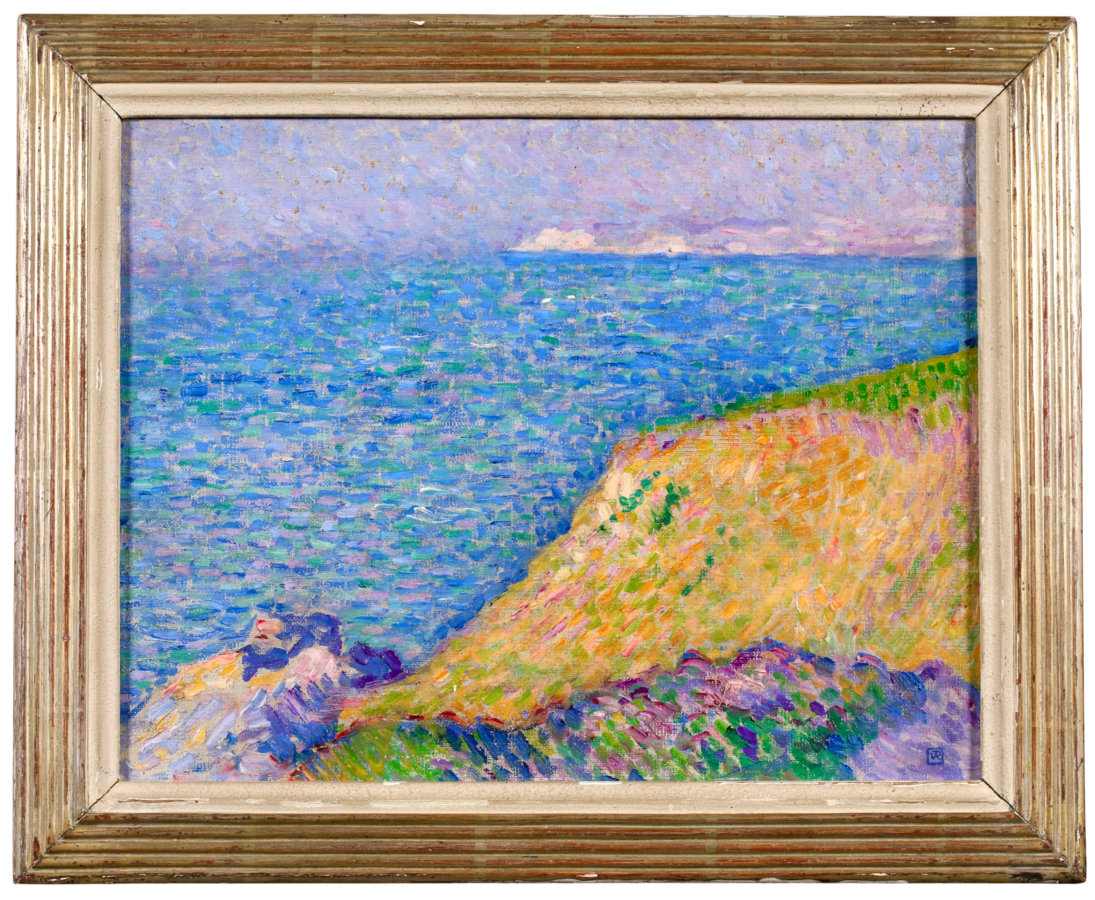
Théodore van Rysselberghe was born into a family whose members included several architects. He studied under Canneel at the academy in Ghent, and then under Portaels in Brussels. Van Rysselbeghe was extremely well-off and could afford to travel extensively, painting and exhibiting as he went. He lived for several years in Paris, spending his summers by the Channel, in accordance with the Impressionist and Neo-Impressionist custom. He participated in the establishment of the Franco-Belgian artistic exchange group Les XX ( The 20) and in its various exhibitions. He was also a founder member of the Libre Esthétique movement. He exhibited at the Salon des Indépendants in Paris on several occasions. At that juncture, his painting was on the conventional side, fleshy and sombre, betraying some orientalist elements inherited perhaps from Portaels.
Van Rysselberghe visited Spain and Morocco on several occasions from 1884, painting his Arab Storyteller and Fantasia. His colours gradually lightened and he began to emerge as a portrait artist. He was on intimate terms with Émile Verhaeren, and it was the latter who invited him to Paris, where van Rysselberghe was greatly impressed by Seurat's La Grande Jatte. He was not entirely convinced, however, by the scientific approach the Divisionists derived from the theory of colour expounded by Chevreul and espoused to a greater or lesser degree by Signac, Cross and Pissarro.
From 1887, van Rysselberghe began painting in the Neo-Impressionist manner, becoming virtually the only artist to apply this approach to portraiture. Paintings such as Madame Oc. Ghysbrechts, Octave Maus (1885) and Madame Maus (1890) date from around this time. Van Rysselberghe also painted a number of landscapes, among them Promenade and Tartan Vessels at Sète. Around 1895, he joined Henry van de Velde in a bid to resuscitate the decorative arts. He designed posters, furniture, typographical elements and jewellery in the 'new style' and painted a large number of decorative panels specifically commissioned by architects.
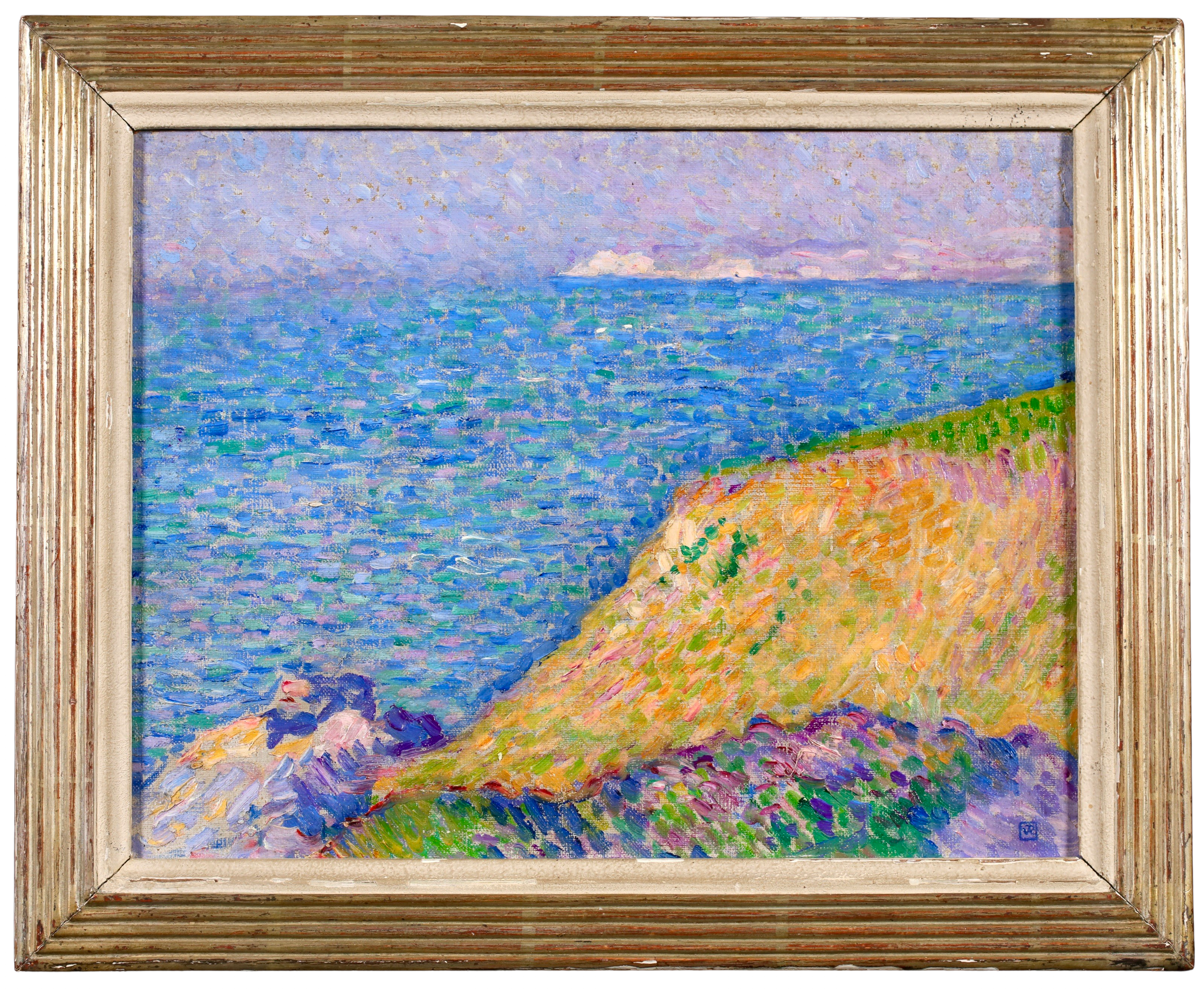
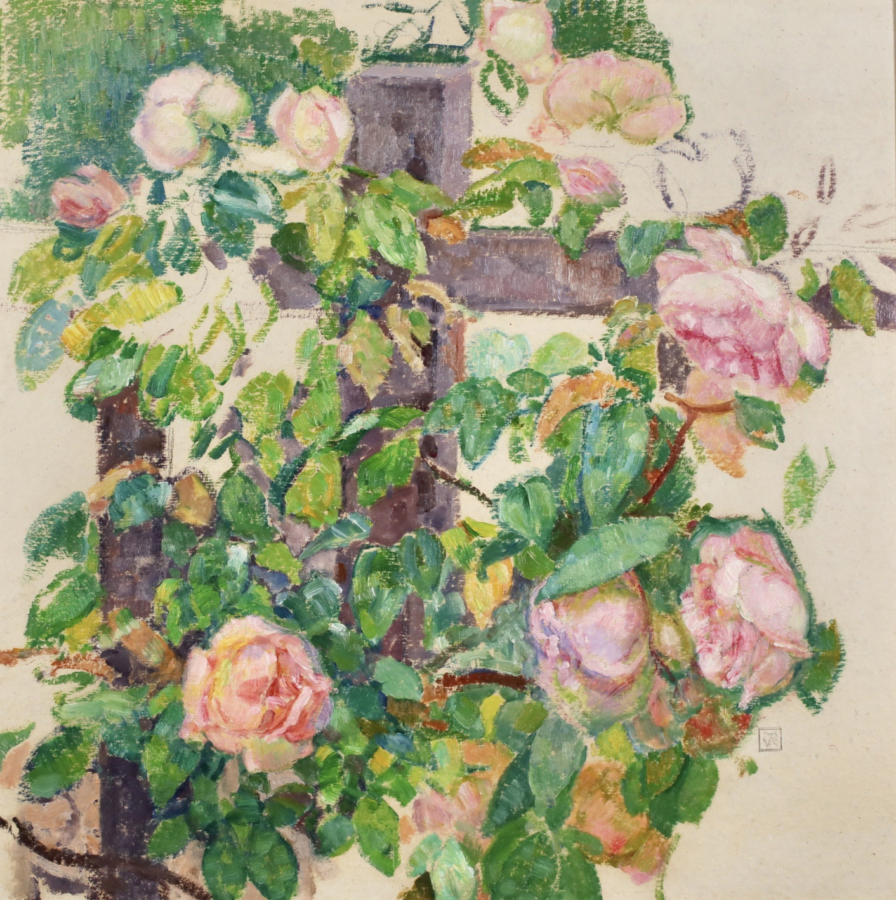
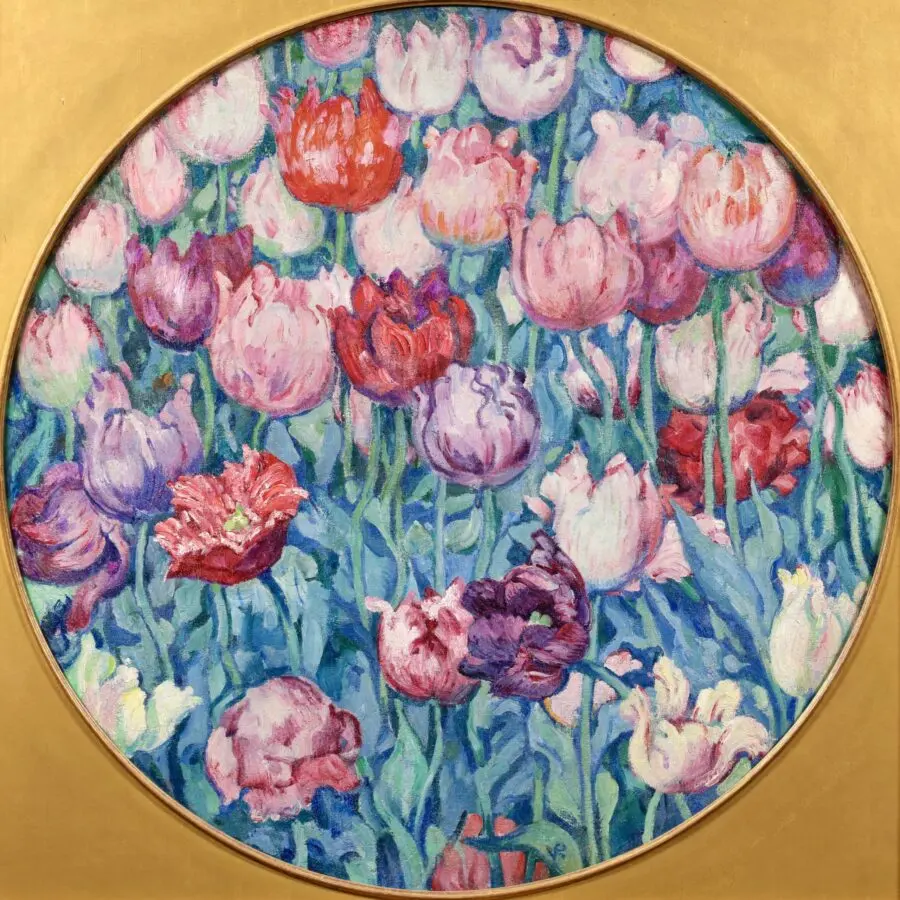
In 1898, he left Brussels and settled in Paris, where he moved in Symbolist literary circles. His wife - 'Madame Théo' or 'The Little Lady' - played an important role in the life of André Gide. In 1903, van Rysselberghe painted his celebrated Reading, where a large number of writers are depicted in a group surrounding Verhaeren, including Gide, Maeterlinck and Fénéon. He continued to paint essentially in the Neo-Impressionist manner, using visual effects achieved by juxtaposed patches of colour, with a predominance of violets, mauves and blues. While residing at St-Clair in Provence, however, he felt a need for a greater repertoire in terms of technique and colour. He duly abandoned the strict tenets of Neo-Impressionism and began painting in the Fauvist manner, using more intense colours in his seascapes and bathing scenes, where the female bathers' bodies are fleshed out by the strong colours of sea and sun.
Museum and Gallery Holdings
Amsterdam (Rijksmus.): Aquarium with Fish and Crayfish
Brussels (MBA): Woman Reading and a Young Girl; Mademoiselle Z.; Promenade; Émile Verhaeren, Poet; Mandolinist; Octave Maus (1885); Madame Maus (1890); Fantasia (before 1884)
Essen (Folkwang Mus.): Moonlight in Boulogne
Ghent (Mus. voor Schone Kunsten): Reading; Dario de Regoyos, Spanish Painter
Helsinki (Ateneumin Taidemus.): Midi Landscape
Hyères: Portrait of Madame Deman
Leipzig: Venetian Woman
Ostend (Mus. voor Schone Kunsten)
Otterlo (Kröller-Müller Mus.): Per-Kinder Point (1889); Pines at Cavalière (1904)
Paris (Mus. d'Orsay): Estuary with Sailing Vessels (1892-1893); Portrait of Émile Verhaeren, Poet (1915, oil on canvas)
Rotterdam (Mus. Boijmans Van Beuningen): Mirror
Weimar: Fiery Sky