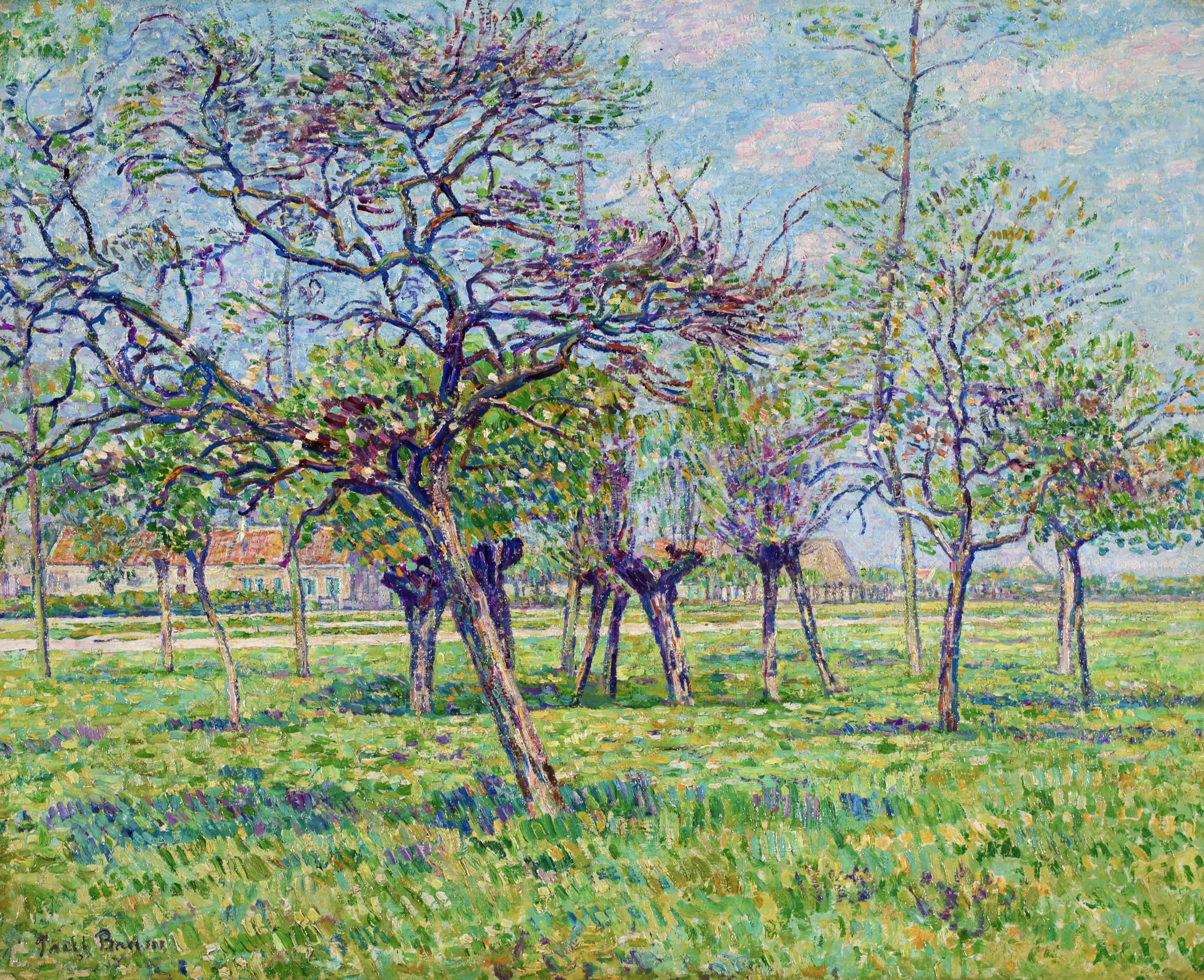
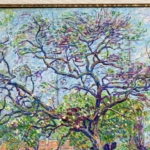
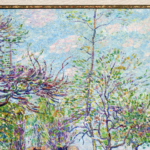
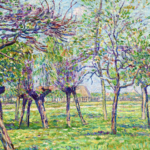
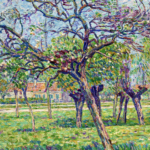
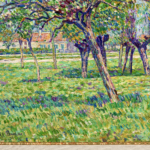
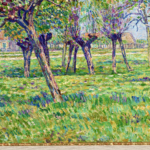
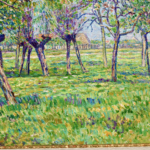
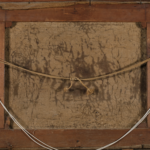
Medium: Oil on canvas
Signed: Signed lower left
Size: 20.00" x 24.00" (50.8cm x 61.0cm)
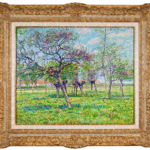
Framed Size: 29.00" x 33.00" (73.7cm x 83.8cm)
Dated: 1899
£63,000.00
GBP
Additional information
Condition: Very good condition
Provenance:
Private collection - United Kingdom
This work is recored in the catalogue raisonne of the work of Paul Baum on page 536 under the Kasseler Archiv reference number Kassel Catalogue Number 260
About this painting
Love the work of Paul Baum?
Sign up to receive notifications when new artworks by Paul Baum are added to our collection.
Paul Baum (22 September 1859 – 15 May 1932), was a German painter, draftsman and printmaker. He was the most important representative of Neo-Impressionism in Germany.
He began as a flower painter at the Royal Porcelain Factory. In 1877, he decided to study with Friedrich Preller at the Dresden Academy of Fine Arts. A year later, he switched to the Weimar Saxon-Grand Ducal Art School, where he studied under Theodor Hagen until 1887. During his studies, he travelled to Mecklenburg and Hamburg as well as Holland and Flanders. In 1888, he stayed briefly at the art colony in Dachau District.
During a trip to Paris in 1890, he had his first encounter with French Impressionism. Afterwards, he left Dachau and spent four years in Knokke, Belgium, where he became friends with Camille Pissarro and the Belgian pointillist painter Théo van Rysselberghe. In 1894, he returned to Dresden and became part of the Dresden Secession. However, he continued to be restless and, in 1895, moved to Sint Anna ter Muiden near Sluis, where he lived until 1908. Even so, his stay there was interrupted by numerous trips to Berlin, the south of France, Italy and Turkey.
While visiting Berlin in 1902, he became a member of the Berlin Secession. In 1909, he joined the Neue Künstlervereinigung München (N.K.V.M.) and participated in their first exhibition. That same year, he received the Villa Romana Prize, which included a one-year stay in Rome. He then travelled to Tuscany, remaining there for four years in San Gimignano and, then, Florence. After the outbreak of war in 1914, he returned to Germany and became a professor at the Academy. But, after a year, he was again on the move.
He stayed briefly at the Willingshäuser Art Colony and went from there to Neustadt near Marburg. When his friend, Carl Bantzer, was appointed professor at the Kunsthochschule Kassel in 1918, Baum took his place as a teacher of landscape painting. In 1921, he bought a house in Marburg, intending it to be his permanent residence but, from 1924 on, lived mostly in San Gimignano. He died of pneumonia there in 1932.
Dresden: Mourning
Response in
3 Hours
Our specialist team aims to respond to all inquiries within 3 hours during our opening hours.


Client Satisfaction
Guarantee
Boasting over 200 five-star reviews across Google, 1stDibs, and REVIEWS.io.

Platinum
Seller
Recognized as an experienced seller who consistently exceeds customer expectations.
Member since 2016 with over 100 five-star reviews.
Two Decades
of Expertise
Leighton Fine Art brings over two decades of experience in the fine art industry.
Share on social media


