Ferdinand Loyen Du Puigaudeau

( 1864 - 1930 )

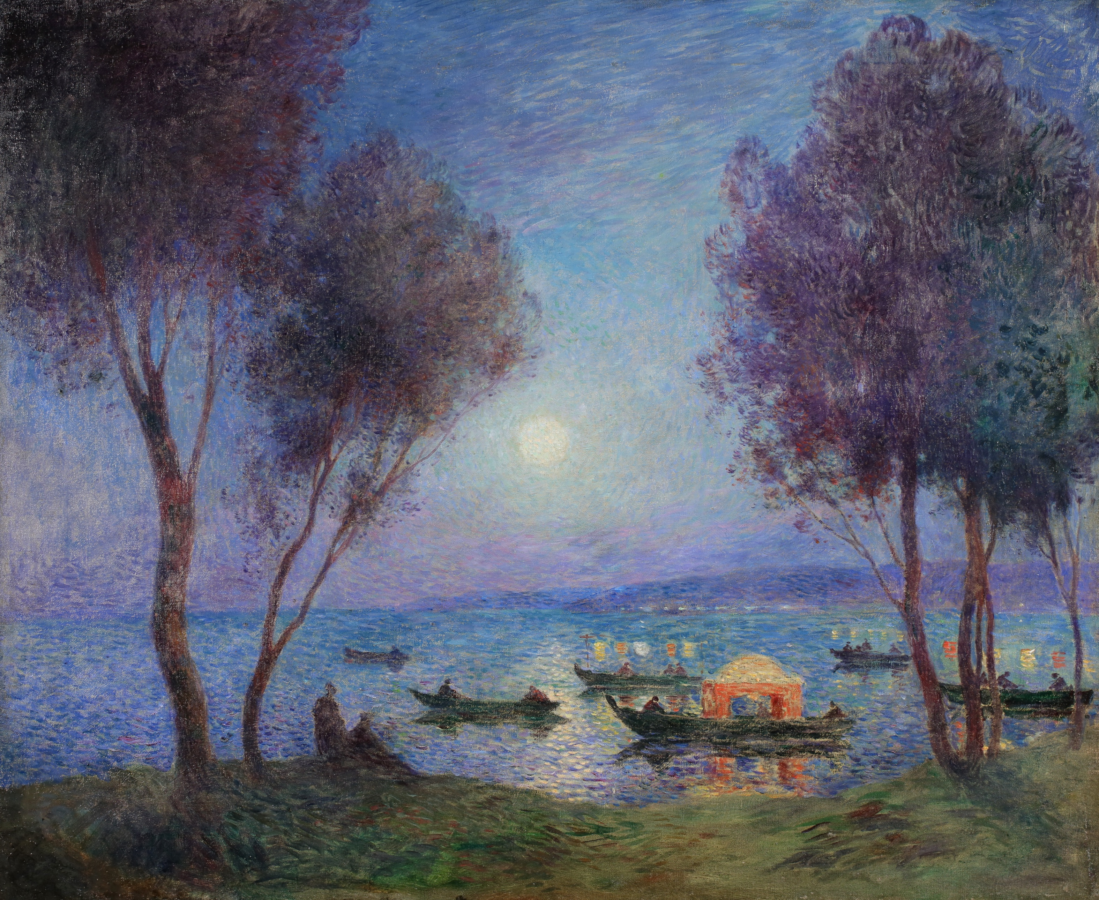
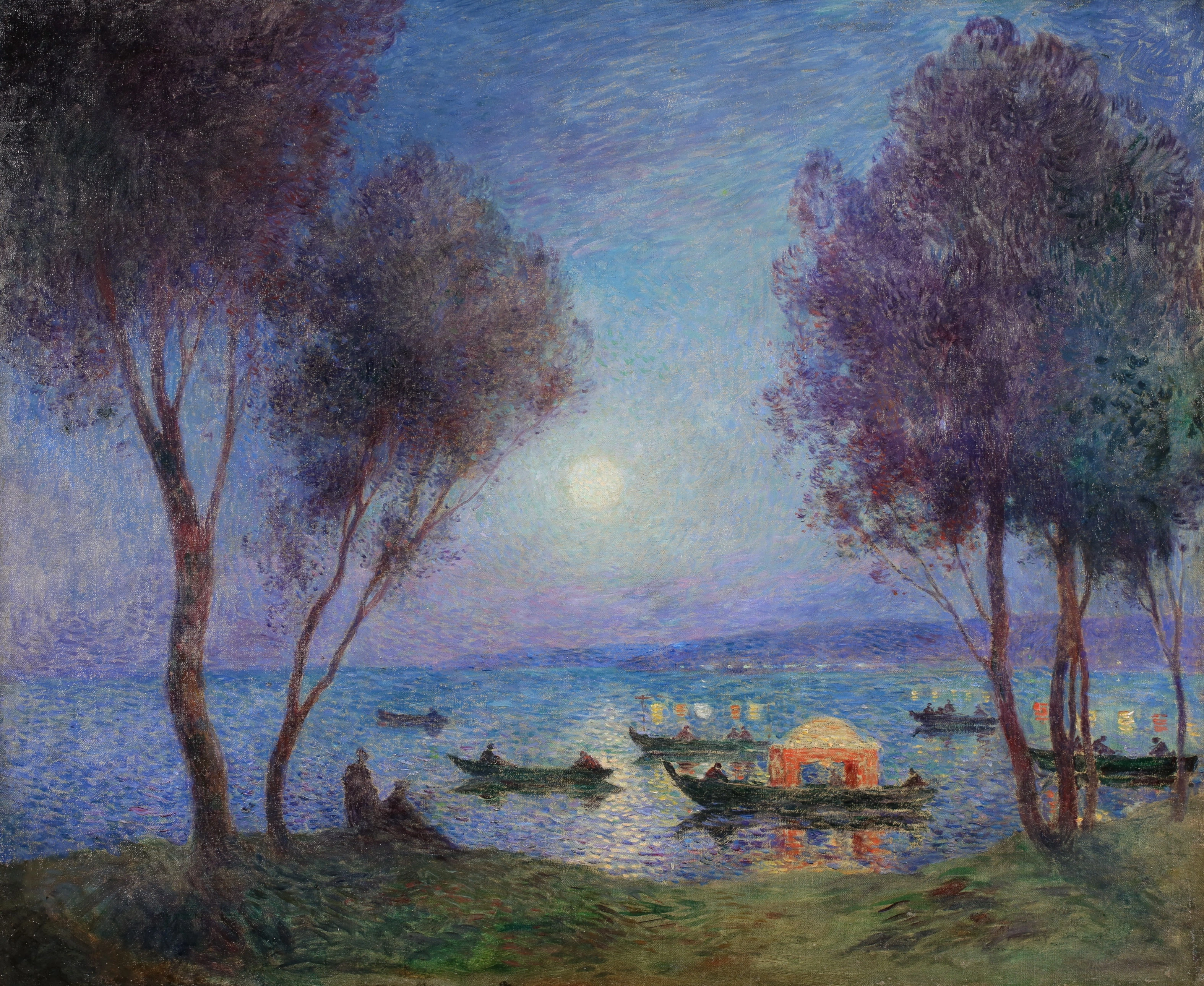
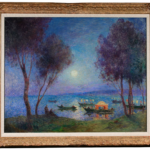
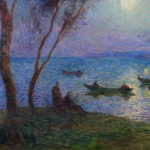
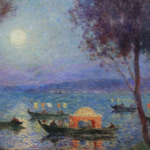
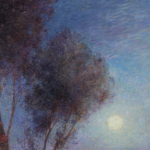
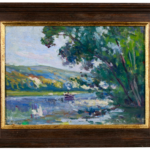
Barques et lampions la nuit sur la mer à Cagnes

Ferdinand Loyen Du Puigaudeau

( 1864 - 1930 )

Barques et lampions la nuit sur la mer à Cagnes

  • Medium: Oil on canvas

  • Size: 24.00" x 29.00" (61.0cm x 73.7cm)

  • Framed Size: 29.00" x 34.00" (73.7cm x 86.4cm)

  • Dated: c. 1905

£33,000.00
GBP

Image download 1Image download 2Image download 3Image download 4Image download 5Image download 6Image download 7Image download 8Image download 9Image download 10Image download 11 Download all Images

Additional information

  • Condition: Very good condition

  • Provenance: This work will be included in Tome III of the Catalogue Raisonne of the work of Ferdinand Du Puigaudeau currently under preparation by Antoine Laurentin.
    The authenticity of this work has been confirmed by Antoine Laurentin and a certificate of authenticity is available from Galerie Laurentin (www.galerie-laurentin.com)

About this painting

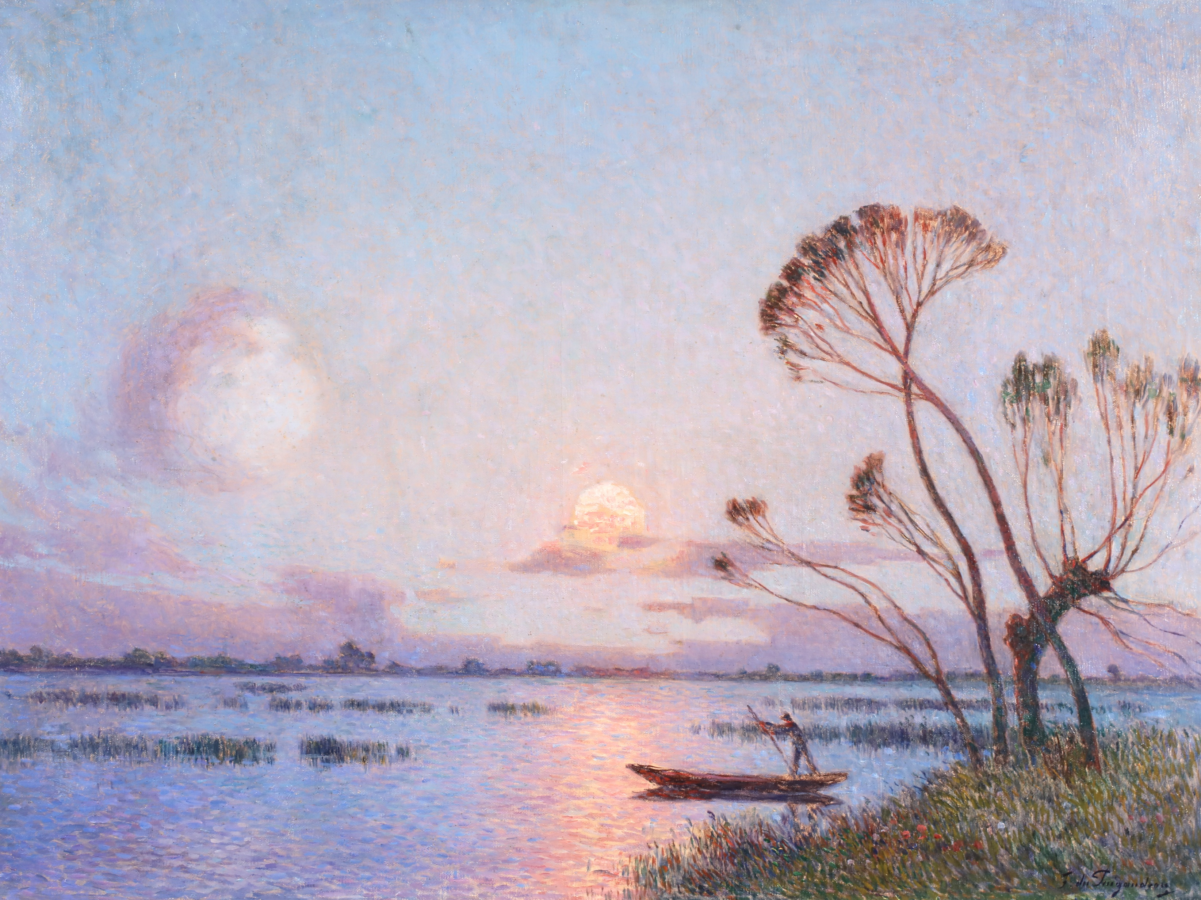
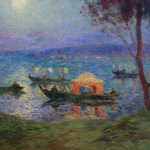
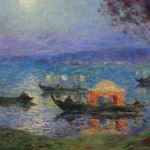
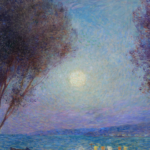
Night on the water, boats hung with paper lanterns, the dark sea broken by reflected colour — this is Ferdinand Loyen du Puigaudeau (1864–1930) at the very centre of his obsession. His contemporaries called him the painter of fireworks, rockets and nocturnal festivals, and the New York Herald in 1903 described him simply as "the painter of fireworks, rockets, sun and gay landscapes." No description of him could be more precise, or more inadequate, because what he actually painted was light — its behaviour at the edge of darkness, its capacity to transform the mundane into something close to magical. The lampions — the small coloured lanterns hung on boats for festival nights along the Mediterranean coast — gave him exactly the conditions he loved: points of warm colour against the dark, their reflections moving on the water below, the whole scene unstable and luminous and alive. The palette in this canvas moves between the deep blues and blacks of the night sea and the warm golds, oranges and reds of the lantern light, with the reflections doing the work of connecting the two registers. Nothing is fixed. Everything shimmers. Du Puigaudeau was born in Nantes in 1864 and largely self-taught before arriving at Pont-Aven in 1886, where he befriended Gauguin and absorbed the lessons of that extraordinary colony without surrendering his own deeply individual vision. Through his father he came to know Paul Durand-Ruel, the great dealer of the Impressionists. Edgar Degas purchased one of his paintings in 1897, and the two maintained a warm friendship and correspondence for the rest of their lives — Degas calling him affectionately "the hermit of Kervaudu." His work is held in the Thyssen-Bornemisza Museum in Madrid, the Indianapolis Museum of Art and the Musée des Beaux-Arts de Quimper.

Be the First to Know

Love the work of Ferdinand Loyen Du Puigaudeau?

Sign up to receive notifications when new artworks by Ferdinand Loyen Du Puigaudeau are added to our collection.

    Ferdinand Loyen Du Puigaudeau Biography

    View full artist profile


    After the divorce of his parents, Puigaudeau was raised, from the age of 14, by his maternal uncle Count Henry Chateaubriand, who encouraged his artistic leanings. He studied from the age of 19 in Italy, mainly in Rome, and in Belgium met the sculptor Constantin Meunier. In about 1886, he went to work in Pont Aven, Brittany, where he met Laval and Gauguin, returning there in 1888 after his military service. Around 1890, he was awarded a study grant and went to work in Sweden and Paris, where he made the acquaintance of the Impressionist dealer Durand Ruel. In 1897, he moved with his family to Antibes, hoping to meet Renoir, then around 1899-1900 to Sannois not far from Paris, where he met Degas. From 1904, he travelled between Venice and France, finally settling permanently in 1910 near Croisic, where he led a secluded life, receiving visits from artists and giving refuge to Laboureur and Florent Schmitt during the World War I.

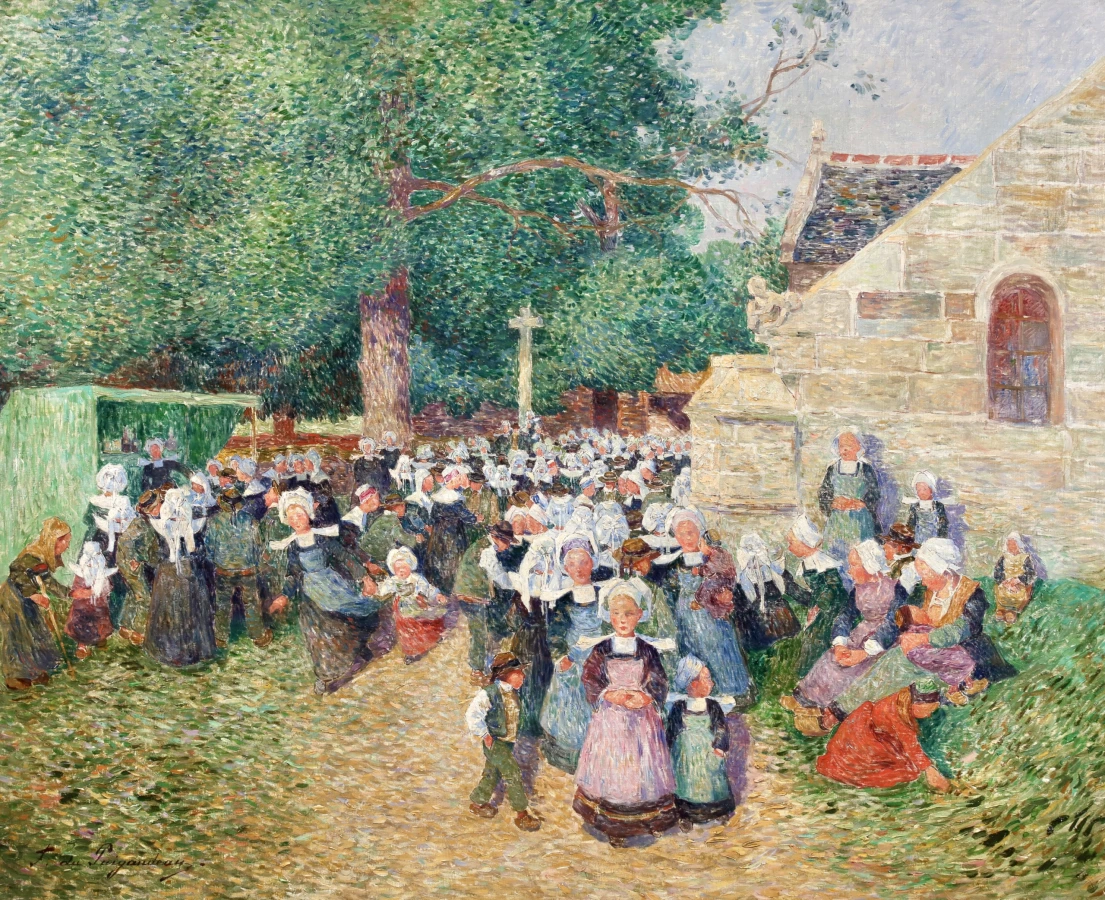
    Puigaudeau has only recently acquired public recognition, partly owing to the financial difficulties which he experienced throughout his life, his inclination towards solitude and the loss of 60 paintings during an exhibition in New York. He is mainly admired for his scenes of village life, urban landscapes or landscapes with figures at dusk and at night. These include: Magic Lantern in the Evening, around 1896, Festival over the grand canal in Venice around 1894, The Sea, Sunset, around 1925, Breton Women with Chinese Lanterns, around 1896, and Fairground at Night ( Le Manège forain la nuit) around 1894.

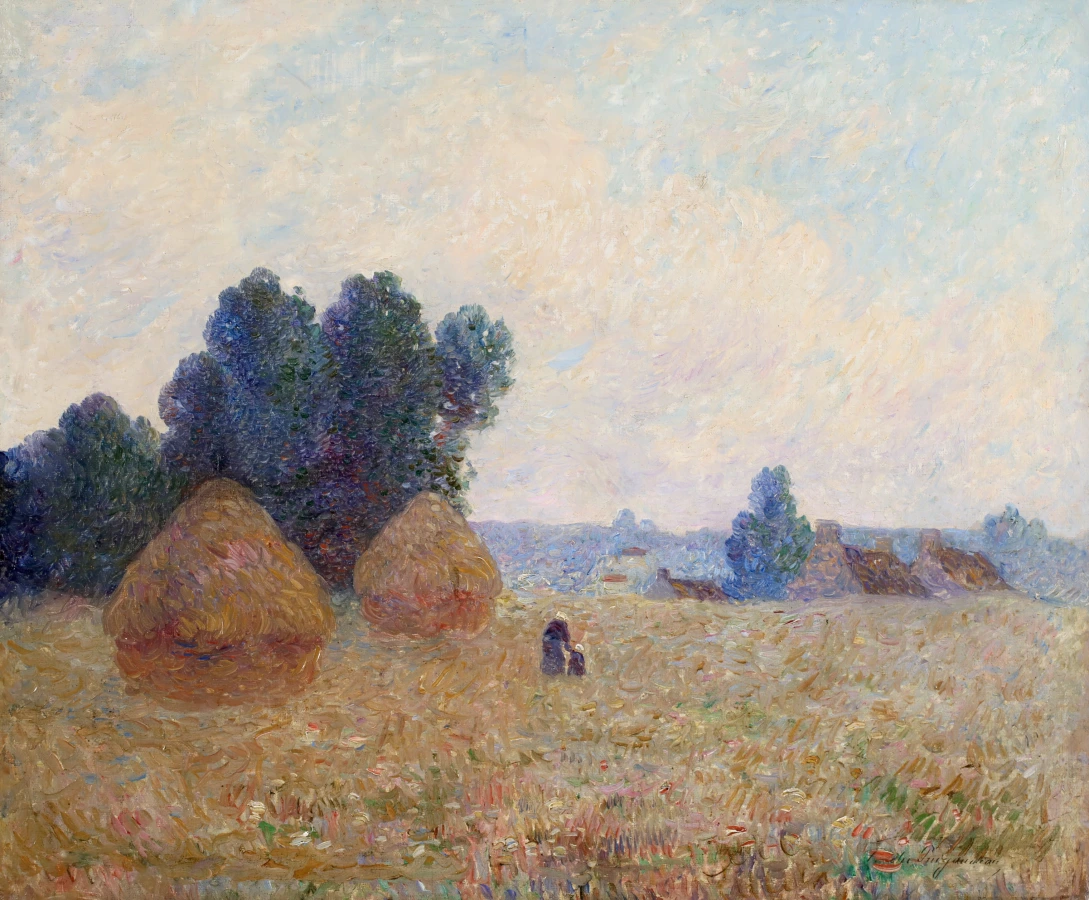
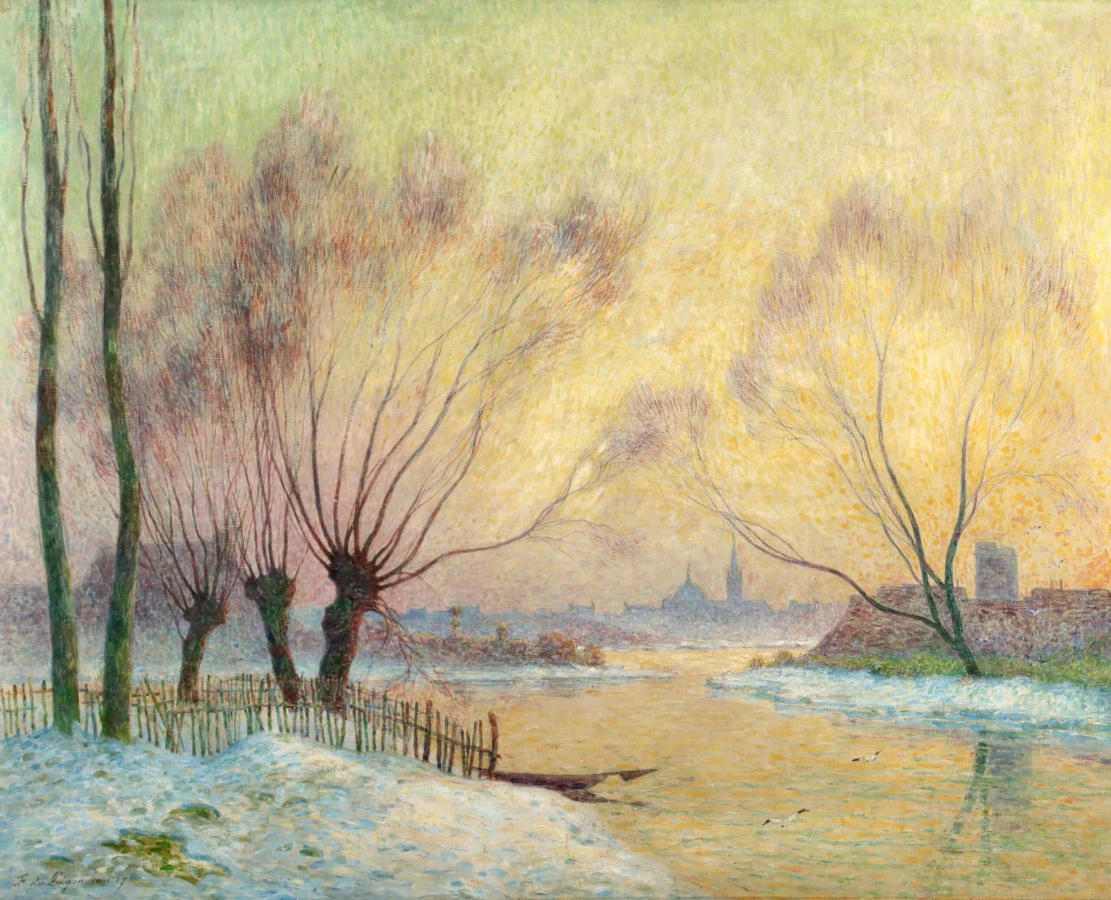
    His technique involved applying colour in separate tones and brushstrokes to achieve certain effects of light, combined with a more structured approach towards objects that gives prominence to detail, as in Garden in Flower in Morbihan around 1910, as well as a certain classical tendency, as in The Town of Batz.

    Puigaudeau exhibited little. He took part in the Exposition Universelle in Paris in 1900 and held his first solo exhibition in 1903 at the Galerie des Artistes Modernes. In 2001, he was represented in The Golden Age of Painting in Brittany ( L'Âge d'or de la peinture en Bretagne) at the Musée de Vannes in La Cohue. Otherwise, the exhibitions organised by the Thierry Salvador gallery in Paris and their catalogues have also helped to make both the artist and his work more widely known.

    Response in
    3 Hours

    Our specialist team aims to respond to all inquiries within 3 hours during our opening hours.

    Google Logo REVIEWS.io Logo

    Client Satisfaction
    Guarantee

    Boasting over 200 five-star reviews across Google, 1stDibs, and REVIEWS.io.

    1stDibs Logo

    Platinum
    Seller

    Recognized as an experienced seller who consistently exceeds customer expectations.

    Member since 2016 with over 100 five-star reviews.

    Two Decades
    of Expertise

    Leighton Fine Art brings over two decades of experience in the fine art industry.

    Share on social media

    A2A - Logo Facebook - Logo Facebook Messenger - Logo X - Logo LinkedIn - Logo Email - Logo WhatsApp - Logo