Further Images
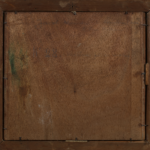

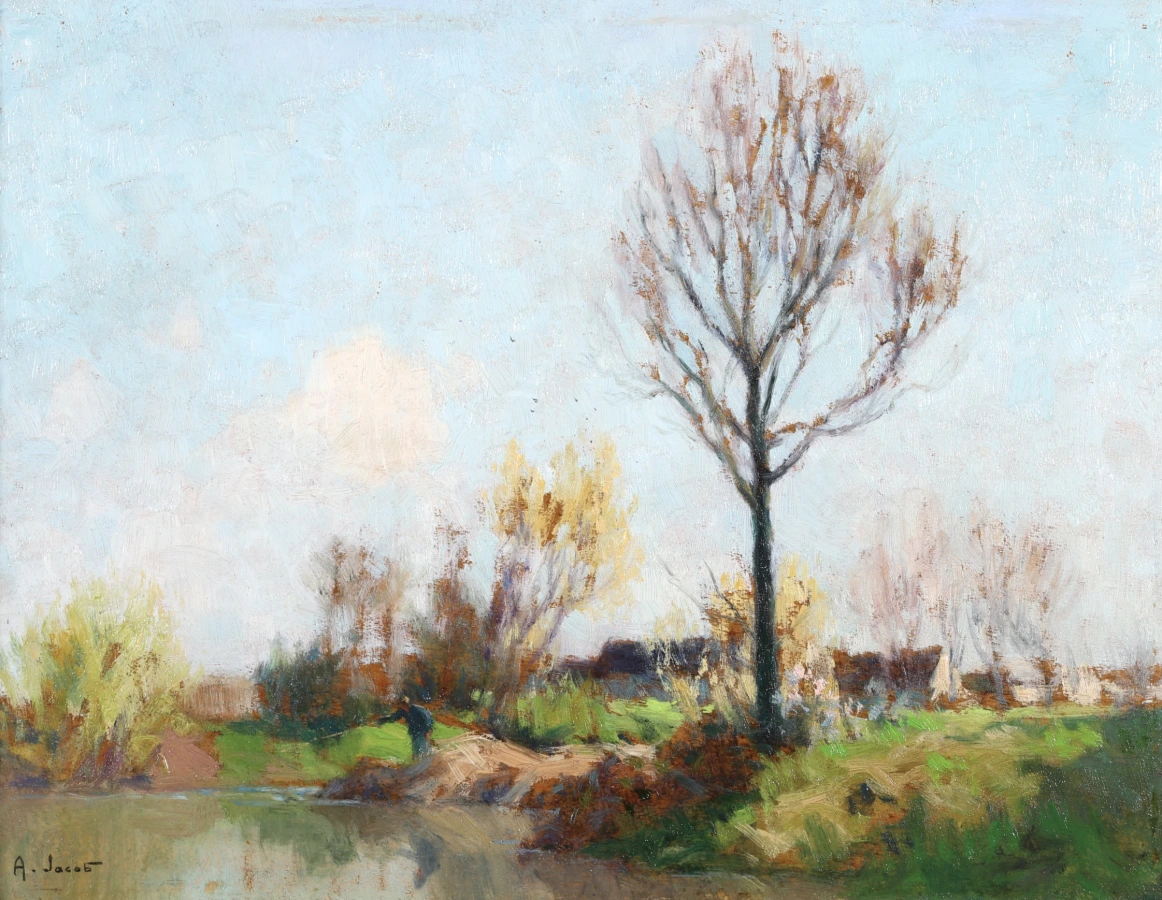
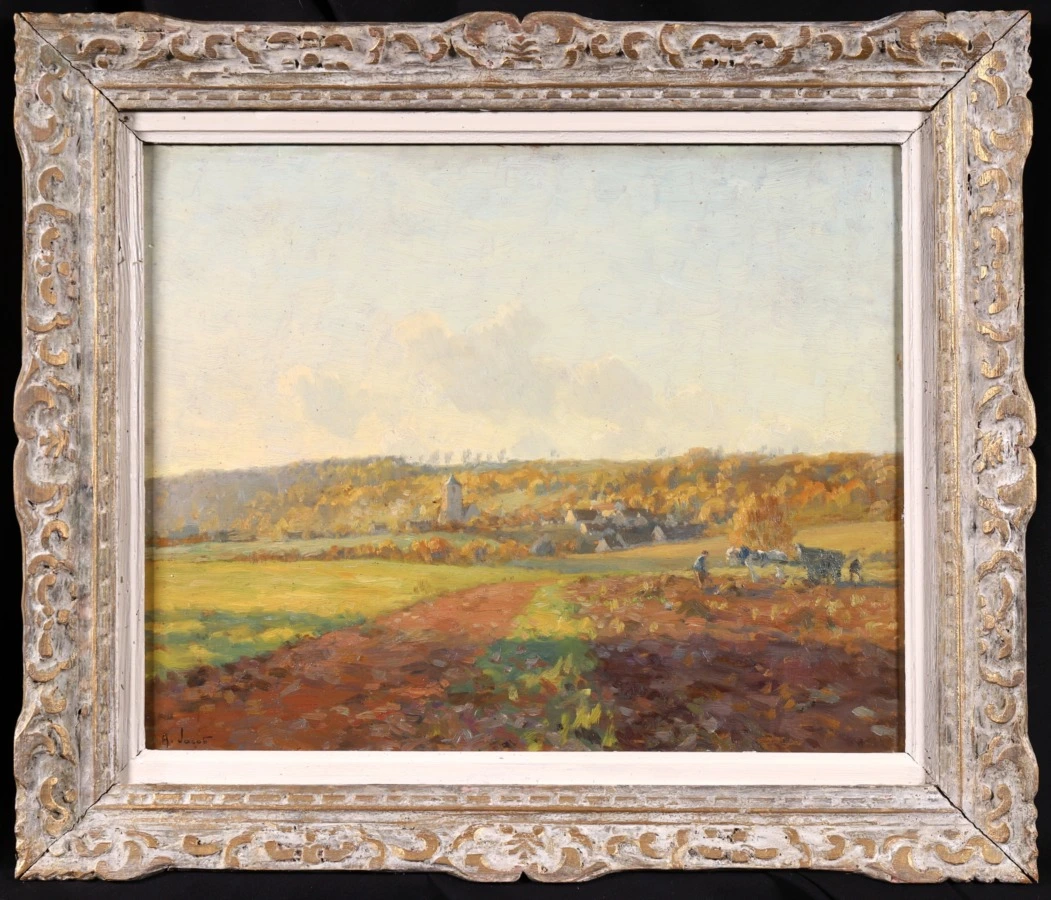
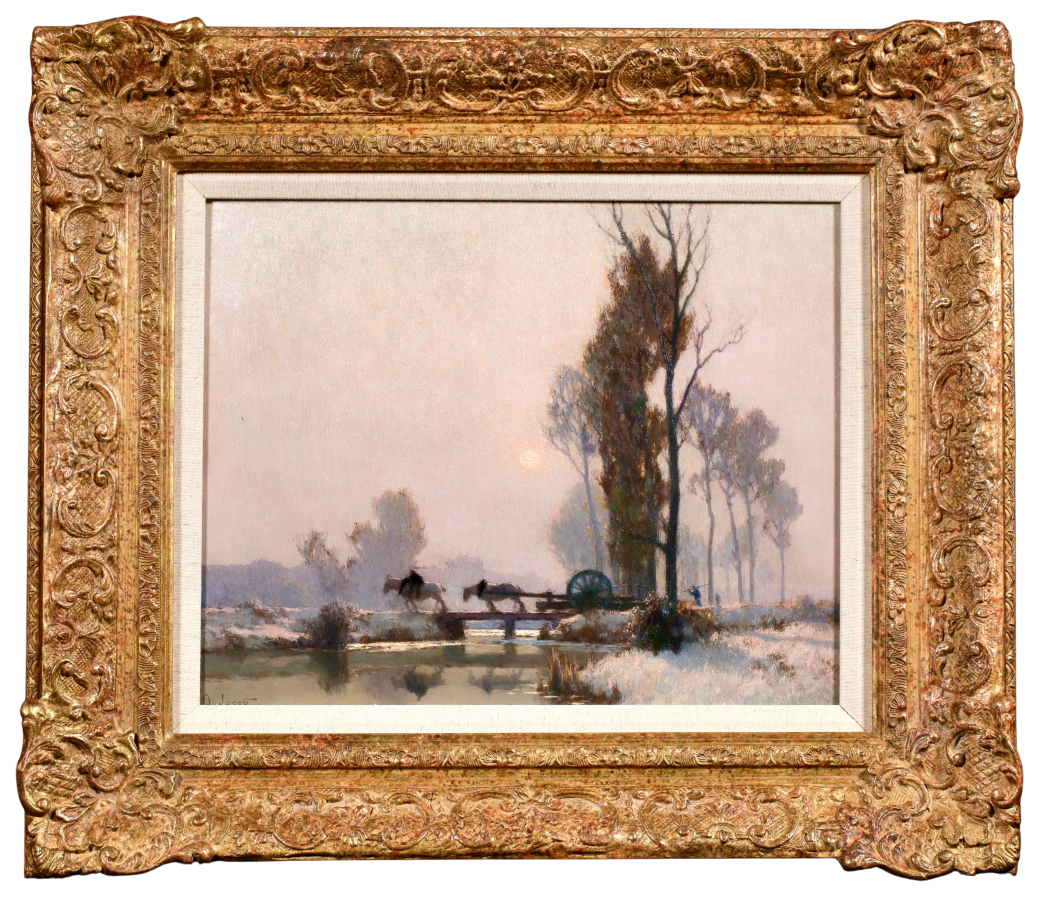
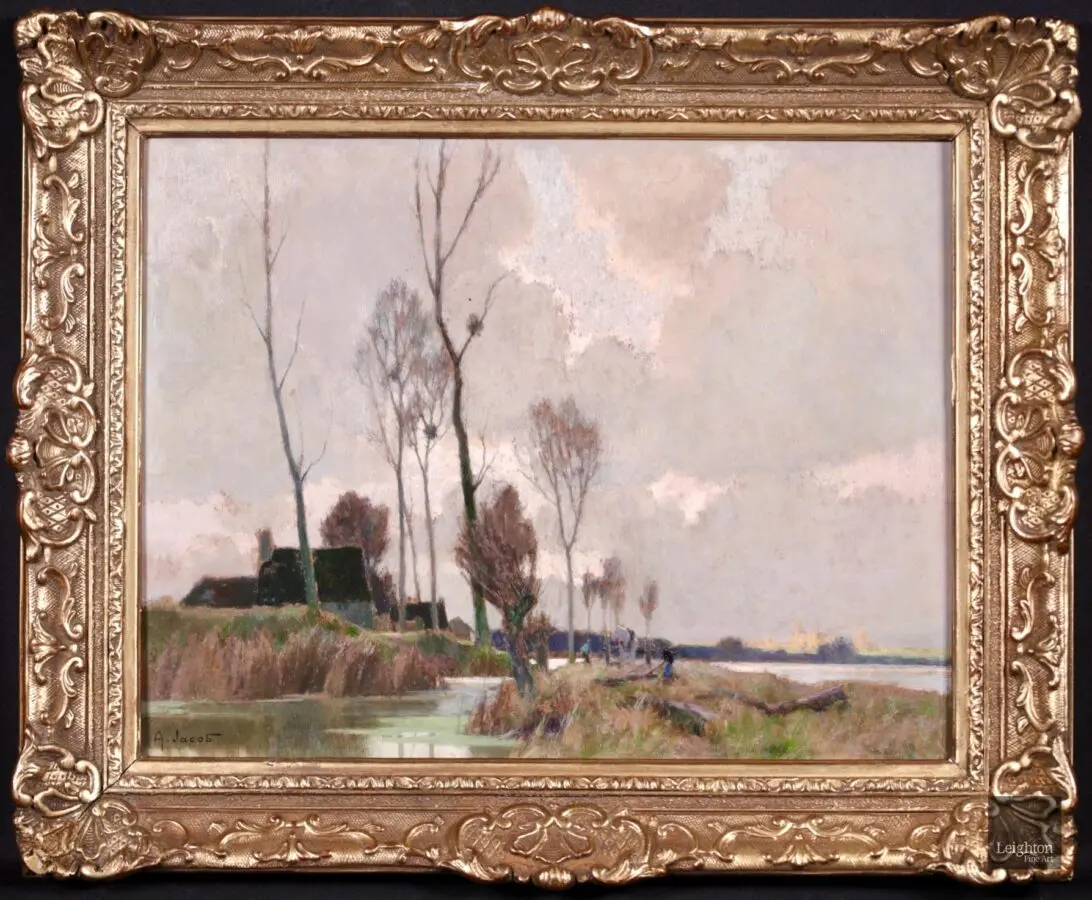
| Medium | Oil on panel |
| Signed | Signed lower left and titled verso |
| Size | 11.00" × 12.00" (27.9cm × 30.5cm) |
| Framed Size | 14.00" × 15.00" (35.6cm × 38.1cm) |
| Dated | c. 1930 |
| Condition | Very good condition |
| Provenance | Private collection - France |
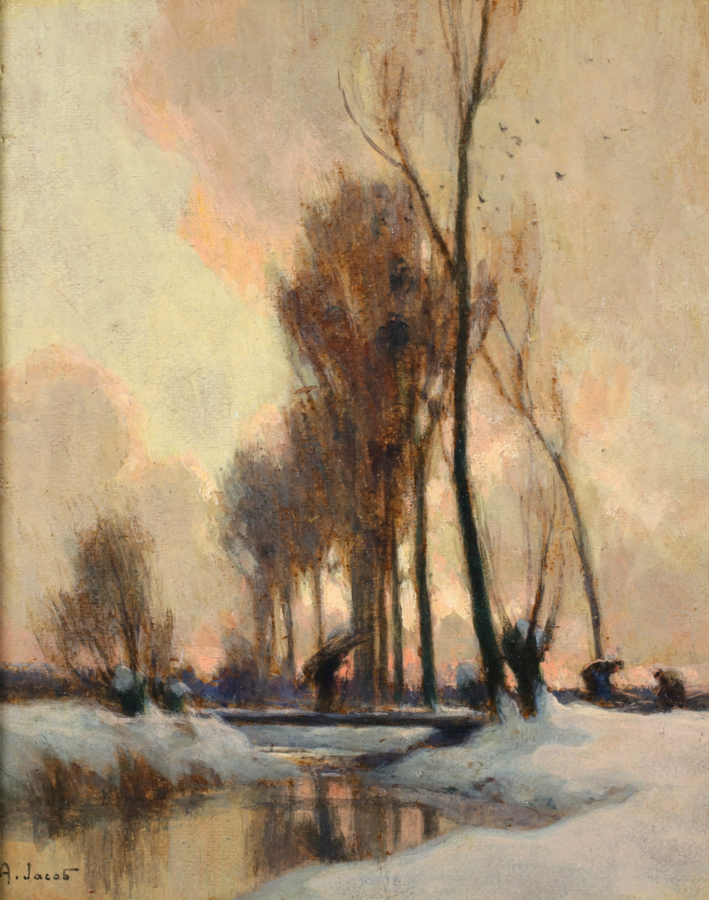
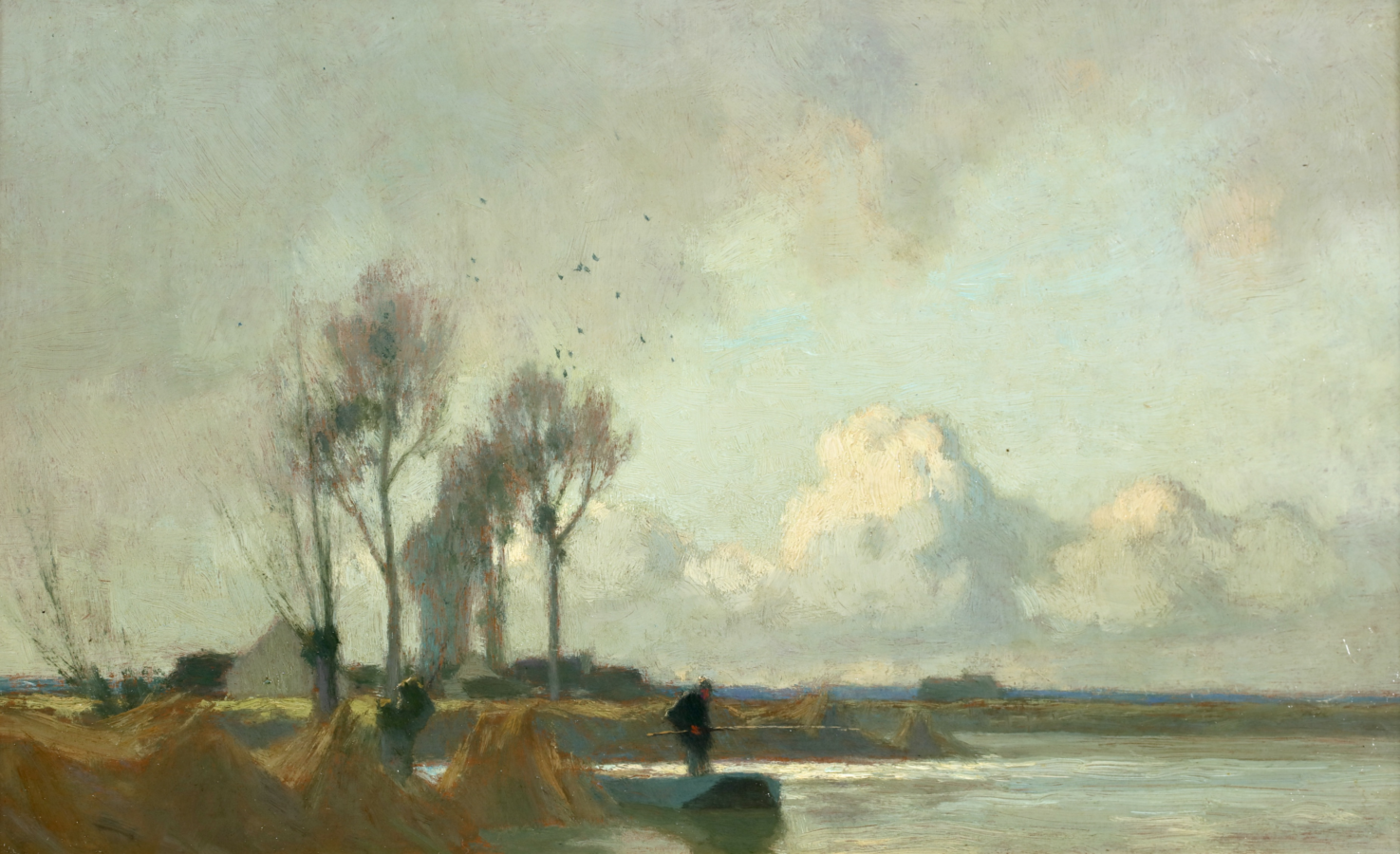
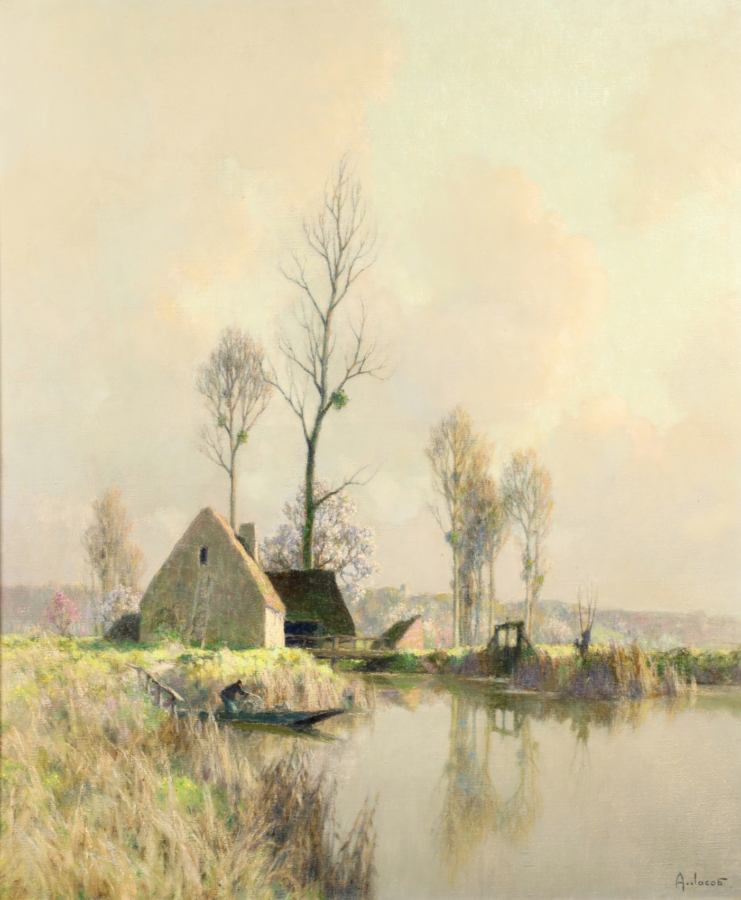
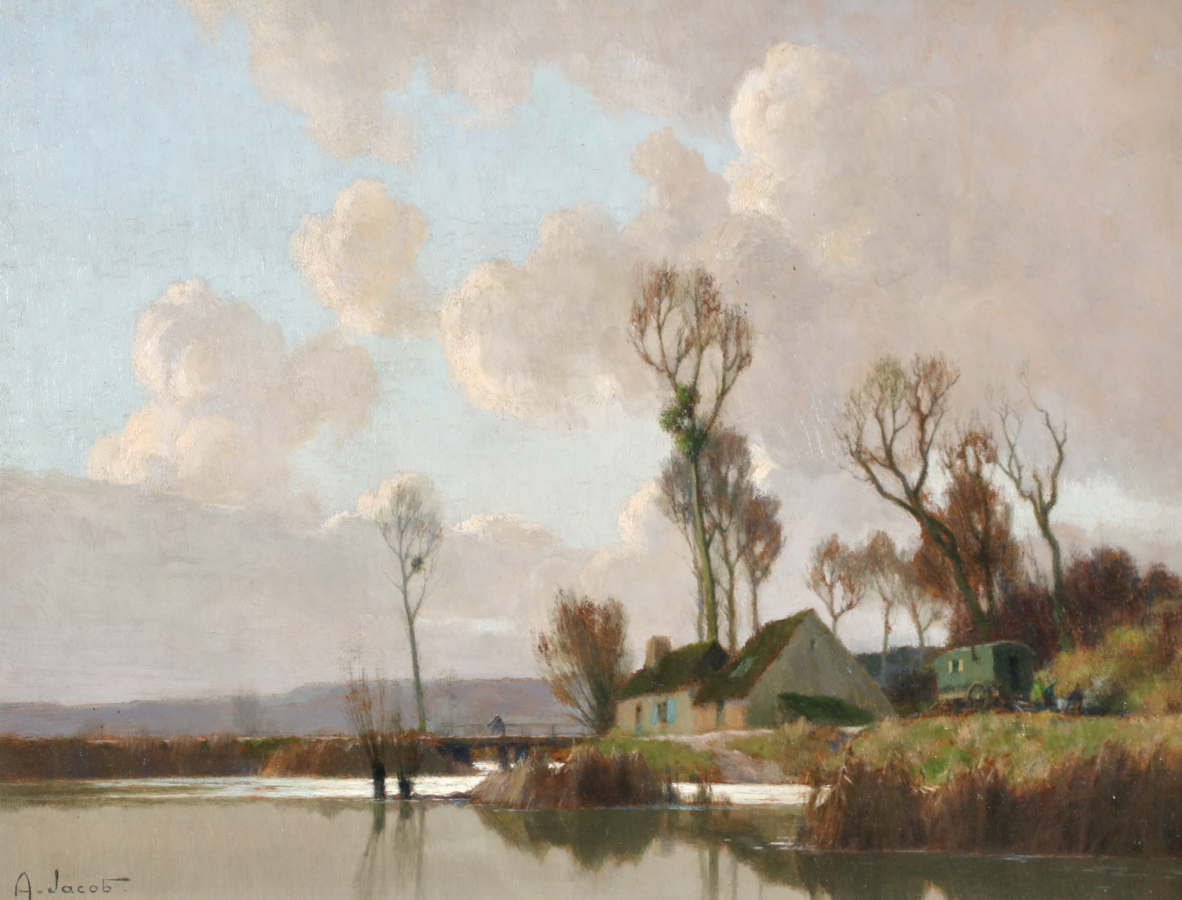
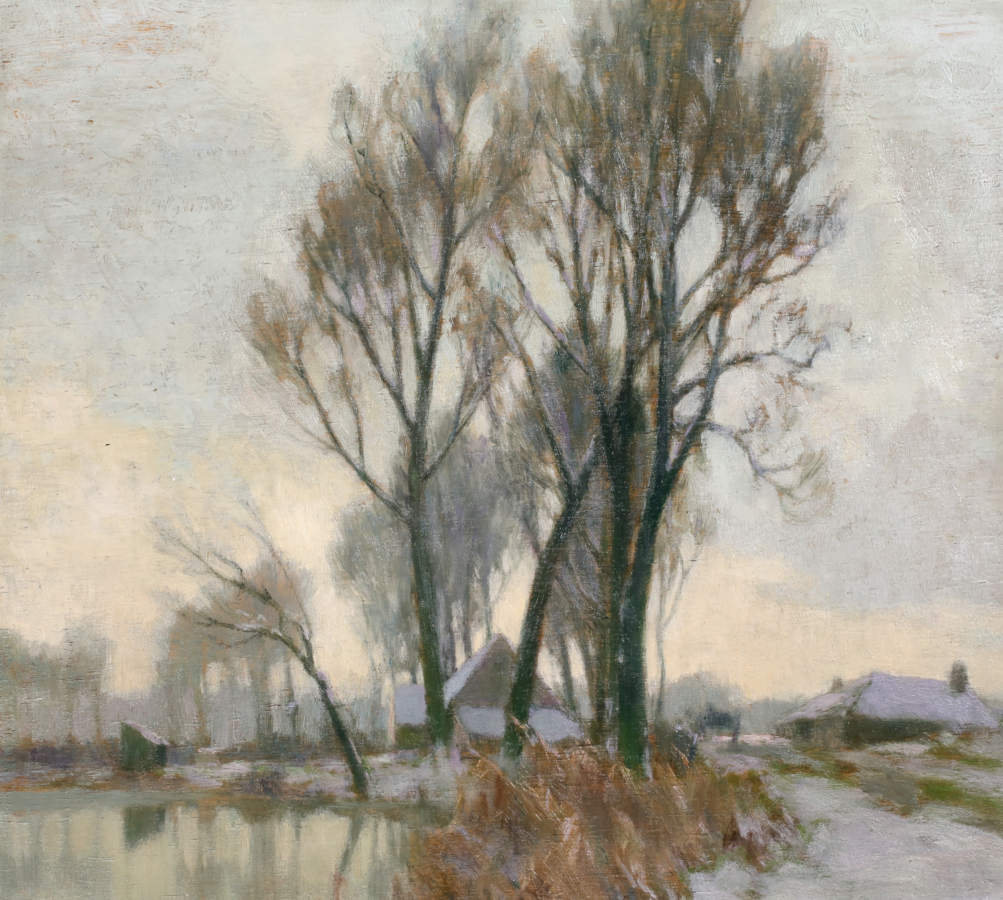
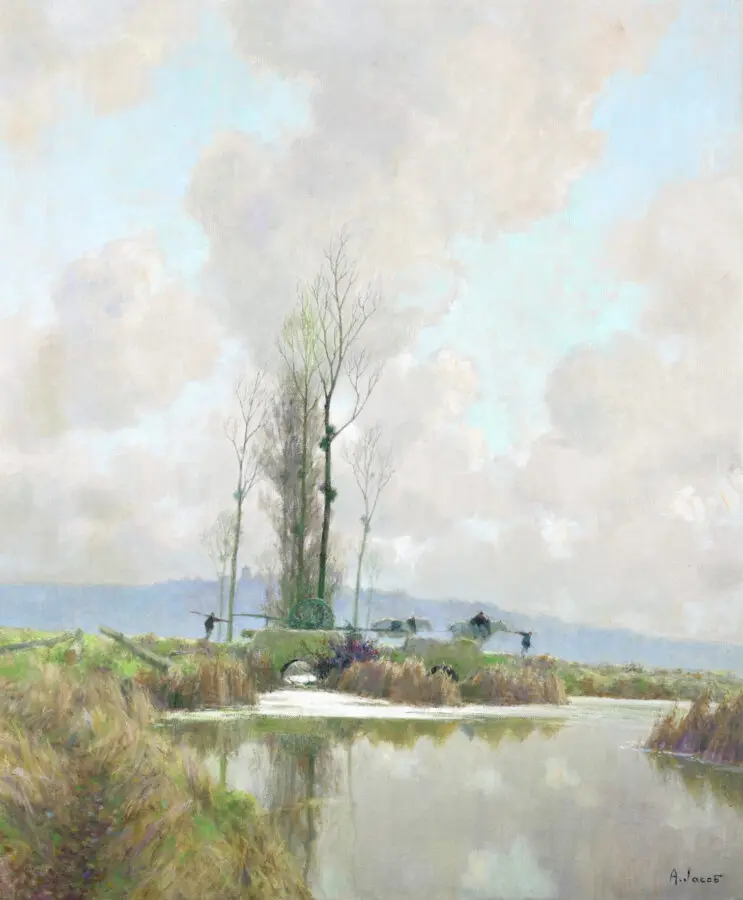
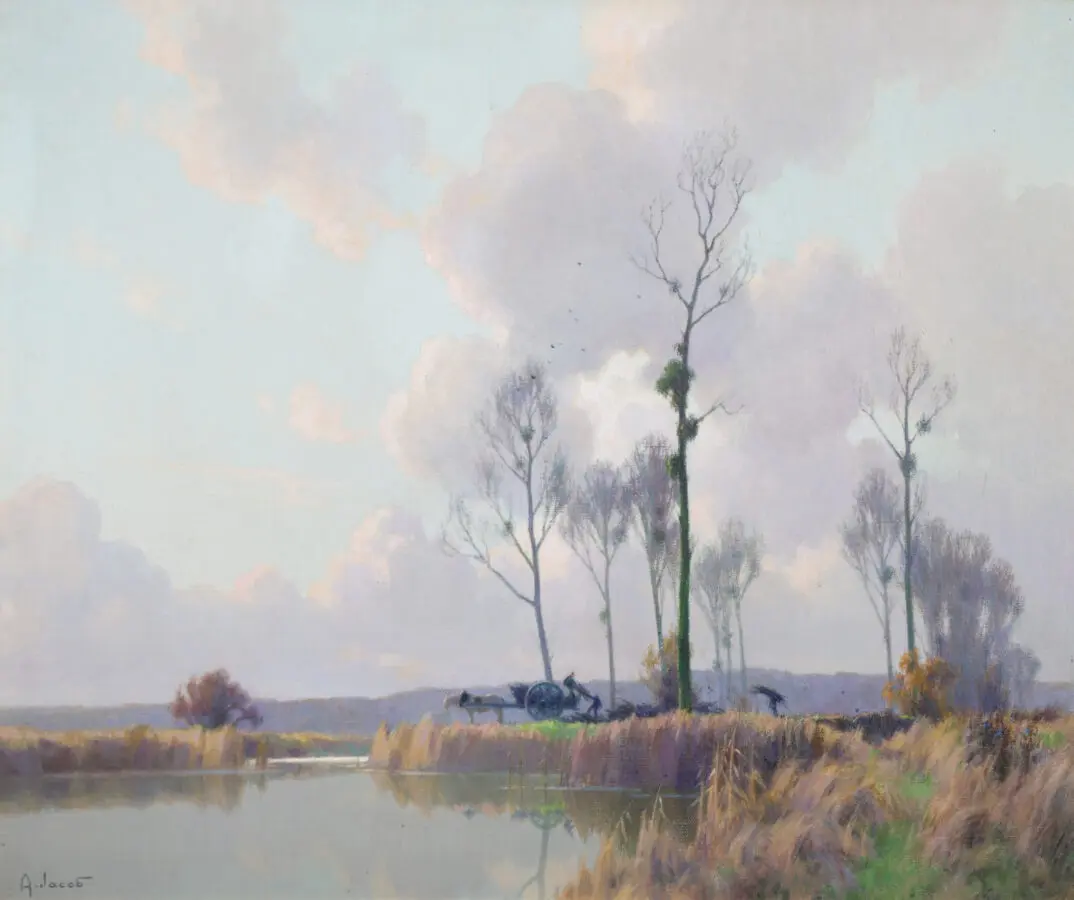
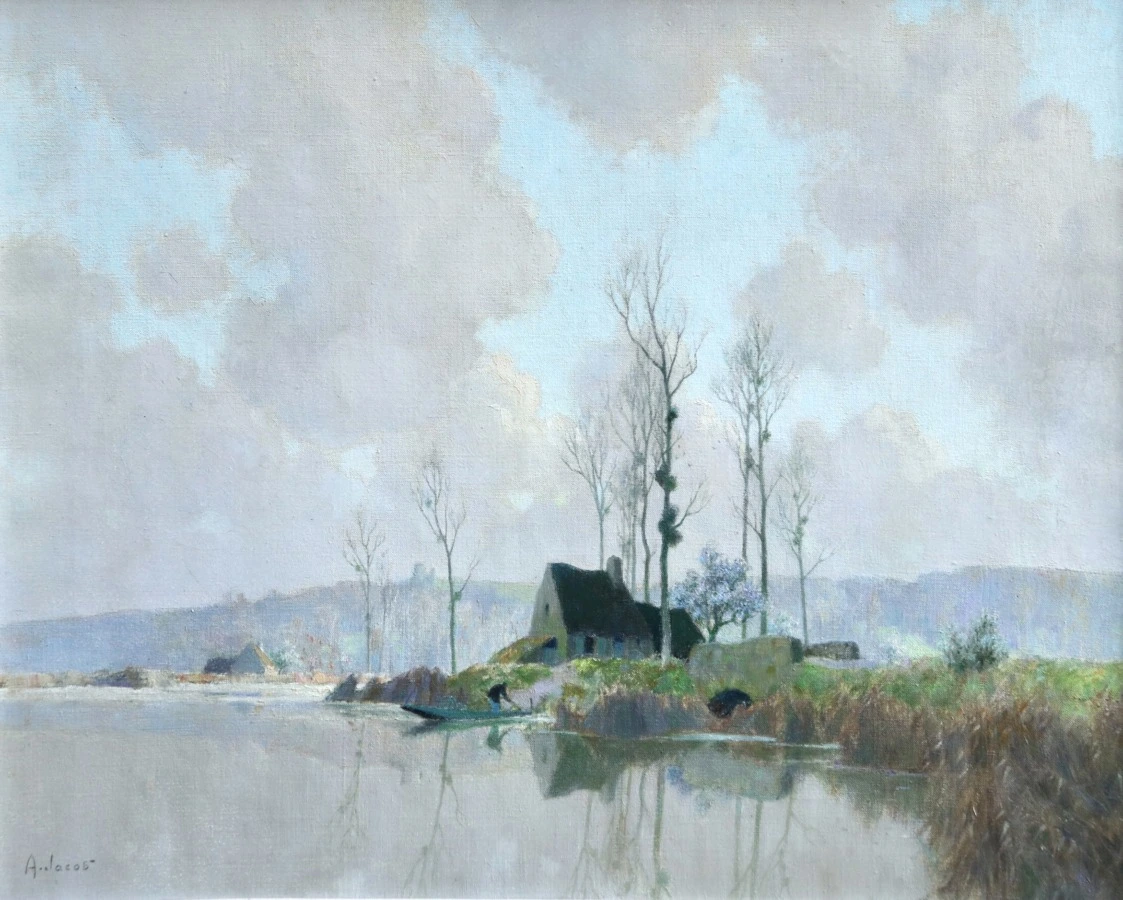
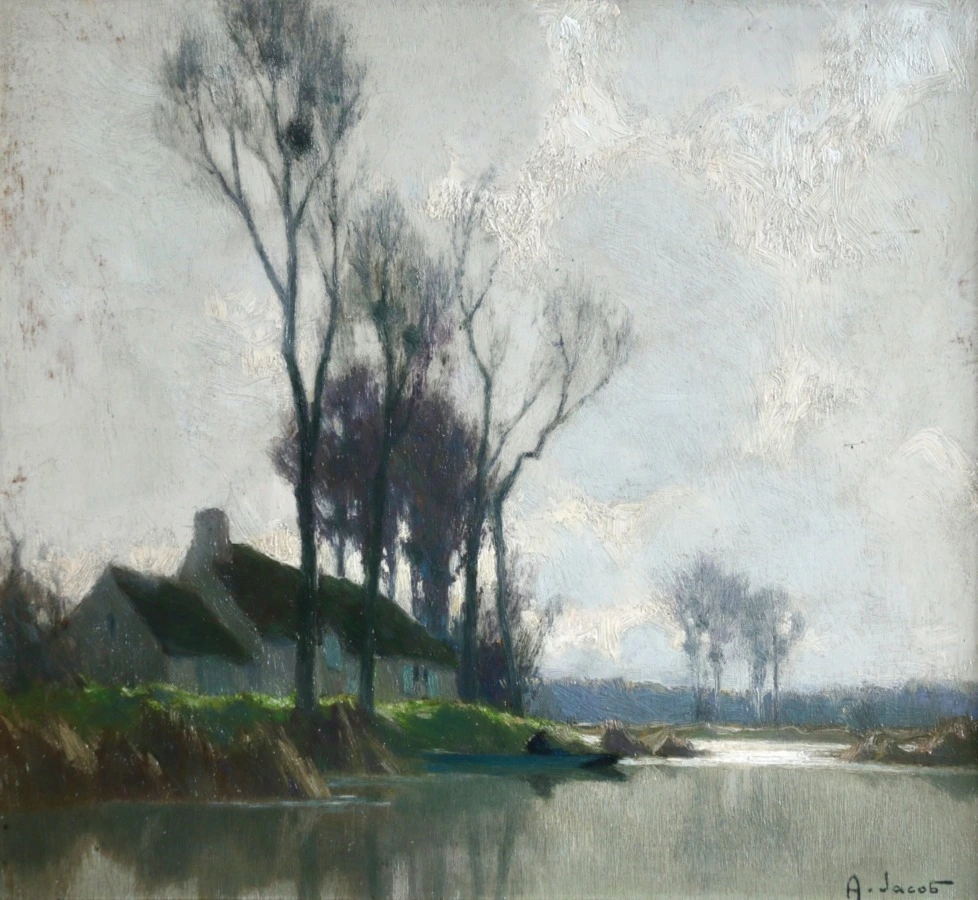
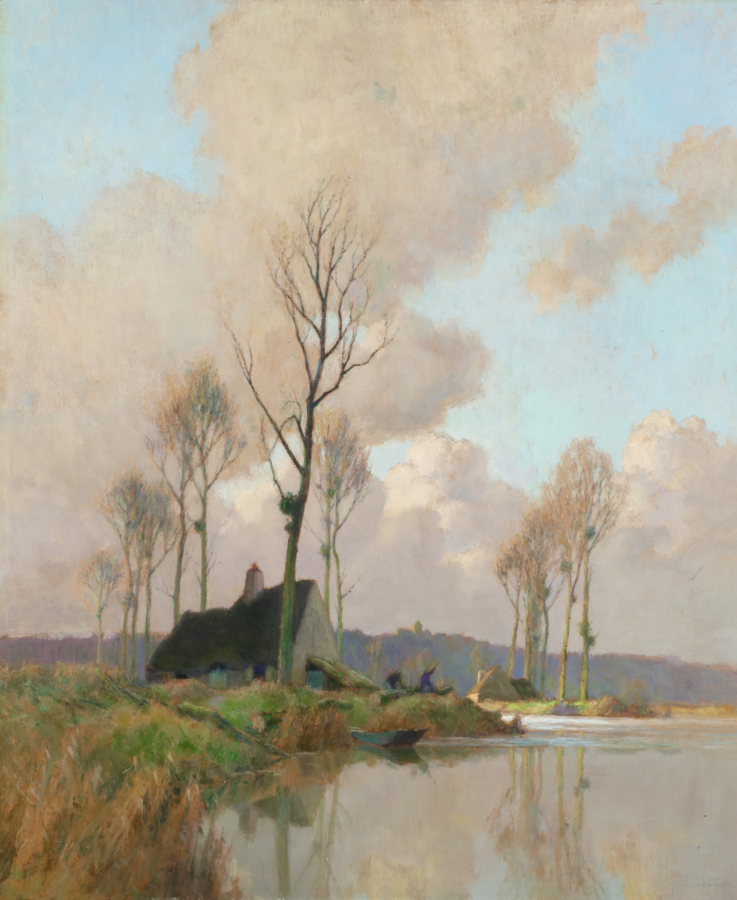
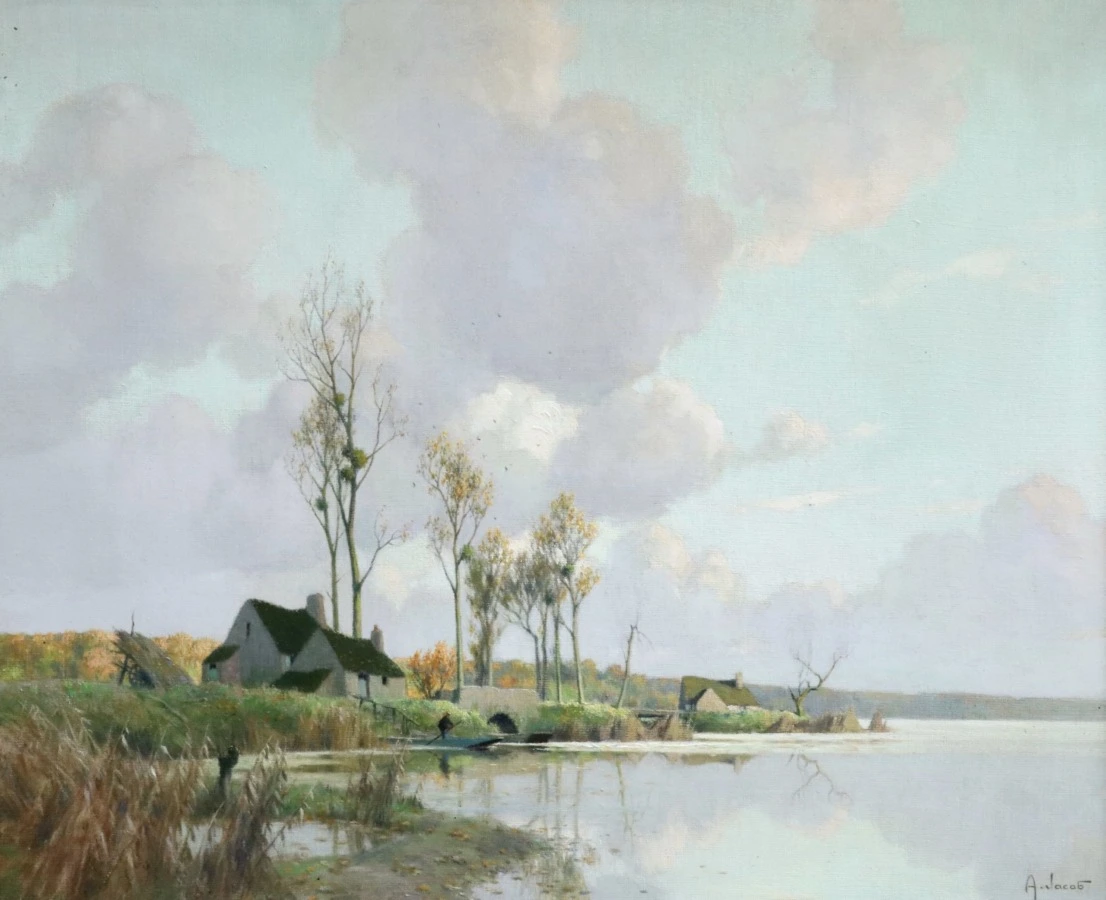
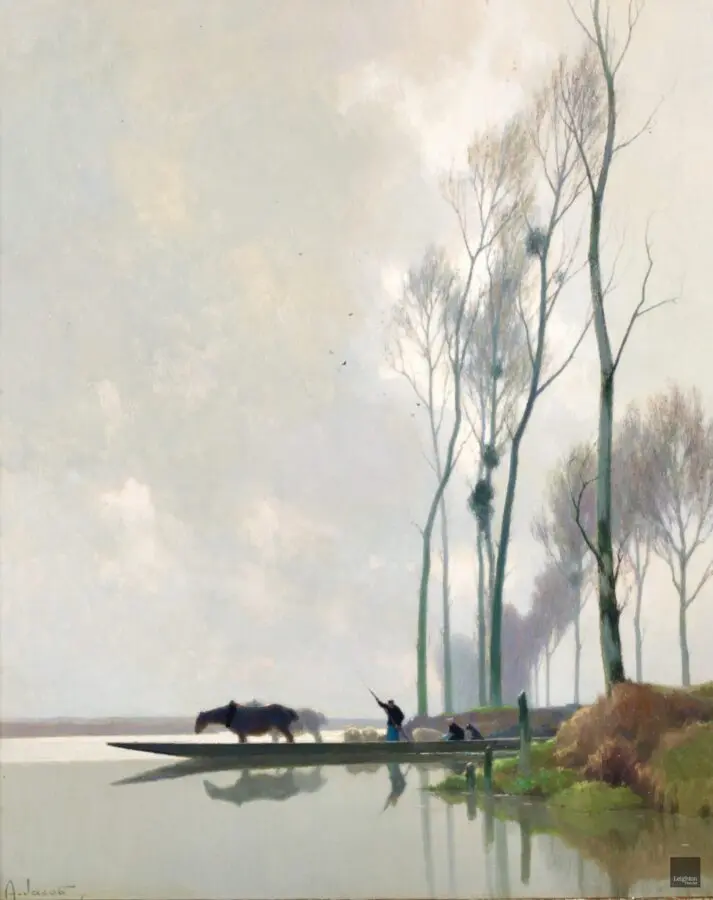
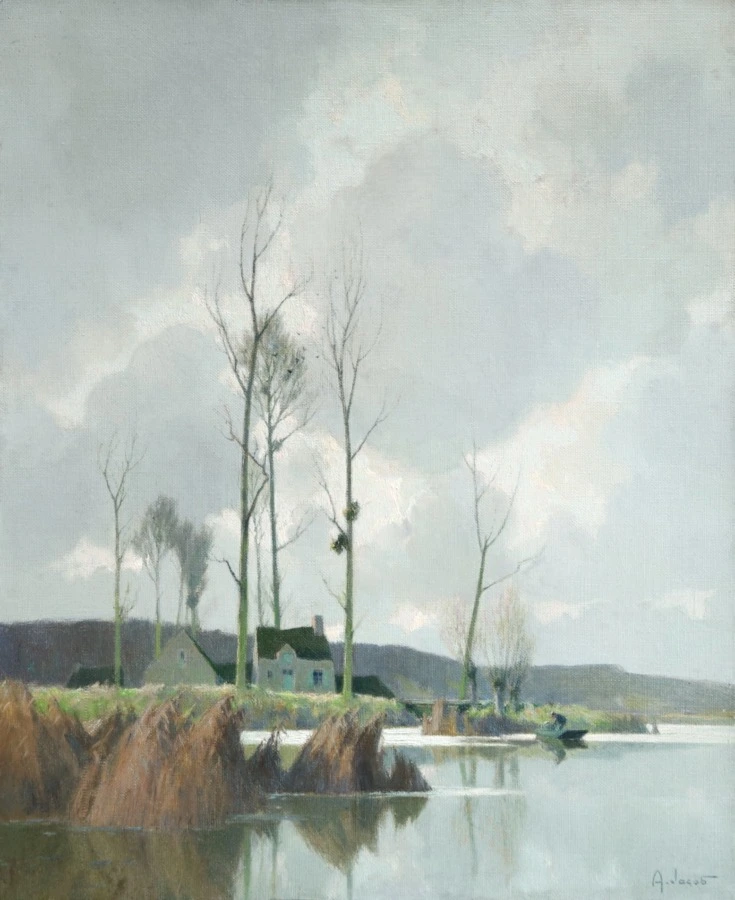
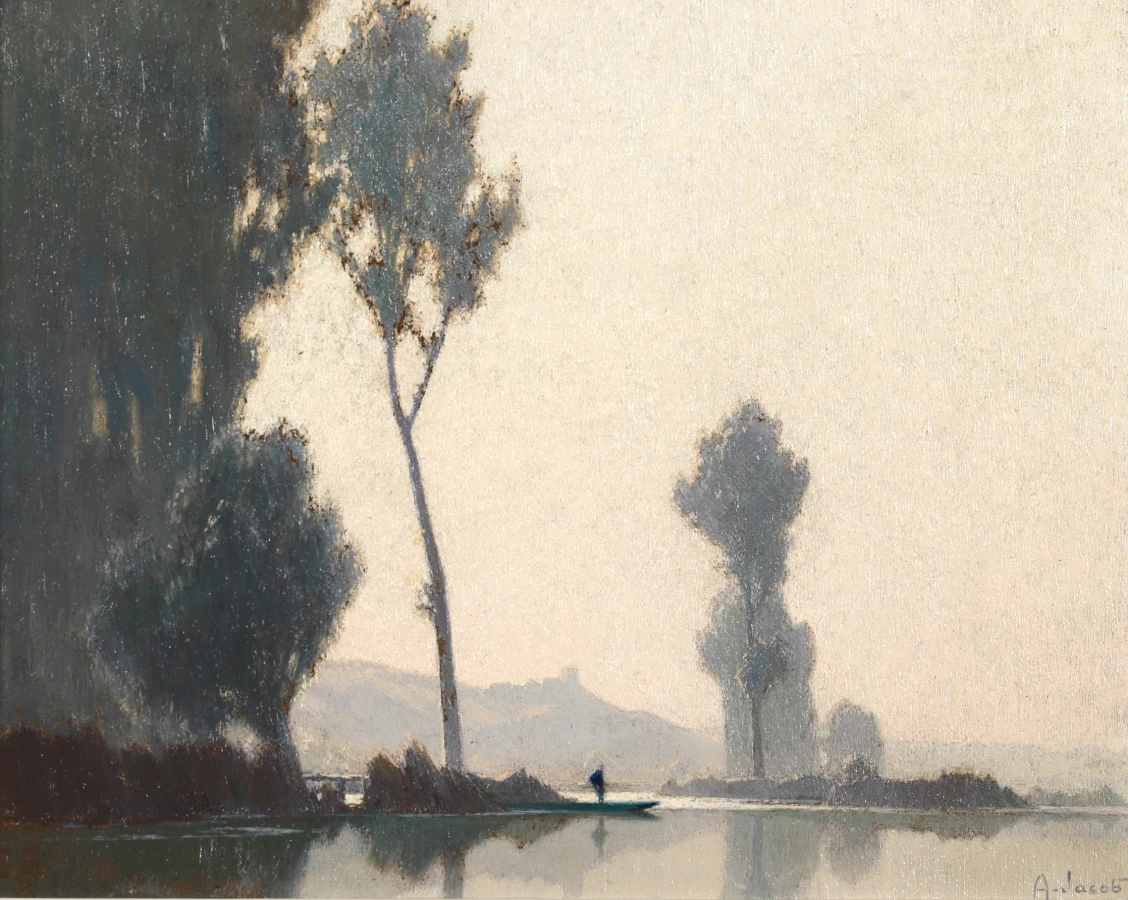
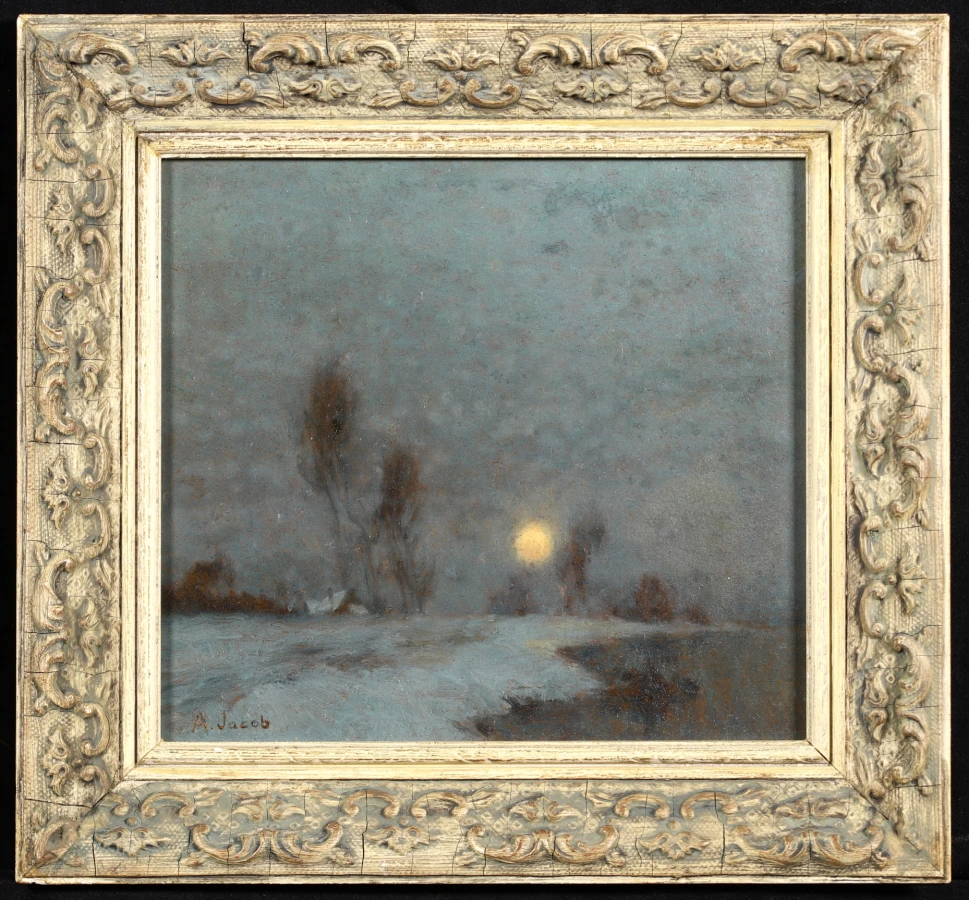
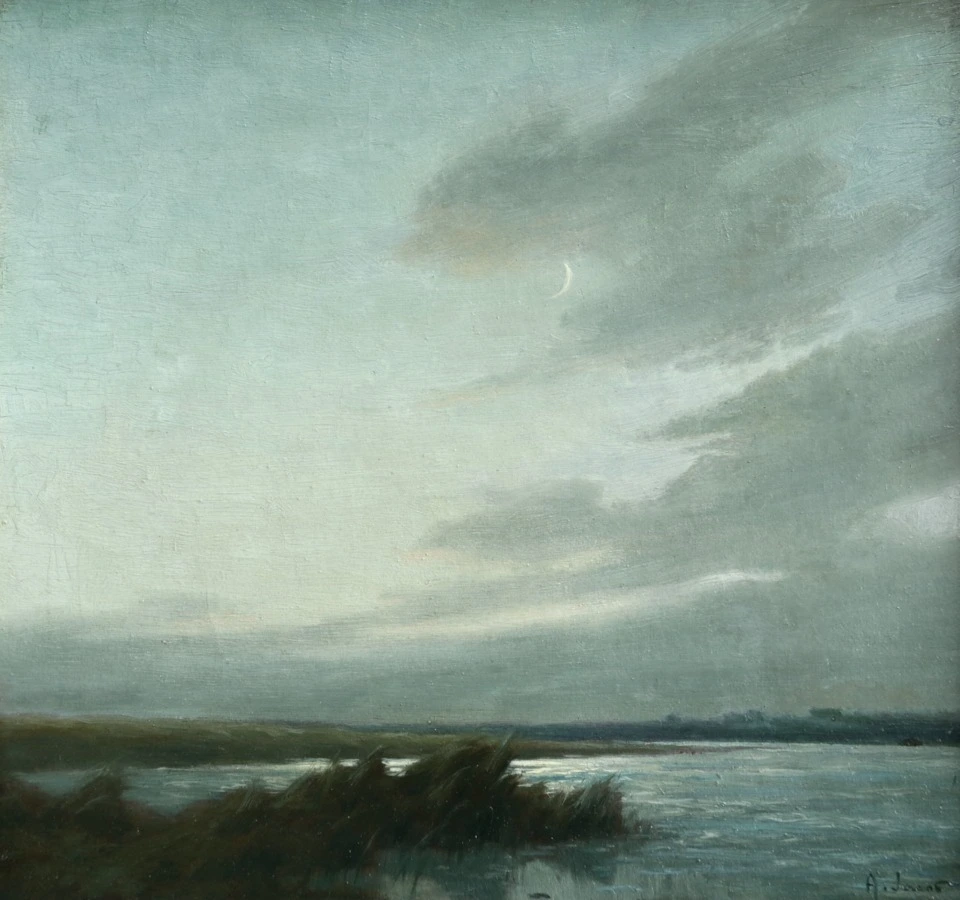
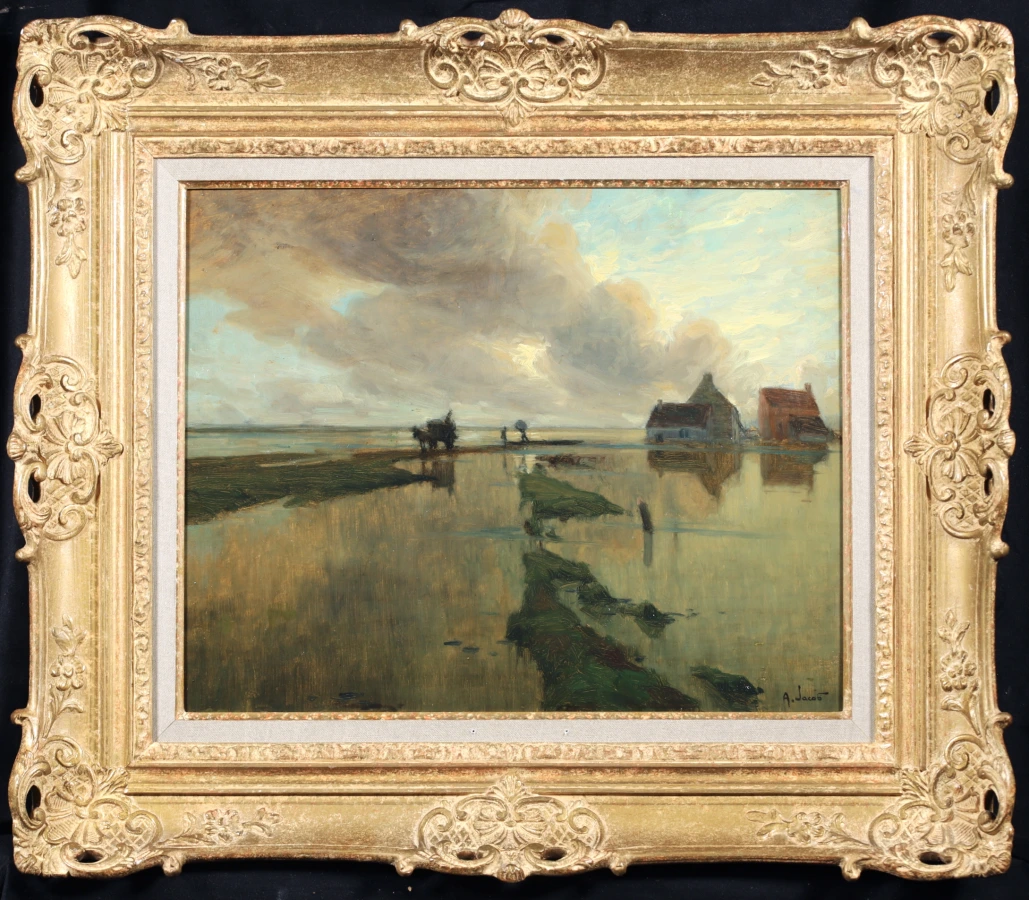
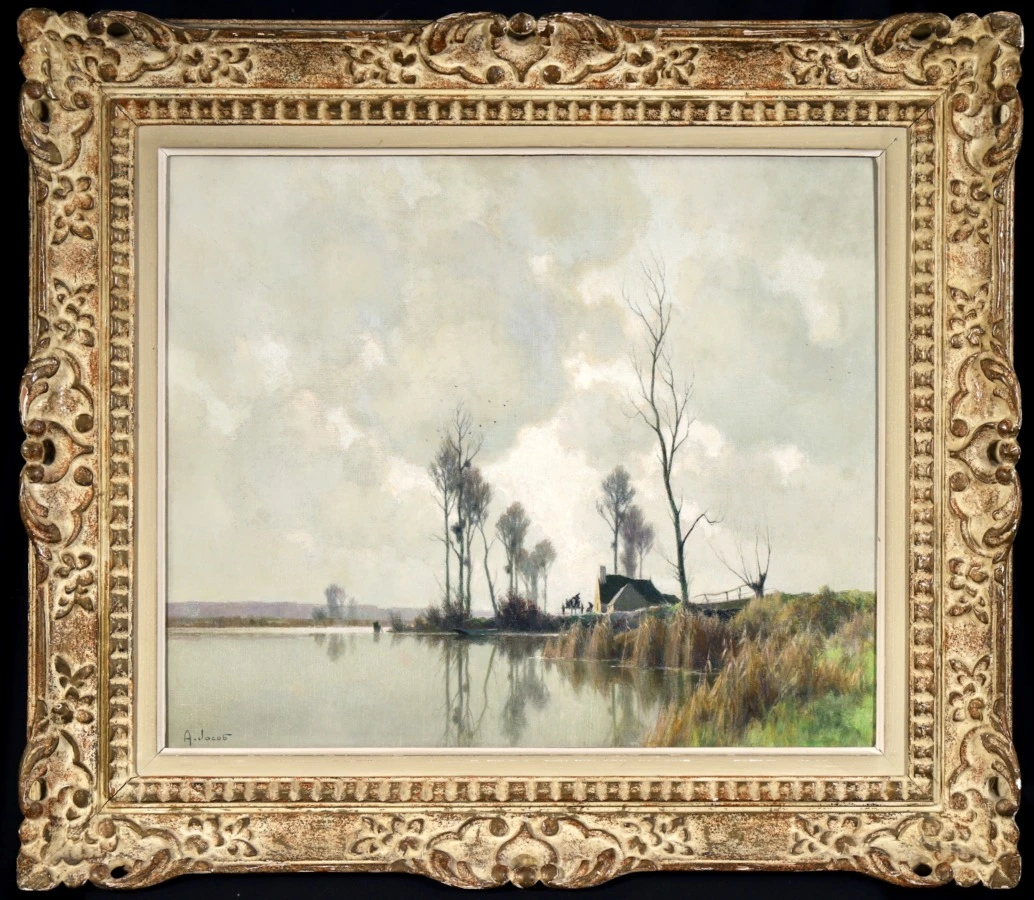
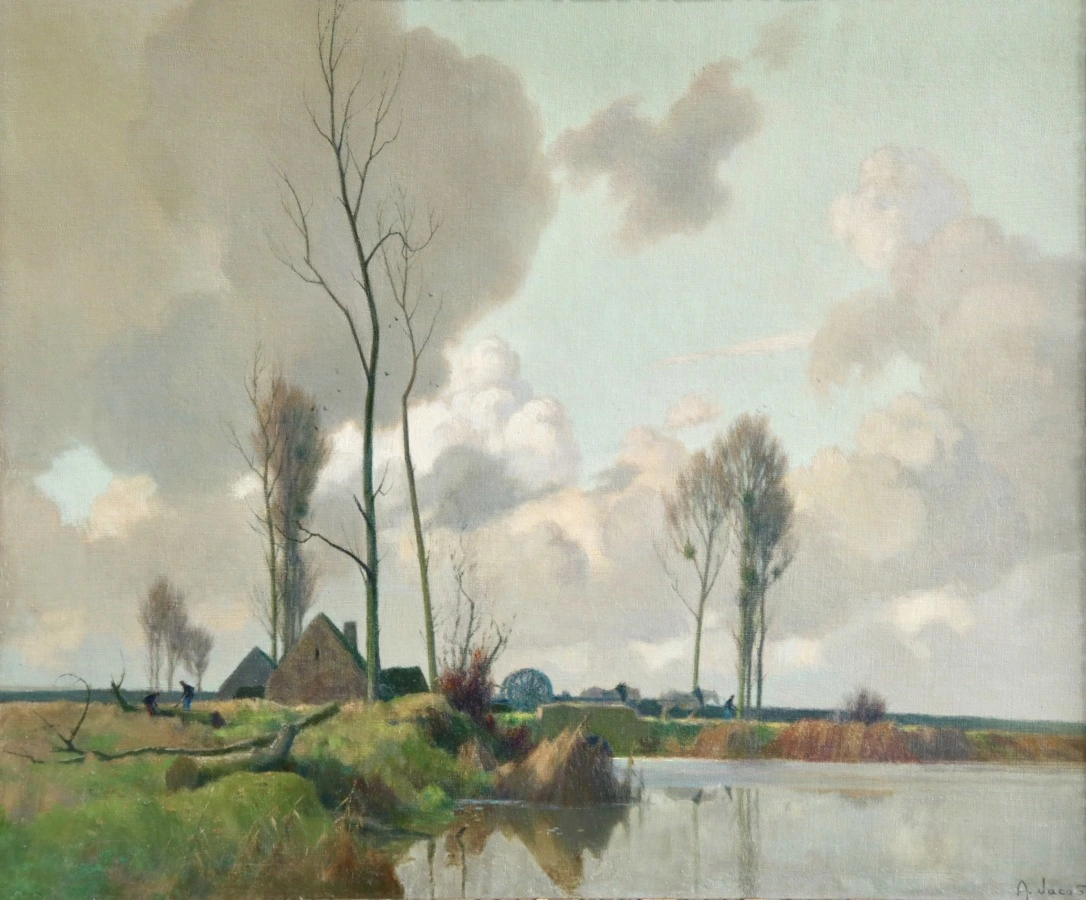
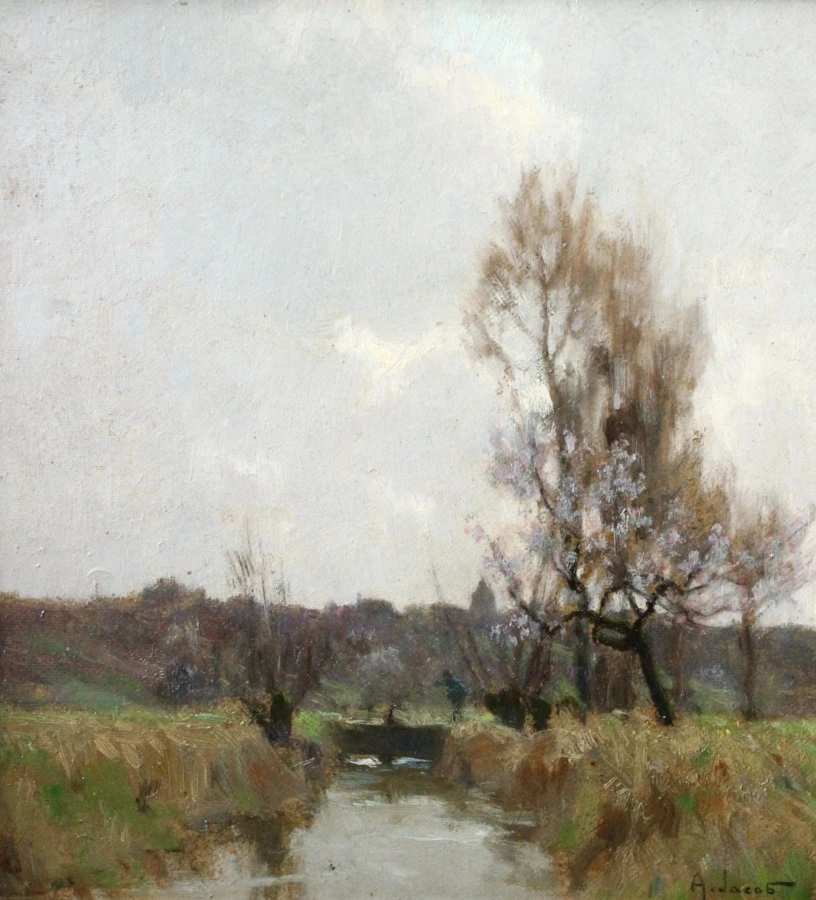
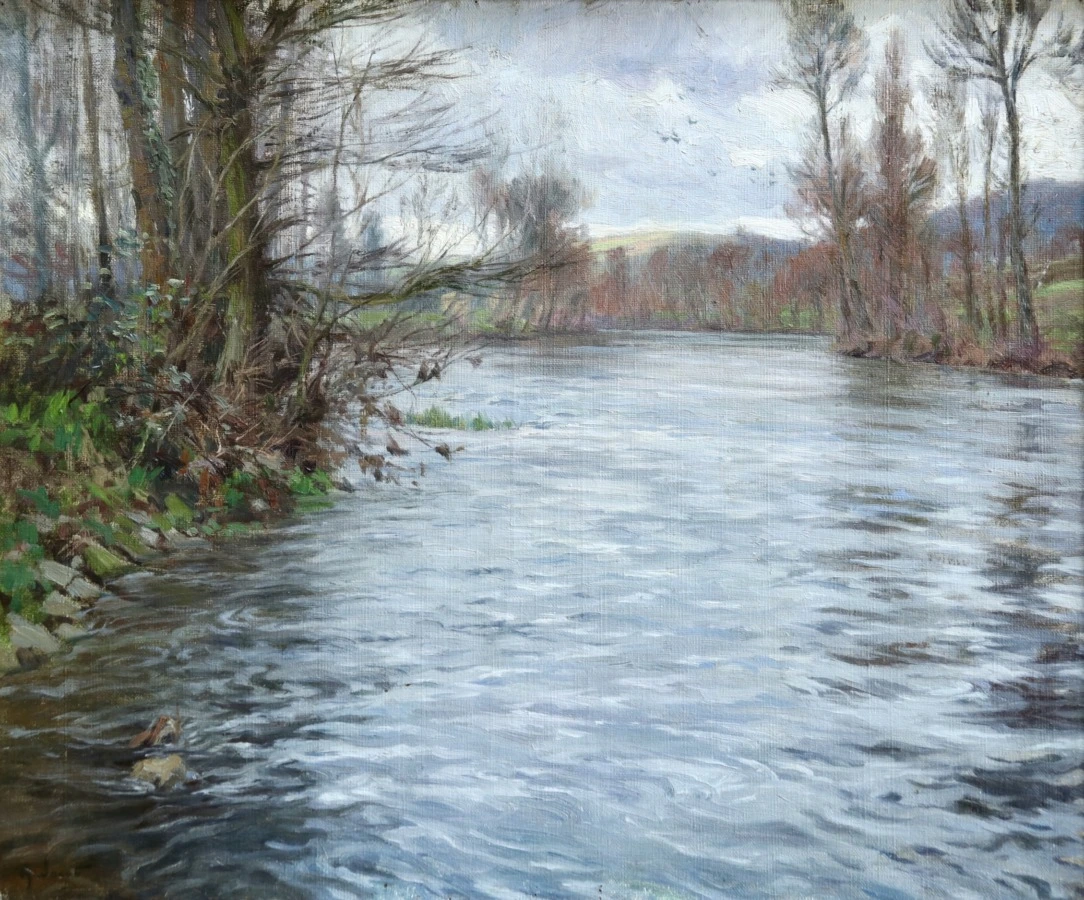
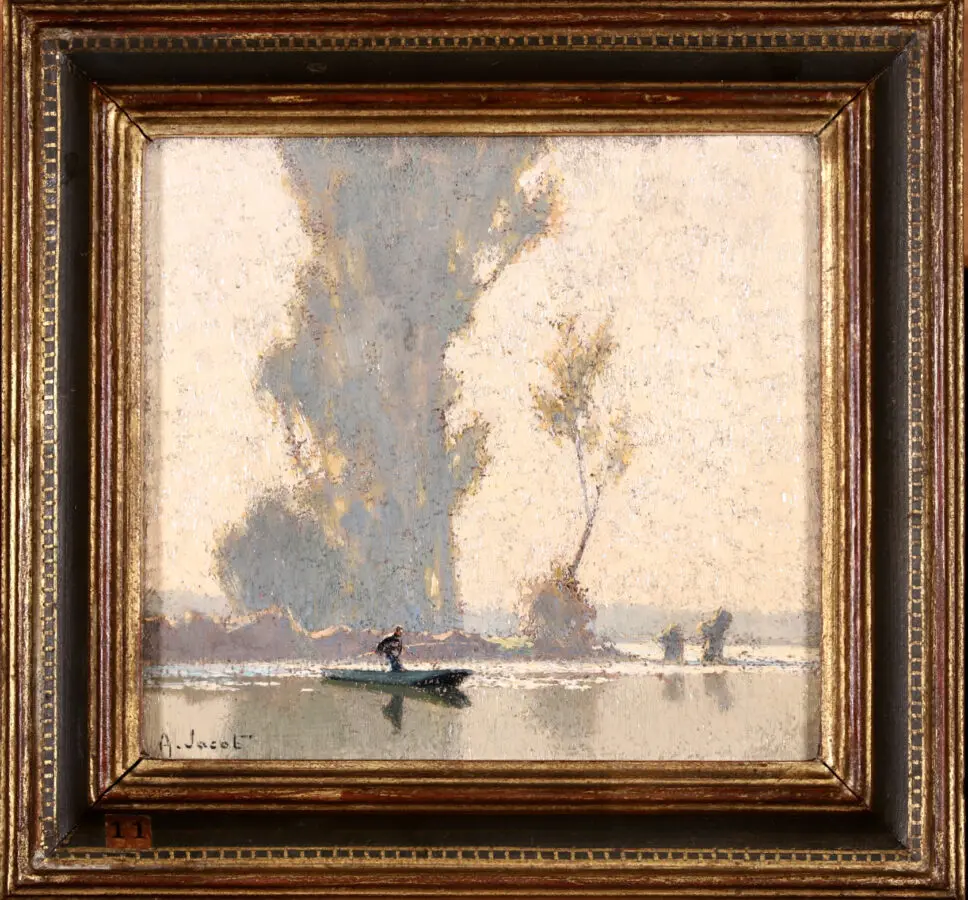
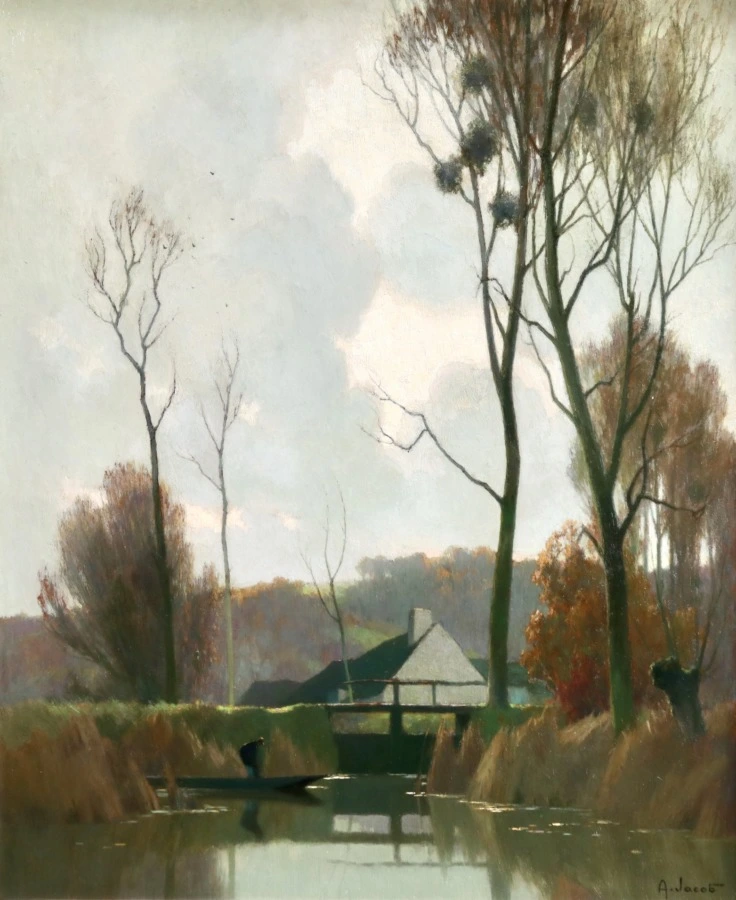
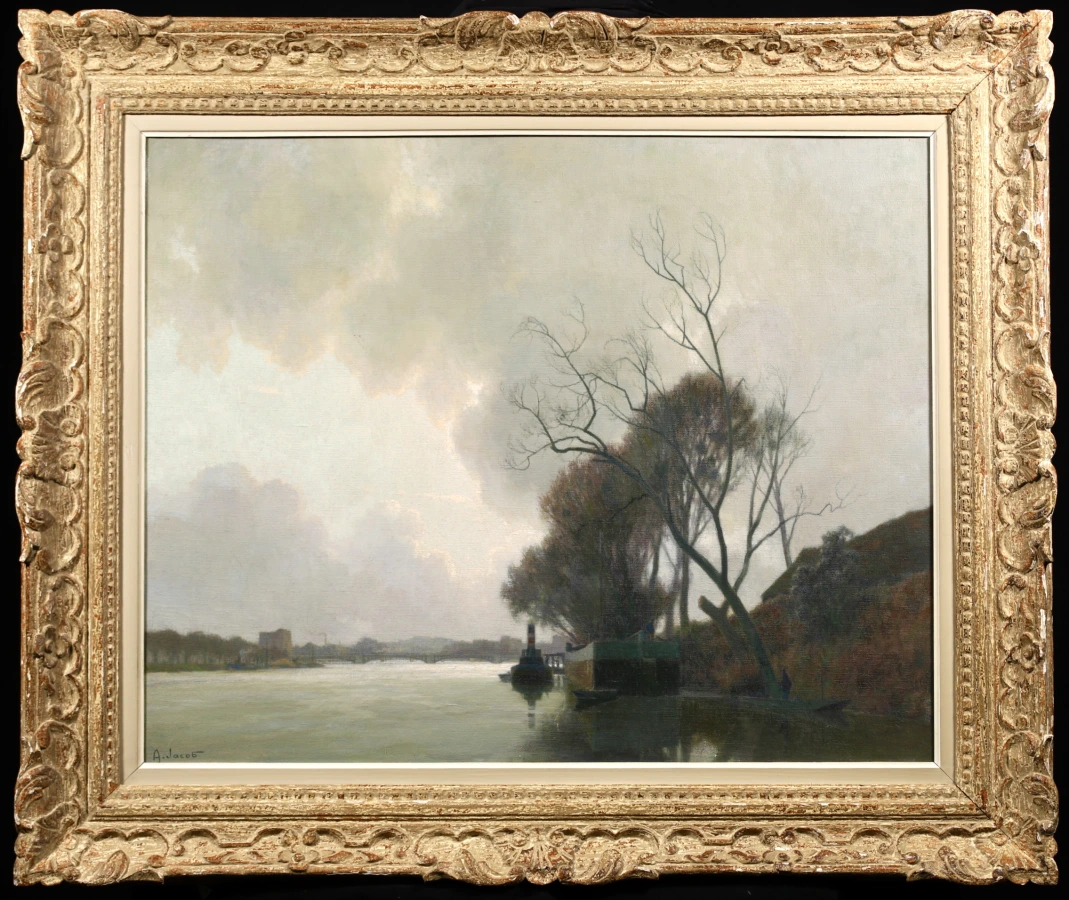
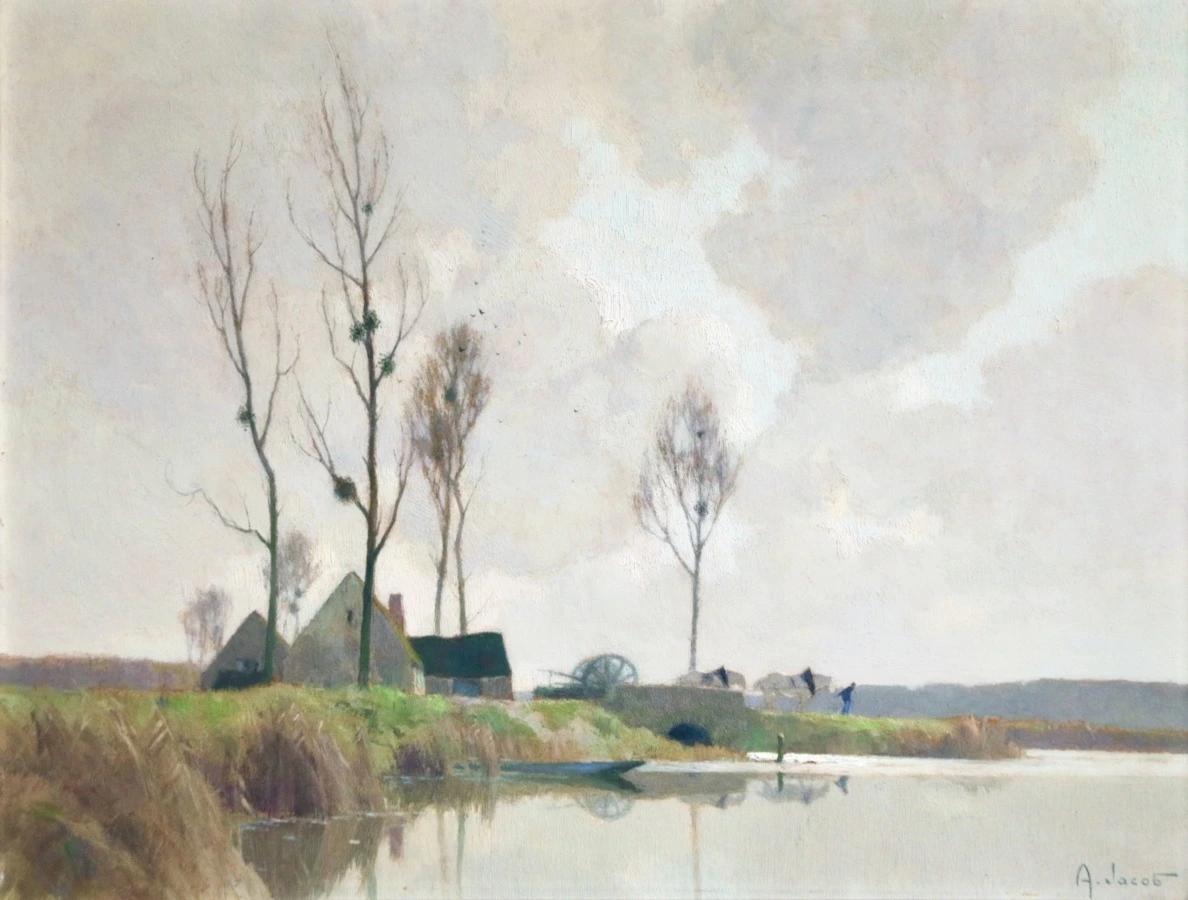
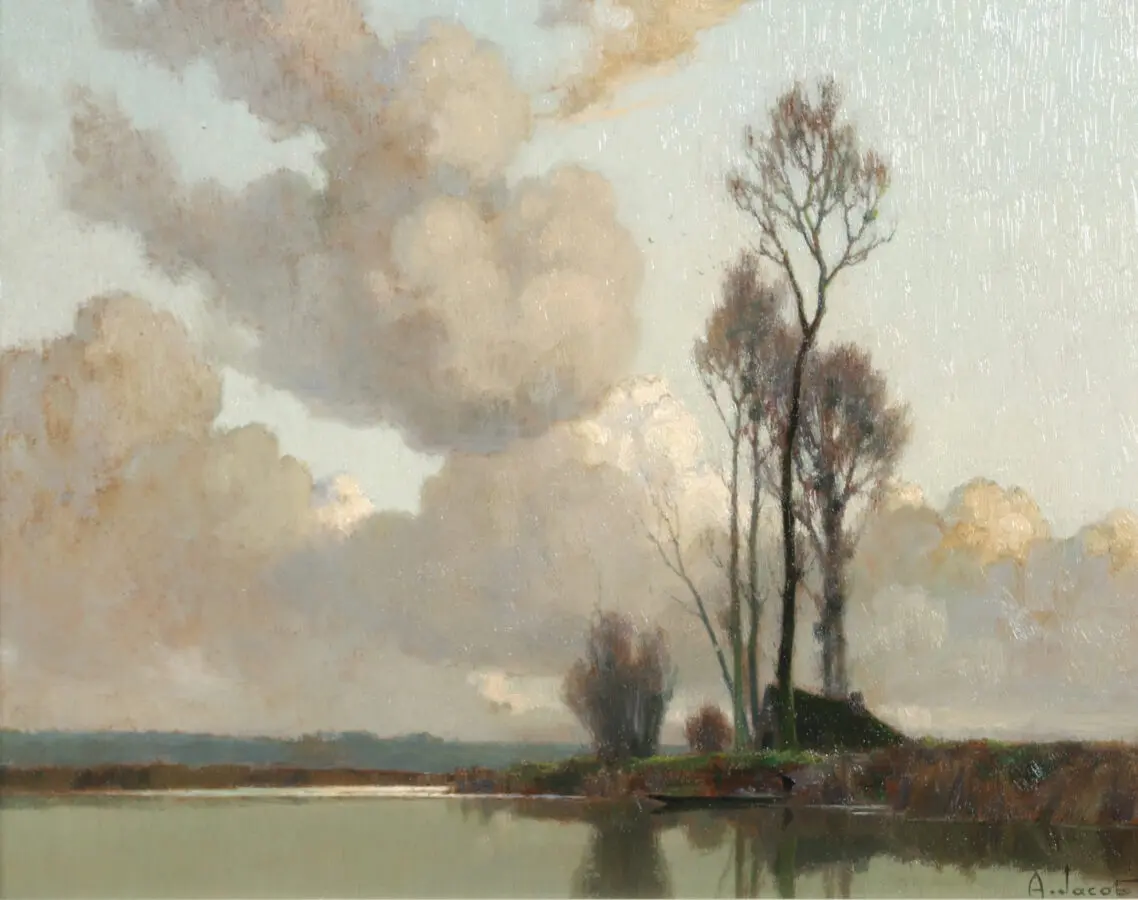
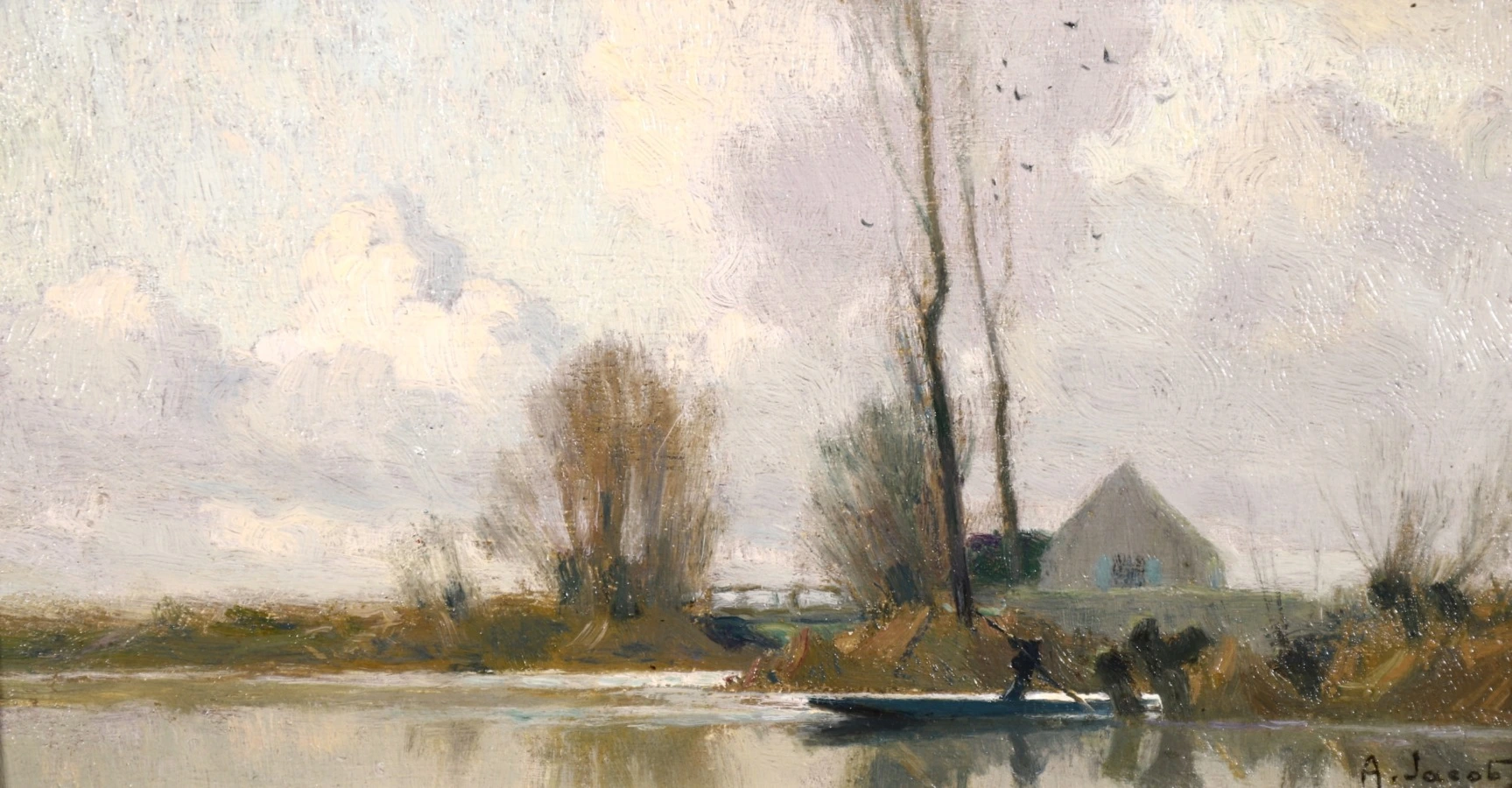
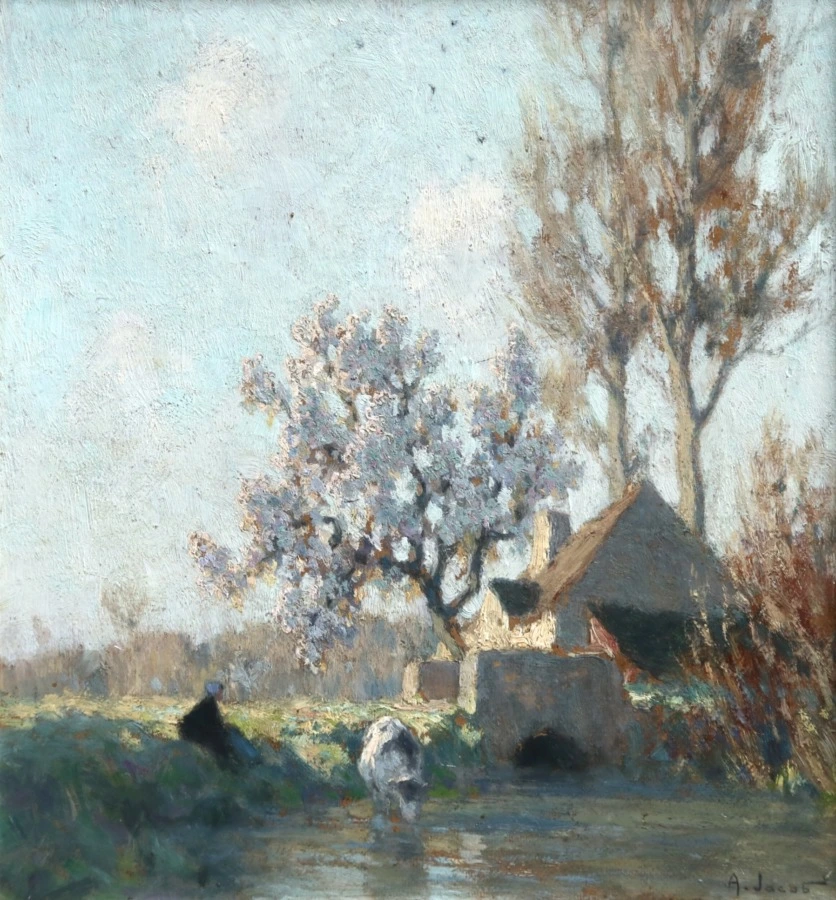
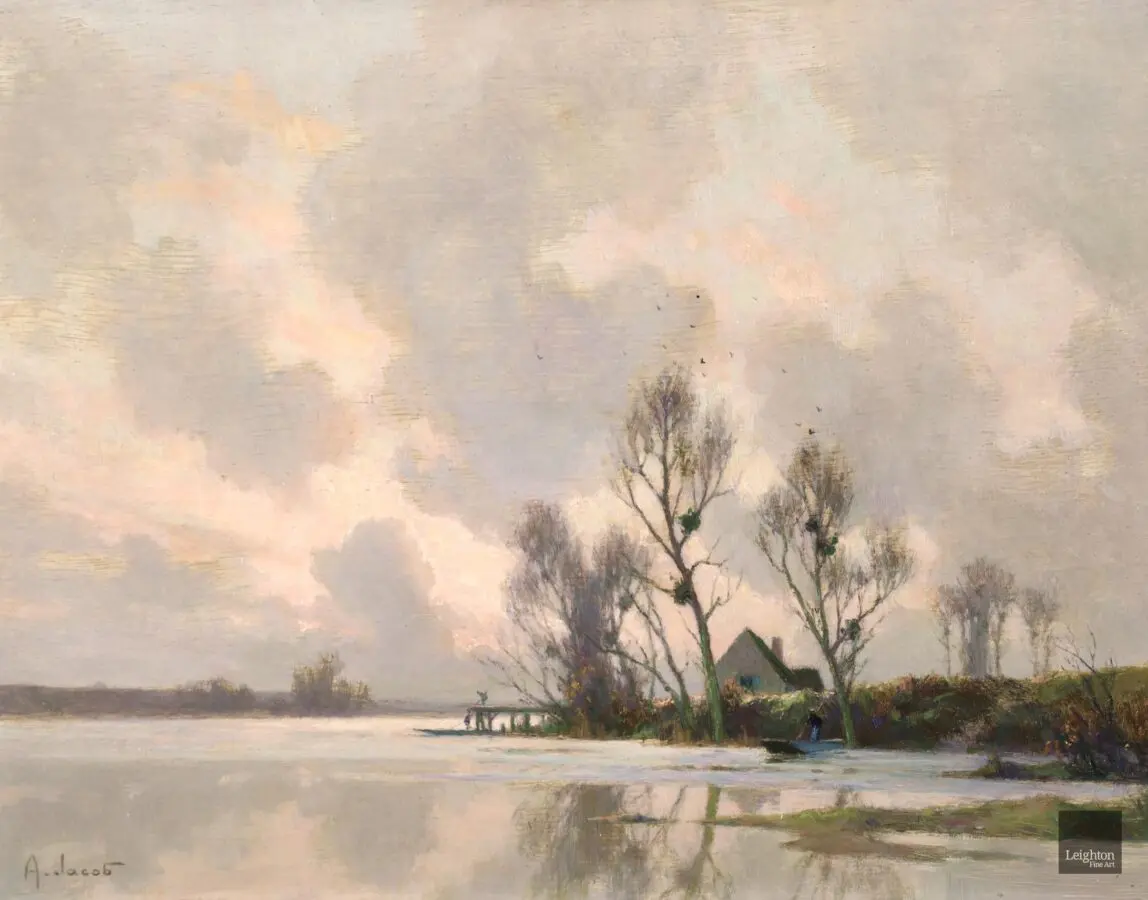
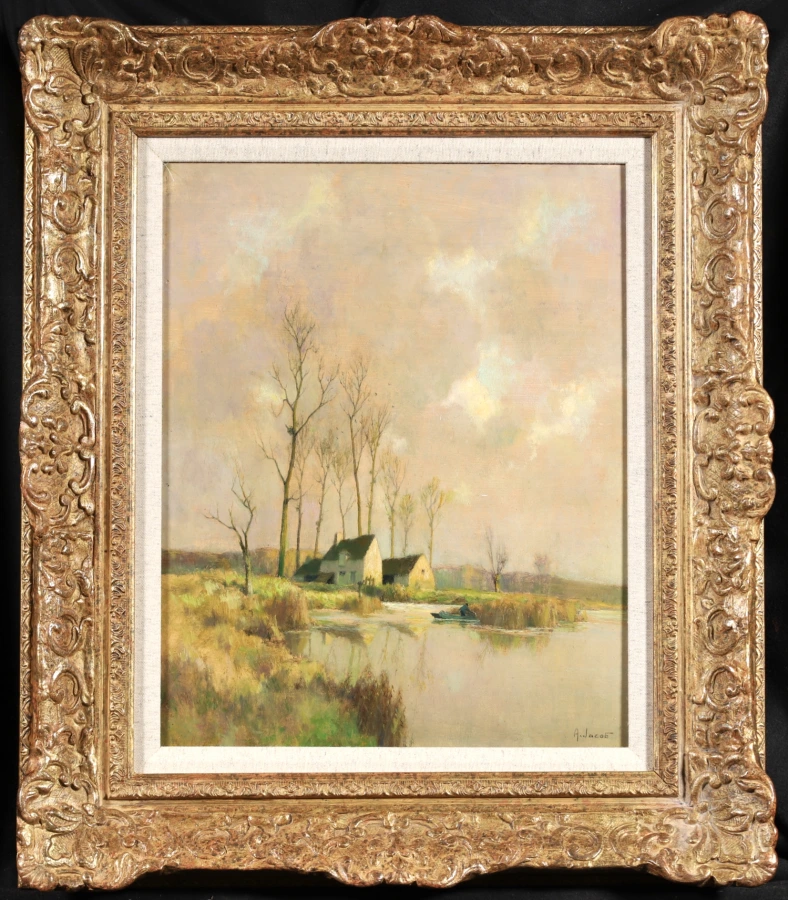
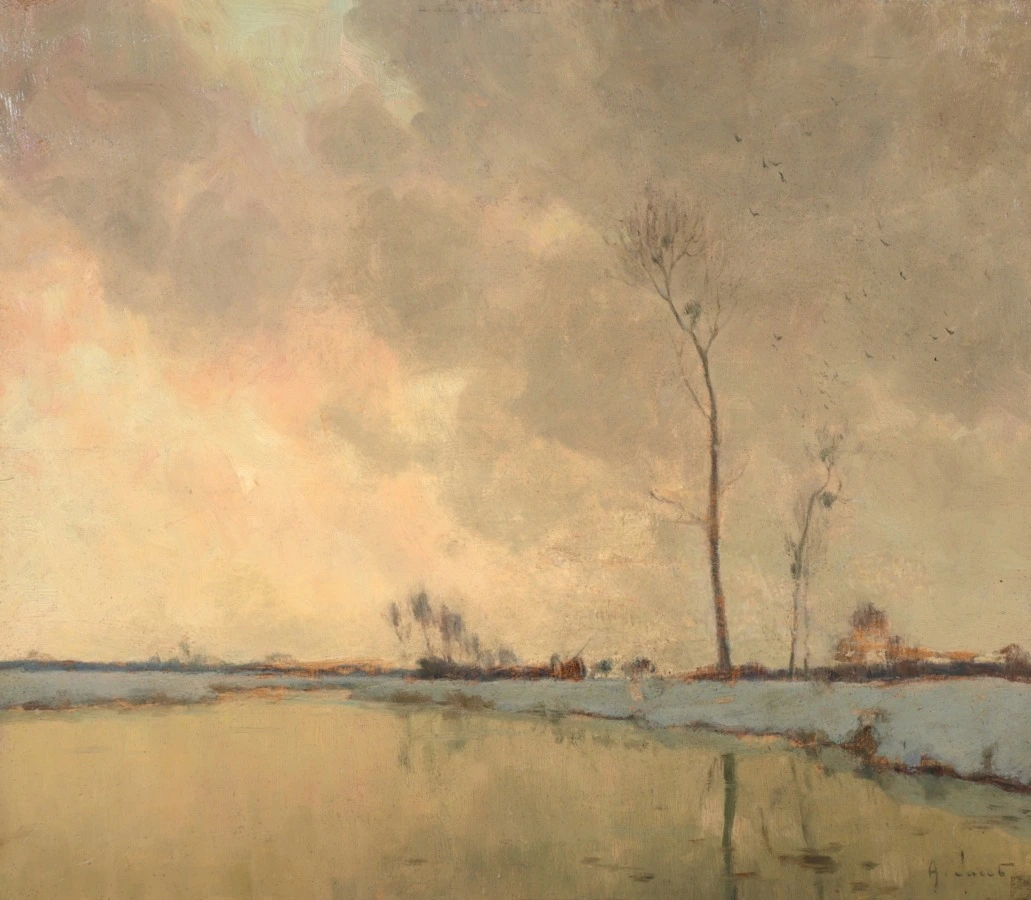
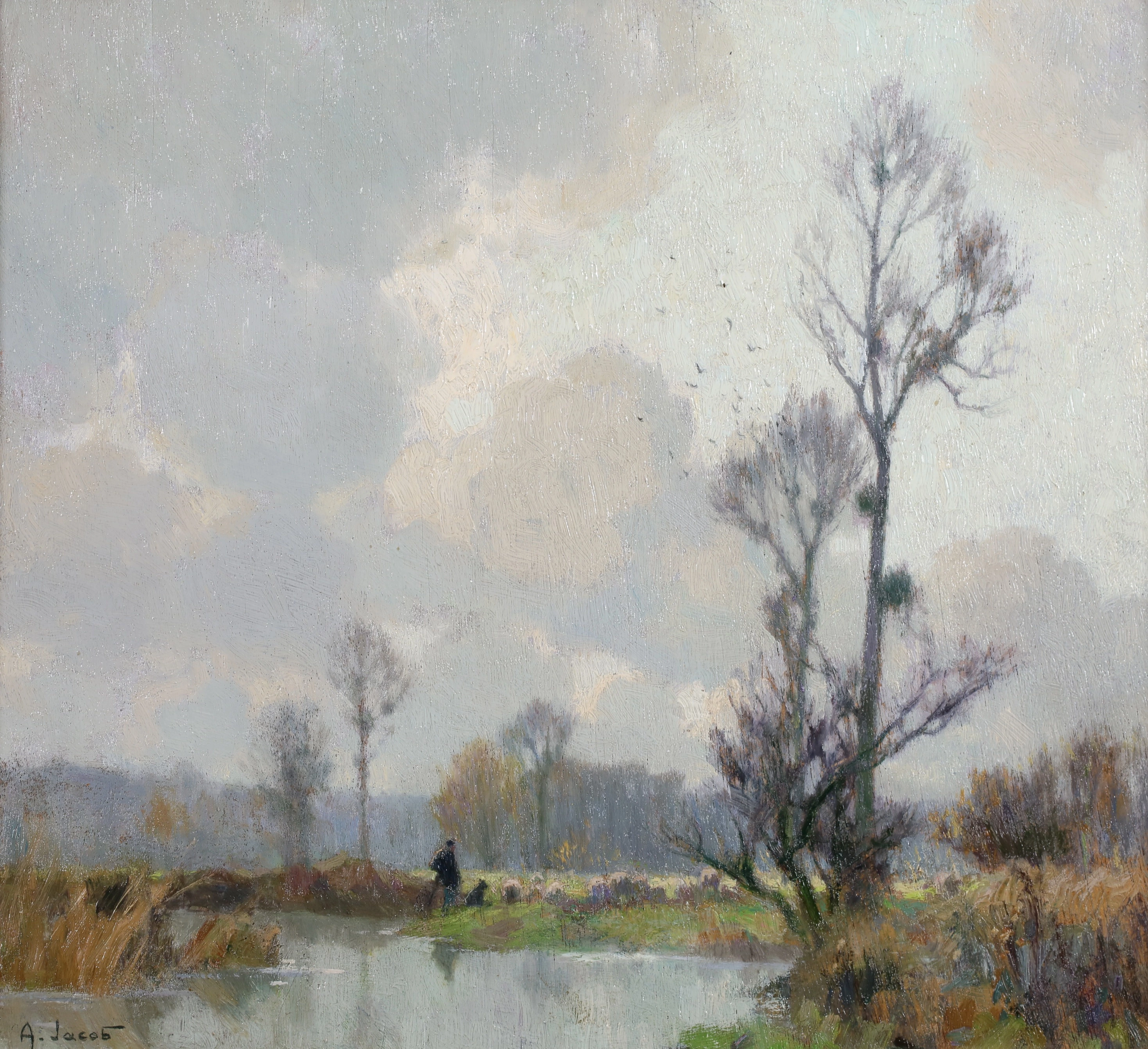
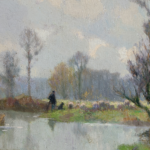
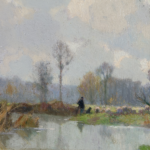
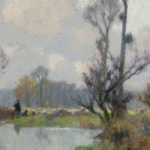
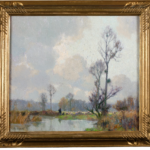
| About this Painting | A shepherd with his flock beside a marsh — the figures small and unhurried in the middle distance, the great bare tree dominating the right of the composition, the water still in the foreground, birds turning in the white sky above. Alexandre Jacob (1876–1972) composed his landscapes from exactly these elements: water, sky, a solitary tree, the sense of an afternoon that has its own rhythm and is in no hurry to end. The palette is the defining quality of his work and this canvas demonstrates it completely. The greys and whites of the sky are not flat but complex — rose, lavender, cream and pale blue working together to give the cloud mass its luminosity and weight. The water in the foreground mirrors these tones with the quiet accuracy of a painter who understood reflection not as a technical device but as the whole point: the sky and the landscape completing each other in the still surface. The bare tree, the reed beds, the distant treeline across the marsh — all are handled with an economy and a confidence that comes from a lifetime of looking at this kind of French countryside and knowing what matters and what does not. Jacob was born in Paris in 1876 and lived just outside the city at Asnières-sur-Seine, on the banks of the river he painted for seven decades. He studied at the Académie des Beaux-Arts under Eugène Claude and began exhibiting at the Paris Salon in 1899. He was one of the founders of L'Union des Beaux-Arts de Lagny alongside Édouard Léon Cortès and Henri Lebasque. He received the Gold Medal of the Paris Salon in 1914 and a Gold Medal at the Paris International Exhibition of 1937. He died in 1972, aged ninety-six, having devoted his entire working life to the landscapes of the Île-de-France with a consistency and depth that very few painters of any period have matched. |
£4,950.00
GBP