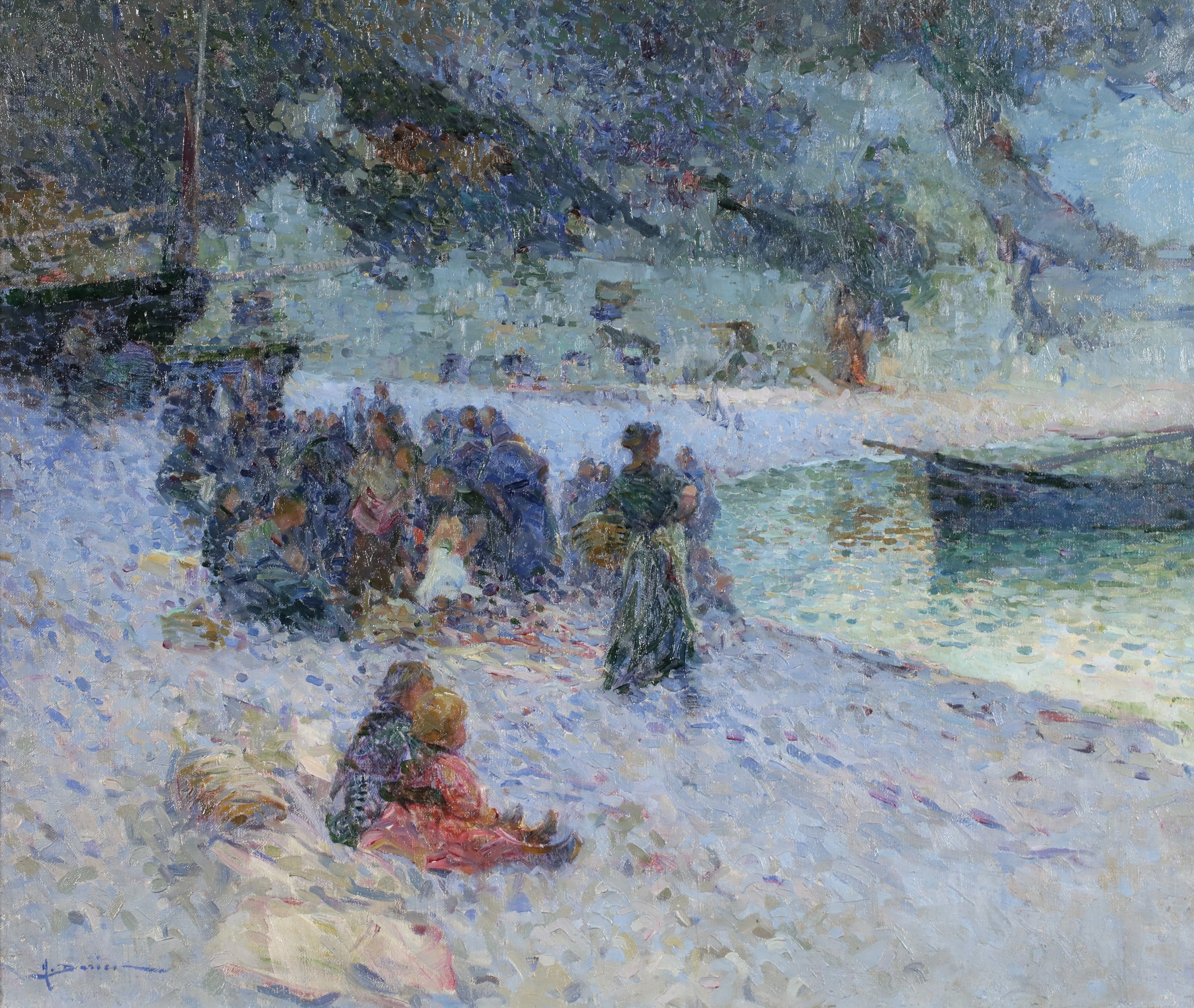
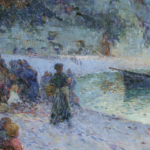
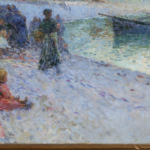
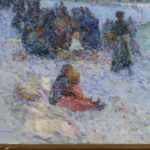
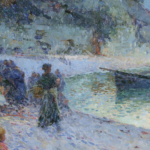
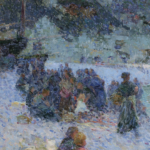
Medium: Oil on canvas
Signed: Signed lower left
Size: 18.00" x 22.00" (45.7cm x 55.9cm)
Framed Size: 22.00" x 26.00" (55.9cm x 66.0cm)
Dated: c. 1910
£7,950.00
GBP
Additional information
Condition: Very good condition
Provenance: Private collection - Normandy
About this painting
Love the work of Henri Gaston Darien?
Sign up to receive notifications when new artworks by Henri Gaston Darien are added to our collection.
Henri Darien studied with Jules Lefebvre and Guillemet. He became a member of the Société des Artistes Français in 1886 and exhibited regularly at their Salons, receiving numerous distinctions, notably: an honourable mention in 1889; third-class medal, 1897; Prix de Raigecourt-Goyon, 1897; second-class medal, 1899. His work appeared at the 1900 Exposition Universelle in Paris. He was made a Chevalier of the Légion d'Honneur in 1910.
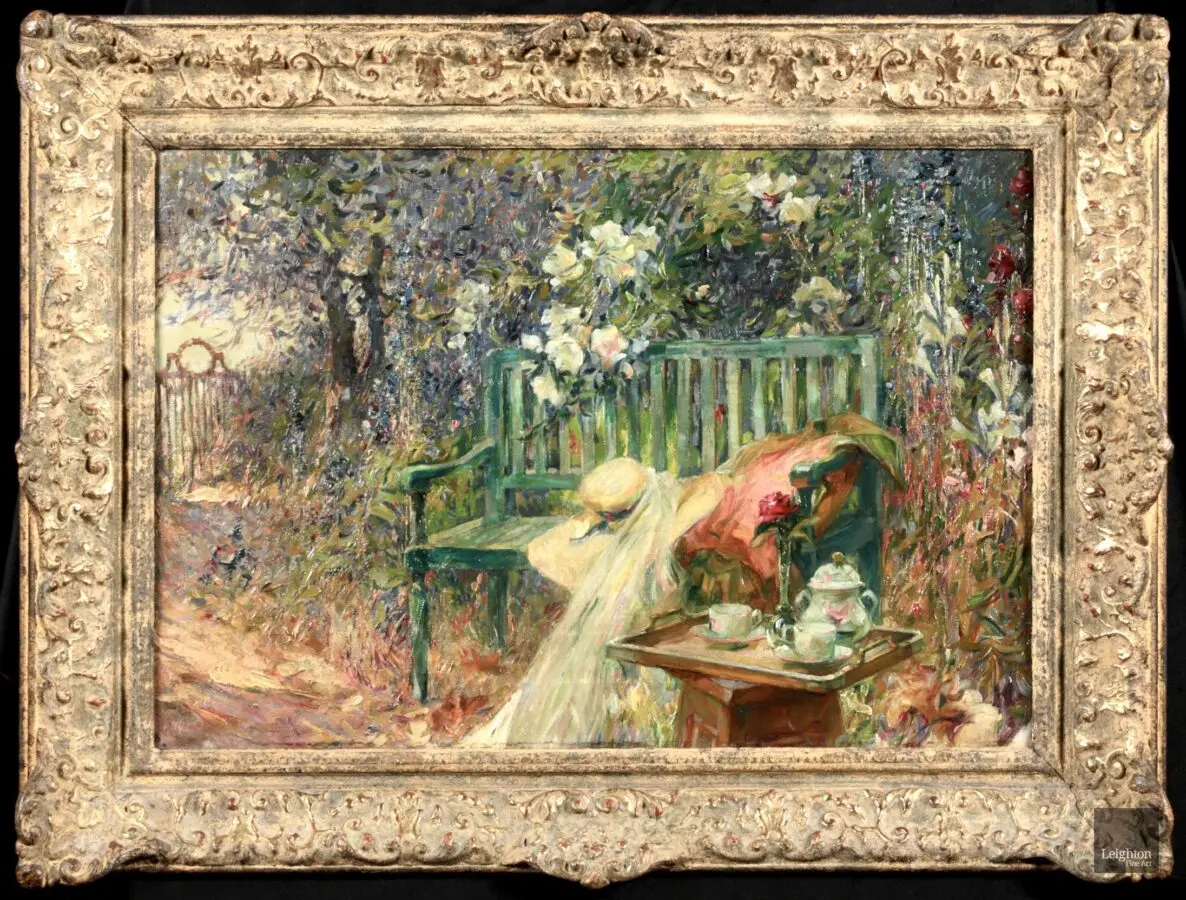
In his works, he chose a compromise between two contemporary styles: realism and Impressionism. His Auction is a scene featuring highly active real people, painted in a precise style; whereas the port and the transparent effects of the water in the background are obtained by means of small, light, luminous touches.
Museum and Gallery Holdings
Auxerre: In the Forest
Fécamp (Mus. des Terre-Neuvas et de la Pêche): Auction (La Criée) (1909, oil on canvas)
Response in
3 Hours
Our specialist team aims to respond to all inquiries within 3 hours during our opening hours.


Client Satisfaction
Guarantee
Boasting over 200 five-star reviews across Google, 1stDibs, and REVIEWS.io.

Platinum
Seller
Recognized as an experienced seller who consistently exceeds customer expectations.
Member since 2016 with over 100 five-star reviews.
Two Decades
of Expertise
Leighton Fine Art brings over two decades of experience in the fine art industry.
Share on social media