Johannes ('Jan') Sluijters studied at the fine arts academy in Amsterdam, where he was a Rome Prize laureate in 1904. He duly travelled to Italy in 1906 to 1907, also visiting Spain and France. His friendship with Piet Mondrian dated from 1906, and the two artists often painted side by side out of doors. Sluijters settled in Amsterdam in 1911, although he spent 1915 to 1916 in Staphorst, where he met Le Fauconnier. He exhibited alongside Mondrian at the Stedelijk Museum in Amsterdam in 1909 (at a juncture when Mondrian was still some way from his subsequent Neo-Plasticism). Then, in 1910, Sluijters joined with Cornelis Spoor, Jan Toorop and Mondrian to establish the Moderne Kunstring art circle. His work has featured at recent group exhibitions, including Dutch 20th Century Art: Beauty in Precision, from Van Gogh to Mondrian ( Art, Pays-Bas, XXe siècle - La Beauté exacte, de Van Gogh à Mondrian) held at the Musée d'Art Moderne de la Ville de Paris in 1994, and, in 2003, at Lasting Attraction: Dutch Artists in Italy, 1806-1940 ( De blijvende verlokking: Nederlandse kunstenaars in Italië, 1806-1940), an exhibition held in Rotterdam to illustrate the impact of Italy on Dutch artists. Sluijters' first major solo exhibition was held at the Stedelijk Museum in Amsterdam in 1927. In 2003, the Kunsthal Museum in Rotterdam mounted a comprehensive retrospective of his work.
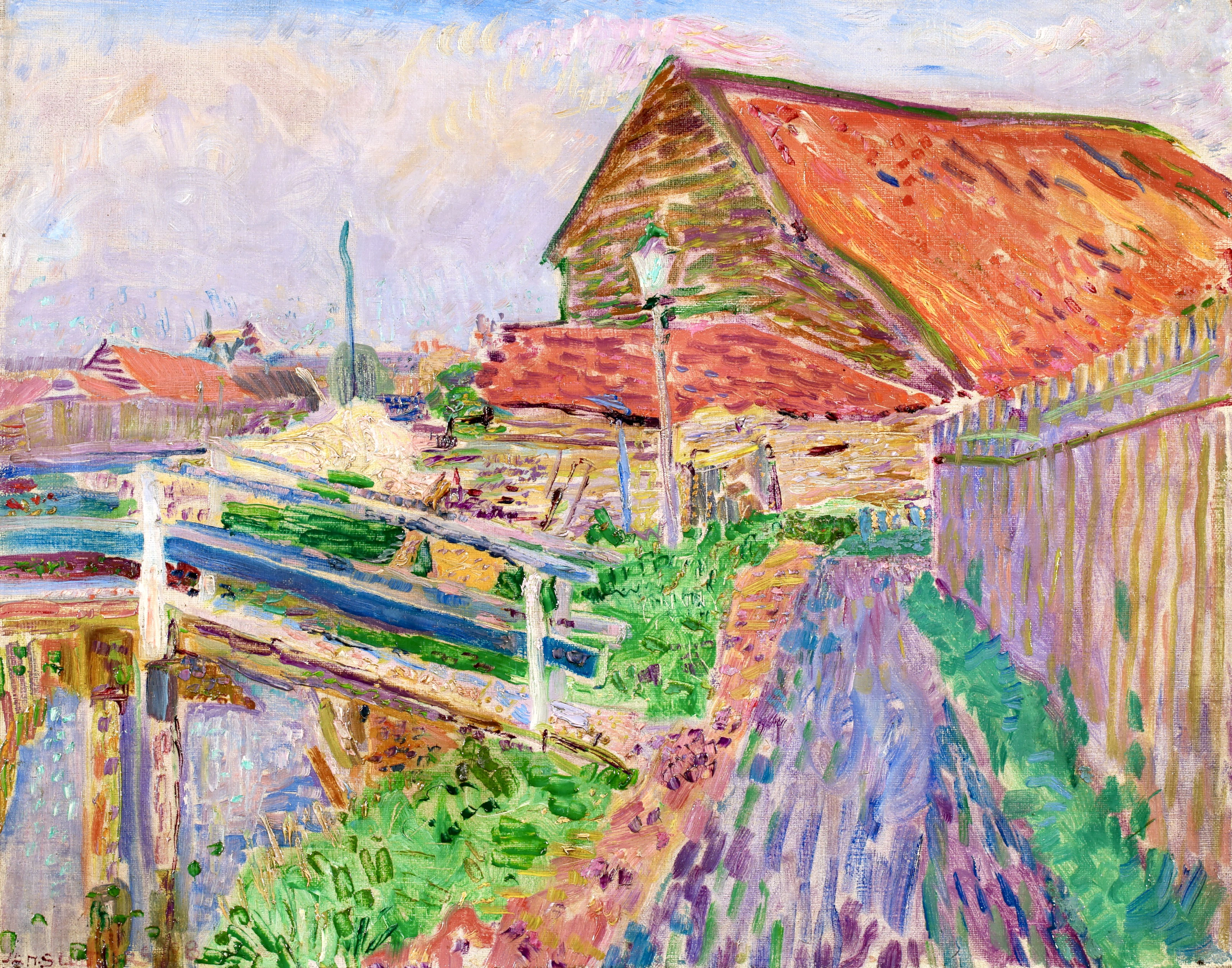
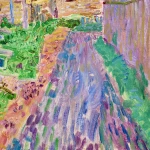
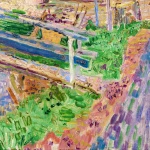
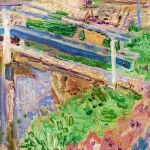
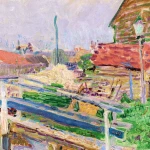
Typically for his day, Jan Sluijters started out as a Post-Impressionist, but he was quickly drawn to Van Gogh and the Expressionist currents that were then sweeping northeast Europe, and to Fauvism. From that point onwards, his colours became and remained clear and vivid. Sluijters was also aware of Gauguin and current developments in Cubism and Futurism and, in effect, did not shy away from incorporating certain elements into his own body of work. His preferred subject matter included nudes, portraits, interiors and landscapes - particularly by moonlight. During his sojourn in Staphorst in 1915 to 1916, he produced what many consider to be his best (or, at all events, his most sensitive) work; this took the form of compositions depicting the everyday life of the Dutch countryside, capturing the visual expressions of its inhabitants in dark brown tones punctuated by patches of chiaroscuro not dissimilar to Van Gogh's series of Nuenen paintings. From that point onwards and until his death, Sluijters' work became softer and more serene, although he continued to exploit the Fauvist/Expressionist colour palette. Overall, he remains a major figure from the beginning of Dutch Expressionism.
Museum and Gallery Holdings
Amsterdam (Stedelijk Mus.): Portrait of Madame J. van der Vurst de Vries-Godin (1914); Self-portrait (1924); Joy of Painting (1946)
Antwerp (Koninklijk Mus. voor Schone Kunsten)
Eindhoven (Van Abbe Mus.): Landscape (1910); Reading (1911); Portrait of Germ de Jong (1933)
Haarlem (Frans Halsmus.): Peasants at Staphorst (1917)
Otterlo (Kröller-Müller Mus.): Factory Land at Twilight (1908); Flower in a Vase (1912); Female Nude (back view) (1919); Lamentation of Christ (1925); Don Quixote (1939)
The Hague (Gemeentemus.): Child's Bedroom (1910); Sunset at Laren II (1911); Portrait of the Artist's Family (1922); Chrysanthemums (1925); Nude (1933); Still-life with Full-length Nude (1933)