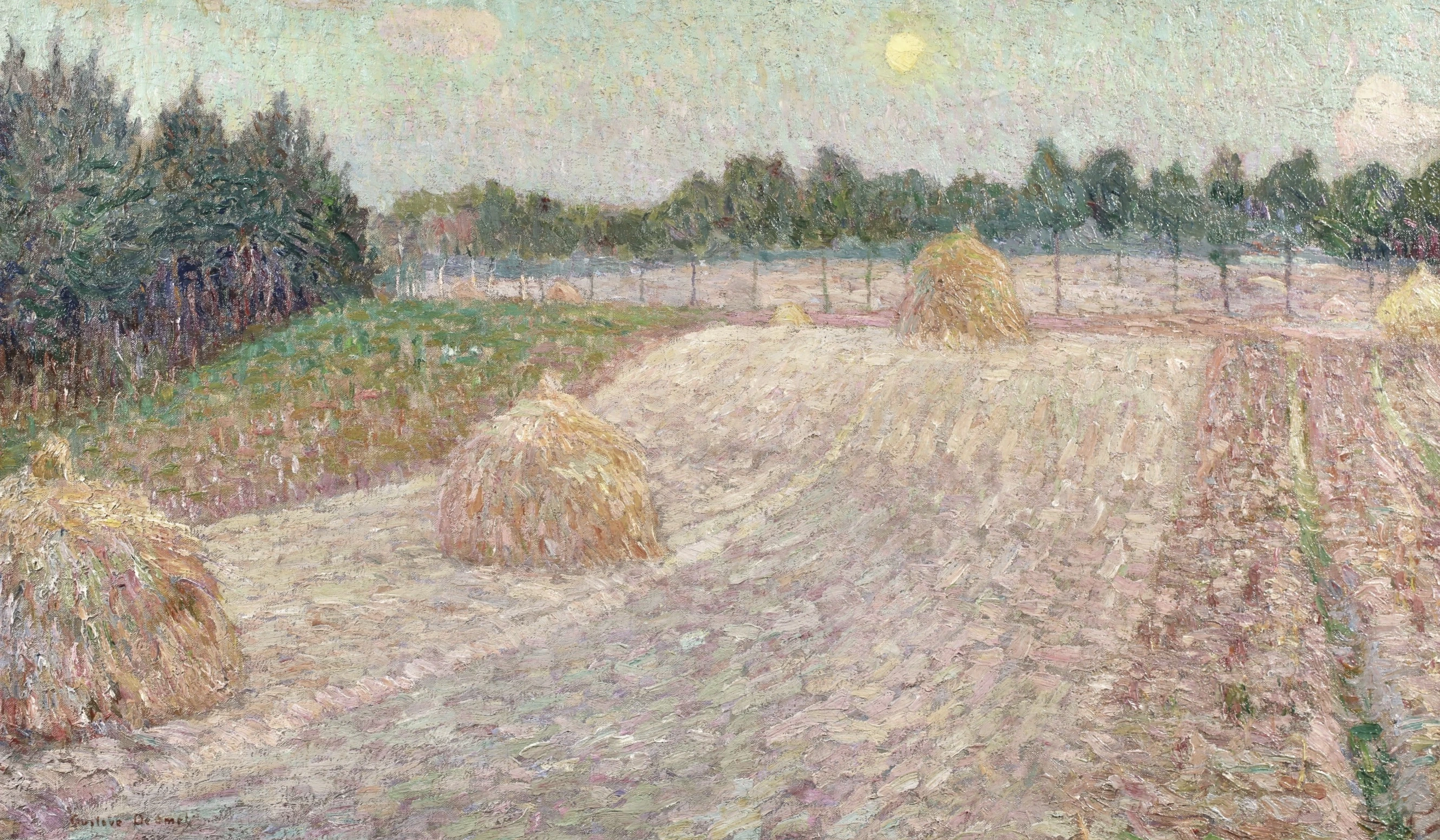
Gustave (Gustaaf) de Smet initially worked alongside his younger brother Léon, also a painter, with his father, the photographer and decorative artist Jules de Smet. He then studied under Jules van Biesbroek and Jean Delvin at the Koninklijke Academie voor Schone Kunsten in Ghent from 1889 to 1895. He settled in Laethem-St-Martin in 1901, but he also spent time in Deurle and was back again in Ghent in 1911. At the outbreak of World War I, he sought refuge in the Netherlands.
De Smet's brother Léon was with him in Laethem, and the two met Permeke, van den Berghe and Servaes, with whom they would subsequently form the nucleus of the second-generation Laethem School, which was significantly more aligned with the Flemish Expressionist tradition that preceded it and closer to the Vérisme Social ( Social Realism) of the Barbizon School. While in the Netherlands, he also met the Dutch painter Sluyters, who was strongly influenced by Fauvism and Expressionism, and the French artist Le Fauconnier, whose style has been described as 'post-Cubist rustic'. From 1918, he and the art critics P. van Hecke and André de Ridder set up the Galerie Sélection, which would prove to have a substantive influence on contemporary Belgian painting. He returned to Belgium in 1920 and settled in Afsnée the following year, although he spent short periods in Deurle (1935) and in France (1940).
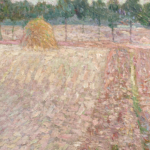
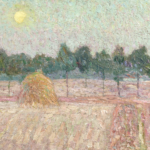
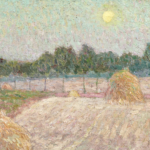
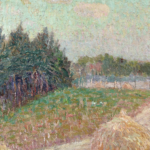
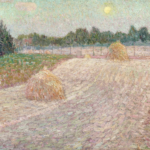
De Smet's early work was tentatively Impressionist but, following his return to Belgium in 1920 and his exposure in Laethem to the work of Permeke and van den Berghe, he proclaimed himself a member of the Belgian Expressionists. His work shared with Expressionism a heavy colour palette and a taste for popular subject-matter. His browns, brick reds and pinks exude warmth, but his figures are puppet-like, his animals and farm buildings of the 'doll's house' variety. These features distance him considerably from the general run of the Expressionists. He appears to have learned from Le Fauconnier how to treat spatial volumes and this may justify his inclusion among the ranks of latter-day Cubists. The Flemish tradition of 'village fair' painting found expression in De Smet as a mildly poetic verisimilitude, with traces of caricature such as one finds in the work of Marc Chagall.
De Smet's work featured at solo exhibitions, including those held in 1914 at the Regnard & Co gallery in Amsterdam; in 1916, at the Heysteet-Smith gallery, also in Amsterdam; in 1919, at the Galerie Giroux in Brussels; and in 1921, at the Galerie Sélection in Brussels. A De Smet retrospective was mounted at the Palais des Beaux-Arts in Brussels in 1936. Following his death, his work was exhibited at the De Vuyst gallery in Lokeren, notably in 2003.
Museum and Gallery Holdings
Amsterdam (Stedelijk Mus.): Blue Table (1915)
Antwerp (Koninklijk Mus. voor Schone Kunsten): Pally (1922); Eating Mussels (1923); Little Girl in Pink (1937); Still-life with Herrings (1938)
Basel (Kunstmus.): Sleeping Woman (1919); Bouquet of Dark Flowers (1919); Poacher (1925)
Brussels (Mus. royaux des Beaux-Arts de Belgique): Women at Katwijk (1918); Béatrice I (1923); Young Woman in Blue (1935); Self-portrait (1937); Nocturnal Landscape (1941)
Deinze (Mus. van Deinze): Woman (1928); Straw Hat (1938)
Eindhoven (Van Abbe Mus.): Dance-Hall (1922); Woman and Child (1922); Landscape (1937); Barebreasted Young Woman (1937-1938)
Ghent (Mus. voor Schone Kunsten): Church at Afsnée (1906); Interior with Porcelain Figures (before 1914)
Grenoble: Circus II (1926)
Ixelles: Dovecot (1920); Parade (1922)
Liège (Mus. of Modern and Contemporary Art): Still-life (1940)
The Hague (Gemeentemus.): White Chrysanthemums (1914); Farmhouse (1914); Moonlit Landscape in the Snow (1918); Female Figure (1919); Loggia II (1928)